







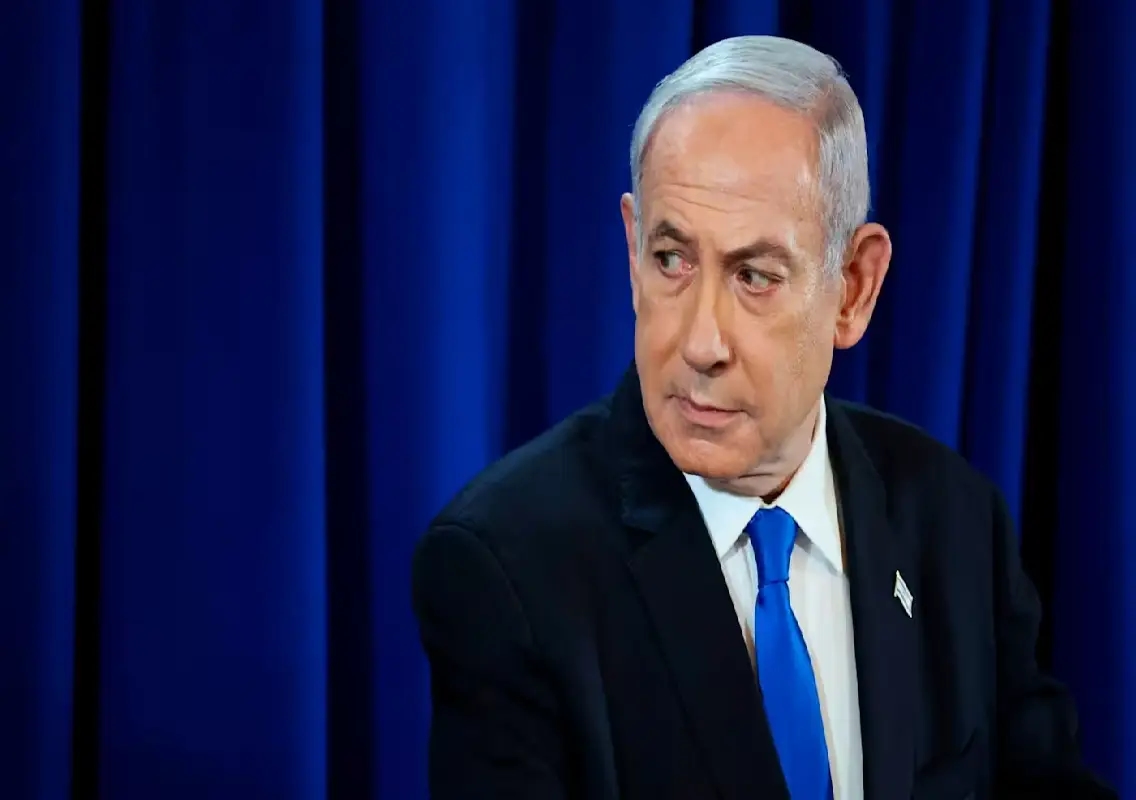


Israeli Prime Minister Benjamin Netanyahu is set to join US President Donald Trump’s newly proposed “Board of Peace”, a controversial international body that Trump has suggested could one day replace the United Nations. The announcement has intensified diplomatic unease across Europe and beyond, with several governments raising concerns about the board’s structure, legality and the sweeping powers it would grant the US president.
Netanyahu’s office confirmed on Wednesday that he would join the board alongside other “world leaders”. However, it did not clarify whether Israel would pay the proposed $1 billion fee that reportedly guarantees permanent membership in the body.
The Board of Peace is expected to be formally announced at the World Economic Forum (WEF) in Davos, where Trump arrived on Wednesday. According to a senior White House official, around 35 national leaders are expected to attend the announcement.
Countries joining and key absentees
Israel will be joining a group of countries that already includes the United Arab Emirates, Morocco, Vietnam, Belarus, Hungary, Kazakhstan and Argentina. Egypt’s foreign ministry also confirmed that President Abdel Fattah al-Sisi would participate in the initiative.
Trump is also awaiting a response from Russian President Vladimir Putin, who, according to US officials, is “studying all the details” of the invitation. If Putin accepts, he would become the second leader wanted on war crimes charges by the International Criminal Court (ICC), after Netanyahu, to join the proposed body.
The invitation to Putin has significantly deepened concerns among European nations. Many fear that the board could undermine existing international institutions and norms, particularly given Trump’s outspoken criticism of the UN.
European opposition and constitutional concerns
The majority of European Union member states have declined to participate. French President Emmanuel Macron said he would not join due to concerns about the board’s remit and governance. Germany echoed similar reservations, with a government spokesperson stating that a “prerequisite” for German involvement would be that the body be compatible with existing international legal frameworks. German Chancellor Friedrich Merz is not expected to attend the signing ceremony.
Hungary’s Prime Minister Viktor Orbán remains the only EU leader to have accepted the invitation so far. Orbán, who has cultivated close ideological ties with Trump, reportedly welcomed the proposal as an alternative approach to global peace-building.
Italy has also expressed serious reservations. A senior Italian government official said Prime Minister Giorgia Meloni was unlikely to sign up, citing concerns that the board could violate Italy’s postwar, anti-fascist constitution. The constitution allows Italy to join international organisations dedicated to peace and justice among nations only if participation is on equal terms with other states.
The draft charter of Trump’s Board of Peace, however, grants the US president extraordinary authority. Trump is expected to chair the board and hold veto power over its decisions. He would also have exclusive authority to invite member states and appoint his successor, raising alarms about concentration of power.
Structure and ambitions of the Board of Peace
Originally conceived as a mechanism to oversee the reconstruction of Gaza, the Board of Peace has since expanded its ambitions to address other global conflicts. Trump has repeatedly criticised the UN’s effectiveness, arguing that it has failed to prevent or resolve major wars.
“The UN just hasn’t been very helpful,” Trump said on Tuesday. While he acknowledged the organisation’s potential, he claimed it “never helped me on one war”.
Under the proposed structure, the Board of Peace would sit above a separate executive board. This body is expected to include former UK prime minister Sir Tony Blair, private equity executive Marc Rowan, and Trump’s son-in-law Jared Kushner.
A second executive board would focus specifically on Gaza, where discussions on reconstruction have already begun. Gaza has been devastated by more than two-and-a-half years of war between Israel and Hamas, leaving much of the territory in ruins and its approximately 20 lakh residents facing a severe humanitarian crisis.
Netanyahu, ICC charges and Davos absence
Netanyahu is not expected to attend the Davos meeting in person. Switzerland, as a signatory to the Rome Statute since 2001, would be legally obligated to arrest him and hand him over to the ICC, which has issued war crimes charges against the Israeli leader.
The allegations include the use of starvation as a weapon of war during Israel’s military campaign in Gaza. Netanyahu has strongly rejected the charges, calling them antisemitic and politically motivated. He has maintained that Israel has adhered to the laws of war.
According to health authorities in Gaza, more than 70,000 Palestinians have been killed since the conflict began, figures that have drawn widespread international scrutiny and condemnation.
Growing strain with Europe
European apprehension over the Board of Peace has further strained relations with the Trump administration. The initiative comes at a time when transatlantic ties are already under pressure due to Trump’s foreign policy positions, including his controversial pursuit of Greenland and his scepticism toward multilateral institutions.
Despite the backlash, the White House has indicated it will proceed with the announcement as planned. Supporters of the initiative argue that existing global institutions have failed to deliver lasting peace and that new mechanisms are needed to address modern conflicts.
Conclusion
Netanyahu’s decision to join Trump’s Board of Peace underscores a shifting global landscape where alternative power structures are being proposed to challenge long-standing institutions like the UN. While supporters see the initiative as a bold attempt to reshape international peace-making, critics warn it risks undermining international law, concentrating power in the hands of one leader, and deepening global divisions. As the world watches developments in Davos, the long-term implications of this controversial proposal remain uncertain.