







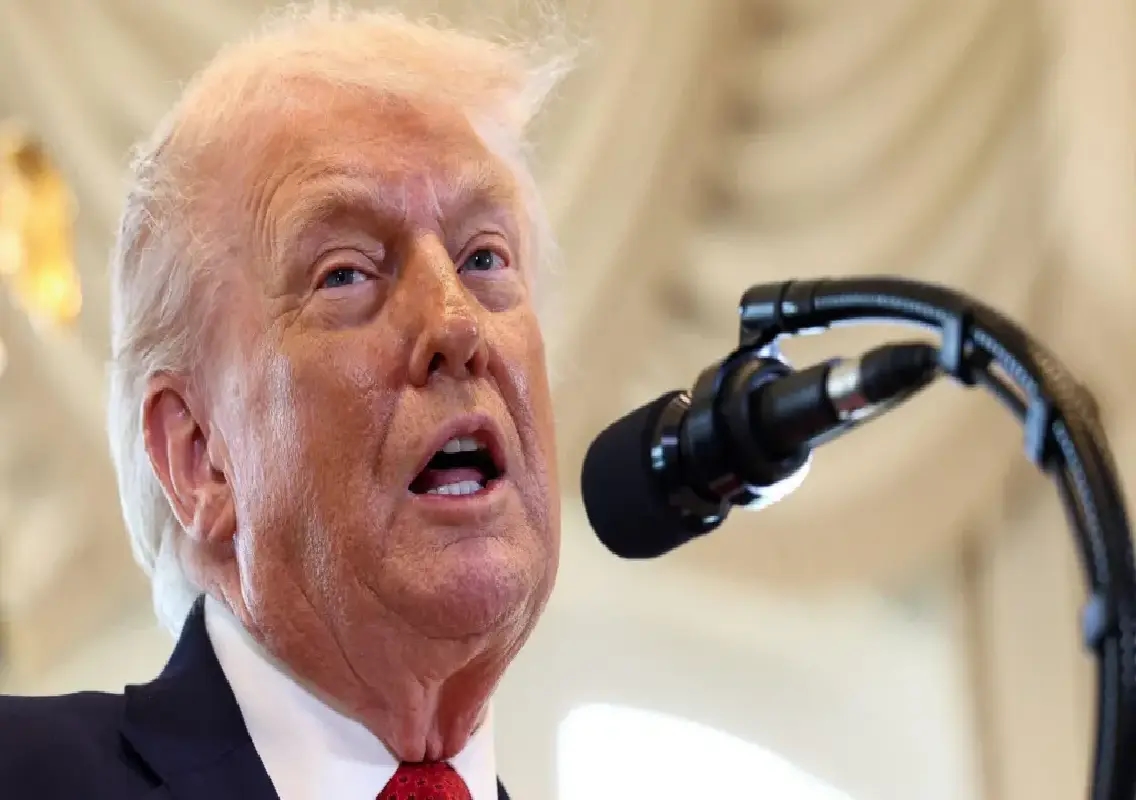


United States President Donald Trump has said he no longer feels “obliged to think purely of peace” in international affairs after failing to receive the Nobel Peace Prize last year, linking his stance to rising tensions over Greenland — a strategic Arctic territory — in a message to Norway’s Prime Minister Jonas Gahr Støre. The extraordinary exchange between two close allies has triggered fresh diplomatic concern, with broader implications for NATO cohesion, transatlantic relations and European responses to Arctic geopolitics.
Trump message ties Nobel snub to Greenland policy
According to reports and official confirmations, President Trump sent a message to Prime Minister Jonas Gahr Støre on Sunday night in which he criticised Norway over the Nobel Peace Prize decision. Trump claimed that because Norway “decided not to give me the Nobel Peace Prize for having stopped 8 wars PLUS,” he no longer felt compelled to “think purely of peace” as a guiding principle, though he said peace would “always be predominant.”
Trump then linked this sentiment to his strategic interest in Greenland, stating: “The world is not secure unless we have complete and total control of Greenland.” Greenland is a large, sparsely populated semi-autonomous territory within the Kingdom of Denmark that holds significant geopolitical value due to its location, early-warning capabilities for missile defence, mineral resources, and proximity to Arctic shipping routes.
Norway’s response and Nobel clarification
Prime Minister Støre confirmed that he received the message but emphasised that the Norwegian Government does not decide Nobel Peace Prize winners. The Nobel Peace Prize is awarded by an independent Nobel Committee appointed by the Norwegian Parliament, not by the government itself, and last year’s prize went to Venezuelan opposition leader María Corina Machado. Støre reiterated these facts and stressed support for de-escalation and diplomatic engagement.
In his initial message to Trump earlier the same day, Støre — writing on behalf of himself and Finnish President Alexander Stubb — had urged a reduction in tensions over Trump’s tariff threats and the dispute concerning Greenland. Trump’s reply took a markedly different tone, shifting focus from cooperation to perceived entitlements and strategic security.
Tensions over Greenland and NATO allies
Trump’s comments come amid ongoing controversy over his desire for the United States to gain “control” over Greenland, a concept that has been firmly rejected by Denmark, the territory’s governing state, and other NATO allies. Denmark has warned that any attempt by the US to pursue military action over Greenland would undermine the North Atlantic Treaty Organisation’s (NATO) founding principle of collective defence and could spell the end of the alliance.
Tensions have also extended into economic pressure. Trump previously threatened to impose a 10 per cent tariff on goods from eight European countries — including Norway, Denmark, Sweden, France, Germany, the United Kingdom, the Netherlands and Finland — if they opposed his proposals regarding Greenland. He has additionally hinted at raising tariffs to 25 per cent by June if demands are not met, triggering rebukes from European capitals.
European reactions and diplomatic pushback
European leaders, including British Prime Minister Keir Starmer, have called for calm dialogue and de-escalation, making it clear that Greenland’s future should be decided by its residents and the Danish government, not through coercive economic or strategic pressure. Europe’s response reflects broader concerns about maintaining alliance unity and respecting sovereignty under international law.
In addition to criticism from political leaders, thousands of Greenlanders reportedly protested against any perceived effort to transfer control of their territory, reinforcing the sentiment that any decision about Greenland’s status must remain grounded in self-determination and democratic process.
Nobel Peace Prize context
The Nobel Peace Prize, awarded annually by the independent Nobel Committee, recognises significant contributions to peace. Last year’s award to María Corina Machado, which Trump has referenced, underscored global attention to issues in Venezuela. Trump’s suggestion that missing out on the prize has influenced his diplomatic posture has drawn both domestic and international attention, with critics arguing that such a rationale is incongruous with traditional foreign policy drivers.
Strategic implications of Greenland
Greenland’s importance to global strategy cannot be overstated. Its geographic position makes it pivotal for early warning and missile defence systems, as well as for monitoring Russian activity in the Arctic. The territory’s mineral resources, including rare earth elements, add further strategic value. However, the question of sovereignty remains clear under current international structures: Greenland is part of the Kingdom of Denmark, and Denmark’s government asserts control over its defence and foreign affairs, subject to Greenland’s internal autonomy.
Conclusion
President Trump’s unusual linkage of the Nobel Peace Prize and his stance on Greenland has deepened diplomatic strains between the United States and its European allies. While Trump has framed his stance in terms of national security and strategic necessity, European leaders have underscored the importance of international norms, sovereign rights and constructive dialogue. As tensions continue, the situation highlights the fragility of alliance politics and the complexities of Arctic geopolitics in a rapidly changing world order.