







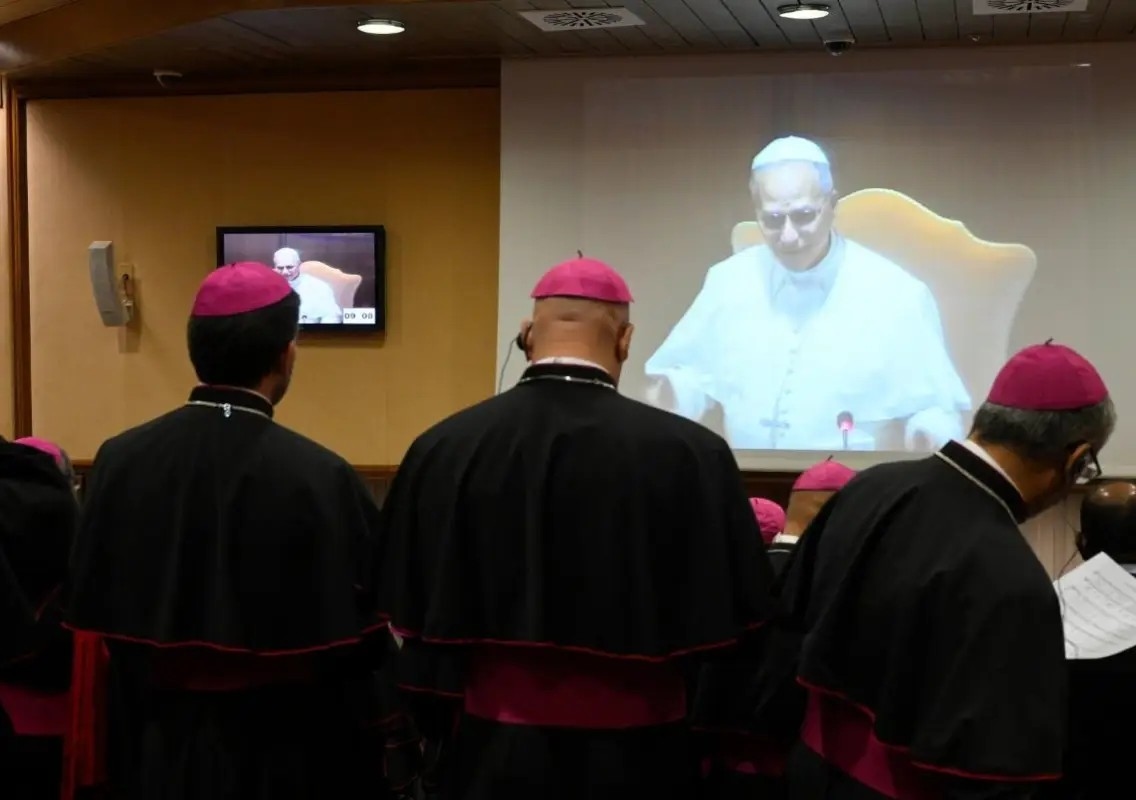


Vatican City : Some 147 newly appointed bishops from five continents have gathered in Rome for an annual formation course focused on the challenges and responsibilities of episcopal ministry.
Running from September 2 to 10, the programme has been organised by the Dicastery for Bishops and the Dicastery for Evangelisation. It offers the new bishops time for formation, prayer, dialogue and fraternity while addressing key pastoral and administrative challenges facing the Catholic Church today.
The gathering brings together bishops serving in different cultural, social and pastoral contexts, providing an opportunity to learn from one another and deepen their understanding of the universal mission of the Church.
Two formation programmes underway
Of the 147 participating bishops, 98 are attending the programme organised by the Dicastery for Bishops. Its theme is “In Christ, Custodians of Magnifica Humanitas in Times of Transformation.”
Another 49 bishops are taking part in the course promoted by the Dicastery for Evangelisation’s Section for First Evangelisation. The programme is entitled “Servants of Communion in the Church.”
Although the two programmes have different emphases, both seek to equip newly appointed bishops for their ministry in rapidly changing social and cultural circumstances.
The formation includes opportunities for prayer and reflection alongside discussions on practical aspects of Church leadership.
Addressing the realities of episcopal ministry
The programme covers a wide range of subjects relevant to the daily responsibilities of a bishop.
Among the areas being discussed are episcopal ministry, liturgy, evangelisation, cultural change, safeguarding, the handling of abuse cases, Church governance and canon law. The bishops are also reflecting on interreligious dialogue, new religious movements, priestly formation and challenges affecting the clergy.
The breadth of the programme reflects the many responsibilities entrusted to bishops. Beyond preaching and celebrating the sacraments, bishops are called to guide their local Churches, accompany priests and religious communities, promote evangelisation and ensure that appropriate structures are in place to protect vulnerable people.
The course therefore combines theological and spiritual formation with practical discussions concerning pastoral leadership.
Safeguarding remains a central responsibility
One of the significant subjects addressed during the course is the protection of minors and the prevention and handling of abuse.
A dedicated session on safeguarding is being led by Archbishop Thibault Verny, President of the Pontifical Commission for the Protection of Minors. The session is intended to address both prevention and the appropriate handling of abuse cases.
The inclusion of safeguarding in the formation programme highlights the importance placed on creating safe environments within Church communities.
For newly appointed bishops, understanding safeguarding responsibilities is an essential part of pastoral leadership. It also requires awareness of the need to listen carefully to victims and survivors, follow established procedures and ensure accountability.
Focus on mission in a changing world
Another major theme of the gathering is the Church’s mission in societies undergoing rapid cultural and social change.
The bishops are being encouraged to reflect on how they can proclaim the Gospel while responding to the realities experienced by families and communities.
Archbishop Luis Javier Argüello García, President of the Spanish Bishops’ Conference, is scheduled to reflect on the mission of the pastor in family and society. His contribution forms part of the broader effort to help bishops understand their pastoral ministry in the context of contemporary family and social life.
The changing cultural landscape presents both opportunities and challenges for the Church. Bishops must respond to new forms of communication, changing family structures, secularisation, migration and other social developments while remaining attentive to the spiritual and material needs of the people they serve.
Liturgy and the life of the Church
Liturgy also has an important place in the formation programme.
Cardinal Arthur Roche, Prefect of the Dicastery for Divine Worship and the Discipline of the Sacraments, opened the Dicastery for Bishops’ course on September 2. Cardinal Claudio Gugerotti, Prefect of the Dicastery for the Eastern Churches, is addressing episcopal ministry, while Archbishop Vittorio Viola, Secretary of the Dicastery for Divine Worship, is focusing on liturgy.
These sessions underline the bishop’s role in promoting the liturgical life of the local Church and ensuring that worship remains at the heart of Catholic community life.
For the newly appointed bishops, the discussions also provide an opportunity to understand how different parts of the Roman Curia can assist them in carrying out their responsibilities.
Building fraternity among bishops
The Rome gathering is not limited to lectures and formal sessions. Fraternity and personal exchange are important elements of the formation experience.
Bringing bishops together from five continents allows them to encounter colleagues whose pastoral experiences may be very different from their own.
The diversity of the participants reflects the global nature of the Catholic Church. A bishop serving in a rapidly growing African diocese may face different circumstances from one serving in a European city, an Asian mission territory or a remote community elsewhere in the world.
Yet the bishops share a common responsibility to serve the people entrusted to their pastoral care.
Such encounters can help participants exchange experiences, recognise common challenges and develop a stronger sense of communion within the worldwide Church.
Preparing bishops for responsible leadership
Church governance and canon law are also included in the programme.
These areas are particularly important because bishops have significant responsibilities in administering dioceses, appointing and supporting clergy, overseeing Church institutions and ensuring that ecclesiastical norms are followed.
Formation in governance can help newly appointed bishops understand the structures and resources available to them as they begin their ministry.
The programme also addresses priestly formation and challenges facing clergy, recognising that the effectiveness of a bishop’s ministry is closely connected with the formation, wellbeing and pastoral service of priests.
Holy See’s role in a changing world
Cardinal Pietro Parolin, Secretary of State, is scheduled to conclude the September 4 programme with a reflection on the role of the Holy See in a globalised world and its work for peace.
The session places the ministry of individual bishops within the wider mission of the Catholic Church and its engagement with the international community.
The Church operates in societies affected by conflict, poverty, migration, religious tensions and political change. Bishops therefore frequently encounter issues that extend beyond the boundaries of their dioceses.
Understanding the Holy See’s diplomatic and pastoral role can help new bishops place local challenges within a broader global context.
A tradition of formation and communion
Formation courses for newly appointed bishops have become an important part of the Church’s efforts to accompany bishops as they begin their ministry.
Earlier Vatican formation programmes have similarly brought together newly ordained bishops from around the world for prayer, learning, dialogue and encounters with Vatican officials.
The current gathering continues that tradition while responding to contemporary concerns such as safeguarding, cultural transformation, governance and the changing needs of clergy and communities.
At the heart of the programme is the recognition that episcopal ministry is not carried out in isolation. Bishops serve within their local Churches while remaining connected to the wider communion of the Catholic Church.
As the 147 new bishops continue their days of formation in Rome, the gathering offers them an opportunity to strengthen their pastoral understanding, deepen their spiritual life and build bonds of fraternity with fellow bishops from across the world.
Their formation comes at a time when Catholic communities are navigating profound social and cultural changes. The lessons, relationships and experiences gained in Rome are intended to help these new pastors return to their dioceses better prepared to serve their people with wisdom, compassion and a renewed sense of mission.