







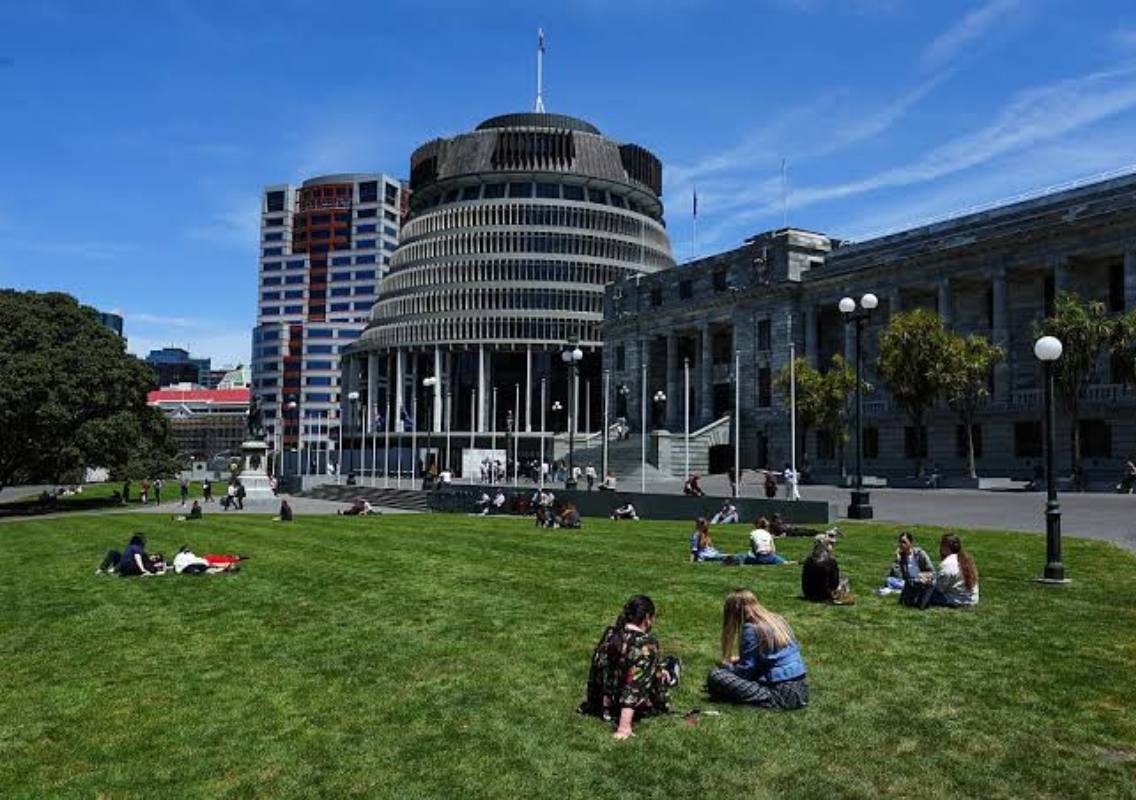


Wellington: New Zealand Prime Minister Christopher Luxon will seek support from the centrist Opportunity Party to retain power after official election results released on Friday, November 27, showed his centre-right coalition fell one seat short of a parliamentary majority.
The ruling coalition comprising the National Party, ACT and New Zealand First secured 65 seats in the 130-member Parliament, below the 66 seats required for a majority. The result leaves Luxon facing negotiations with Opportunity, which won seven seats in its first election campaign.
The negotiations could prove challenging, given policy differences between Opportunity and the incumbent coalition on issues including environmental protection, public investment and competition regulation.
Political observers believe a deal between the centre-right bloc and Opportunity is the most likely outcome, although negotiations could extend into next year. If the parties fail to agree and no alternative coalition secures a majority, New Zealand could face another election.
Luxon said his priority was to ensure political stability and avoid a rushed agreement that could collapse.
“New Zealanders need a government that is stable, that works together and will last for the full term,” he said at a news conference.
He added that voters would not appreciate a hurried agreement that falls apart or a return to the polls.
National-led coalition falls one seat short
Official results released by New Zealand’s Electoral Commission showed the incumbent coalition had secured 65 seats in the 130-seat Parliament.
The National Party, led by Luxon, won 40 seats in the November 7 election. Its coalition partners ACT and New Zealand First secured 13 and 12 seats, respectively.
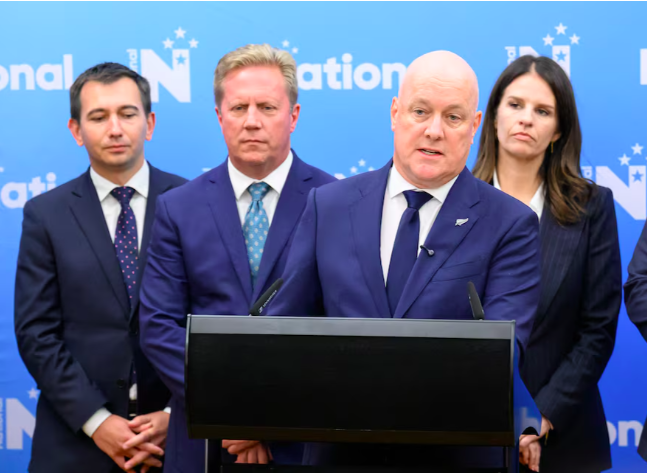
The coalition’s combined tally of 65 seats leaves it one short of the 66 required for a parliamentary majority.
The election campaign was dominated by concerns over the struggling economy and voter dissatisfaction with the country’s two largest political parties, with smaller parties gaining support.
Opportunity, a new entrant to Parliament, secured seven seats and emerged as a pivotal player in the government formation process.
Its leader, Qiulae Wong, said the party would begin negotiations with National, which secured the largest number of seats in the election.
Wong said the party would consider all possibilities, including remaining on the crossbenches, but emphasised the importance of forming a stable government.
“We are going to do everything we can to make sure that there is a stable government,” she said.
Opportunity’s policies pose challenges for coalition negotiations
Opportunity’s policy platform includes several proposals that differ from the priorities of the centre-right coalition.
The party has called for stronger climate commitments, a ban on bottom-trawling fishing, stricter competition rules and a more interventionist approach to public investment.
These differences could complicate negotiations over a coalition agreement or a confidence-and-supply arrangement, under which a smaller party supports the government on key parliamentary votes without necessarily joining the Cabinet.
Luke Oldfield, a political scientist at Victoria University, said a deal involving the three existing coalition parties and Opportunity was likely, although the negotiations could be difficult.
He said he expected a right-leaning bloc to emerge rather than another election, but the final arrangement would depend on discussions between the parties.
ACT leader David Seymour also indicated that government formation could happen relatively quickly if the parties were willing to work together.
He said the government could be formed if the existing coalition was prepared to cooperate with Opportunity in some capacity.
Centre-left bloc unable to secure majority
The election results also ruled out an immediate path to government for the centre-left bloc comprising Labour, the Green Party and Te Pati Maori.
Together, the three parties secured 58 seats. Even if they received support from Opportunity’s seven MPs, their combined tally would reach only 65 seats, still short of the 66 required for a majority.
Labour, the largest opposition party, won 36 seats. Leader Chris Hipkins said the party was not in a position to negotiate to form a government at this stage and would wait to see how the coalition talks unfolded.
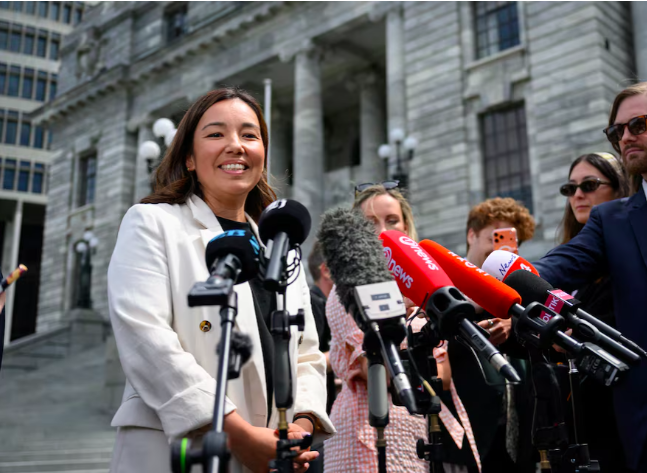
Hipkins also said he would consider his political future after the government formation process became clearer.
However, a different combination could still potentially form a government. If New Zealand First were to reach an agreement with centre-left parties, similar to its arrangement with Labour after the 2017 election, an alternative coalition could emerge.
The 2017 arrangement saw New Zealand First support Labour, with Jacinda Ardern becoming Prime Minister.
Government formation could take weeks
The negotiations are expected to involve discussions on policy priorities, ministerial appointments and the structure of any agreement.
Parties could opt for a formal coalition or a confidence-and-supply arrangement, depending on the terms they agree upon.
Political uncertainty could continue for several weeks. Economists Kelly Eckhold and Darren Gibbs of Westpac New Zealand said in a note that forming a government before Christmas could be challenging given the complicated election outcome.
They warned that uncertainty could weigh on markets for some time.
The New Zealand dollar, which had hit a 17-year low against the US dollar earlier in the week, strengthened slightly following the announcement of the final election results.
The incumbent National-led coalition is expected to continue operating as a caretaker government while negotiations proceed. If the parties fail to form a government, the possibility of a fresh election remains, although political observers consider that outcome unlikely.