







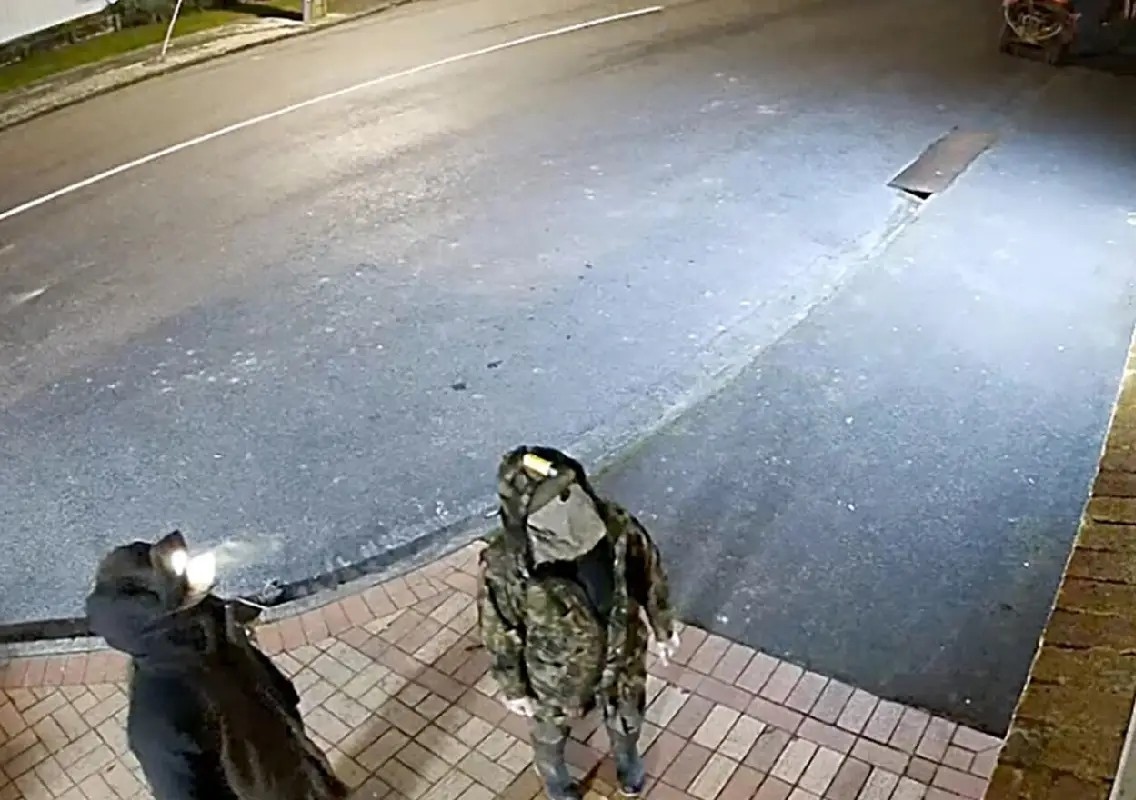


Wellington : New Zealand government agencies missed multiple warnings that could have helped prevent the disappearance of three children with their father, Tom Phillips, according to a public inquiry released on Tuesday. The 211-page report found that police, Oranga Tamariki and other agencies failed to share or act on important information before Phillips took his children into hiding for almost four years.
Phillips was shot dead by police in September 2025 after spending nearly four years in hiding with his three children in the bush around the Waikato region. The children were eventually recovered following the fatal confrontation.
The inquiry concluded that significant opportunities had been missed both before the second disappearance and during the subsequent search.
Earlier disappearance raised serious concerns
Phillips had first disappeared with his three children in September 2021. The children were missing for 18 days before they returned.
He had abandoned his vehicle on a beach, leading police to consider the possibility that he had staged his own and the children’s deaths. After the family returned, police were seriously concerned that he might take the children away again.
However, the inquiry found that those concerns were not sufficiently communicated to Oranga Tamariki, New Zealand’s Ministry for Children.
The failure to transfer this information became one of the central findings of the inquiry.
The report said agencies had information that should have prompted greater concern about the children’s safety, yet the risks were not consistently recognised or shared.
Warnings about guns were not acted upon
One of the most serious findings concerned firearms.
The inquiry found that Phillips had access to at least eight firearms during his second disappearance and likely possessed more weapons that were never recovered. One of the firearms was later used when he shot at police during the confrontation that resulted in his death.
Before the second disappearance, Phillips’ former partner had reportedly warned police that he possessed numerous guns, including weapons allegedly kept at different locations.
The inquiry found no evidence that police took appropriate action on those warnings.
Phillips’ firearms licence was suspended in October 2021, but the inquiry found that it took nearly two months for the suspension notice to be served. An instruction to seize remaining firearms was also not carried out, despite police having information about weapons at his parents’ farm.
The report concluded that taking additional steps over the firearms could have contributed to finding the children sooner.
Family members repeatedly raised concerns
The inquiry also examined warnings from members of the children’s wider family.
The children’s older step-siblings repeatedly contacted Oranga Tamariki before the second disappearance. One of them specifically questioned whether the agency would be held responsible if the children went missing again.
Another provided an affidavit describing concerns about Phillips’ behaviour. The inquiry found that the affidavit apparently was never read by the relevant agency staff at the time.
A supervisor later acknowledged that, had the statement been read, social workers would probably have challenged Phillips about the concerns raised.
The inquiry found that family warnings were at times minimised as part of a parenting dispute rather than treated as potential indicators of risk to the children.
Children taken again in December 2021
Phillips took the children for a second time on December 9, 2021.
Their disappearance was discovered when a scheduled telephone call with their mother did not take place several days later.
Unlike the first disappearance, police did not initially launch a major search-and-rescue operation or immediately transfer the matter to the Criminal Investigation Branch.
The inquiry found that the response was influenced by a mistaken assessment that there were no immediate concerns for the children’s health and safety.
Investigators instead adopted a low-key approach, hoping to persuade Phillips to return.
The inquiry concluded that a more urgent and coordinated response could have made the second disappearance more difficult or potentially prevented it.
Children remained isolated for years
Phillips and the children spent nearly four years living in several camps in dense bush.
The inquiry found that the harm caused by the children’s prolonged isolation from family, friends and wider society was underplayed, minimised or overlooked by agencies for significant periods.
The report also examined the role of home-schooling in the children’s isolation.
Phillips had withdrawn the children from school in 2020 without informing their mother. The inquiry found that the Ministry of Education did not review the home-schooling arrangement despite the circumstances surrounding the family.
The report recommended changes to the way home-schooling applications are assessed, including stronger consideration of parental consent.
Other opportunities were missed
The inquiry identified several further opportunities that could have helped authorities locate the children earlier.
Among its findings, it said police should have considered surveillance warrants sooner, made earlier use of covert cameras and offered a reward at an earlier stage.
A member of the public reported a credible sighting of Phillips and the children in May 2023, but the inquiry found that the report was not followed up promptly.
Police also took around three months to connect Phillips with an aggravated robbery at an ANZ bank in Te Kūiti in 2023, according to the inquiry.
Eventually, authorities deployed extensive investigative resources, including public appeals, aerial searches, electronic surveillance and a reward.
Agencies apologise to the children
The findings have prompted an apology from the New Zealand government.
Social Development Minister Louise Upston apologised directly to the children, saying government agencies had not taken all practical steps to protect them.
Oranga Tamariki chief executive Amanda Malu described the report as difficult and, at times, harrowing reading.
She acknowledged that the agency had not listened to the family in the way it should have.
Police Commissioner Richard Chambers also said the initial investigation had not been given the focus and resources it required.
Inquiry makes nine recommendations
The public inquiry made nine recommendations aimed at preventing similar failures.
Among them, police were urged to provide fuller information when making reports to Oranga Tamariki and to act promptly on warnings about firearms from former partners.
Oranga Tamariki was urged to train staff to recognise parental alienation as a form of harm and to ensure the Family Court receives information about concerns raised by family members and ongoing police investigations.
The inquiry also recommended changes to home-schooling procedures and stronger coordination between police and the Defence Force in cases involving missing children.
The recommendations are intended to address not only individual failures but also weaknesses in communication and coordination between government agencies.
A case that exposed systemic gaps
The Phillips case has raised difficult questions about how authorities assess risk when family disputes, missing children and potential violence overlap.
The inquiry did not determine criminal or civil liability. Its focus was whether government agencies had taken all practicable steps to safeguard the children’s welfare before and during their disappearance.
Its findings point to a pattern in which individual warnings existed but were not brought together into a sufficiently clear assessment of the danger.
The case ultimately ended in a fatal confrontation in September 2025, when Phillips fired at police before being shot dead. One of his children was present during the confrontation, while the other two were found later that day.
The inquiry’s central message is that earlier action, better information-sharing and closer cooperation between agencies might have changed the course of events.
For the three children and their wider family, however, the report comes after years of separation and uncertainty. The government’s apology and the recommendations now place responsibility on authorities to ensure that warnings about vulnerable children are heard, properly assessed and acted upon before opportunities to protect them are lost.