


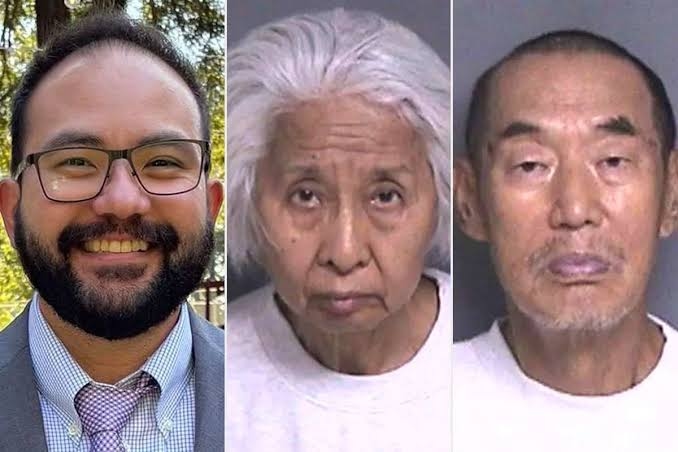


New York: A lawyer representing the in-laws of a slain New York Times executive has alleged that the victim previously threatened to hire a hitman to kill his mother-in-law. The claim has added a new dimension to a murder case involving a bitter divorce, a child custody dispute and allegations of domestic abuse.
Jonathan McKinsey, 40, a gaming engineer at The New York Times, was shot dead outside a sports complex in California on September 26. His in-laws, Shili Chen, 77, and Shouyong Zhang, who have been charged with murder in connection with the killing, have denied the charges.
The couple pleaded not guilty to first-degree murder charges last month. Their defence attorney, Curtis Briggs, has now alleged that McKinsey threatened Chen on at least three occasions, including one incident in which he allegedly spoke about hiring a hitman.
The allegations have not been established in court, and the claims form part of the competing accounts surrounding the case.
Defence lawyer alleges threats against mother-in-law
Speaking to reporters, Briggs claimed that his investigation had uncovered several alleged threats by McKinsey against Chen.
“Mr McKinsey had an extremely violent record. What we found out, through investigation, is there’s been at least three occasions, where there are witnesses, that Mr McKinsey actually threatened my client’s life: Once through a hitman, and two more recently by making comments that he was going to get rid of her,” Briggs said, according to the New York Post.
The lawyer’s allegations have brought renewed attention to the strained relationship between McKinsey and his wife’s parents, which reportedly deteriorated amid the couple’s separation and custody dispute.
Briggs argued that Chen and Zhang were concerned about the safety of their grandchildren and denied that they had deliberately planned McKinsey’s killing.
“They are not cold-blooded killers,” the lawyer said. “They didn’t premeditate anything. There was nothing planned. They were just concerned grandparents who were afraid for their grandchildren’s safety.”
Briggs also described the couple as loving and gentle grandparents, portraying Chen as someone who played a significant role in caring for the children. He compared her role in the household to that of a live-in nanny.
The defence’s account presents the couple’s actions as arising from fear and family tensions. However, these arguments remain claims made by their lawyer and do not establish their innocence or determine what happened during the shooting.
Guns allegedly purchased for protection
Investigators reportedly found a firearm on Chen when she was arrested. A second firearm was allegedly recovered from the couple’s car.
According to Briggs, the couple purchased the weapons in March because they feared McKinsey and wanted protection against him. The lawyer cited the alleged threats as part of his explanation for their concerns.
The circumstances surrounding the firearms, their alleged connection to the shooting and the prosecution’s evidence will be important to the criminal proceedings. The defence’s claim that the weapons were purchased for protection does not, by itself, establish how they were used or whether the killing was planned.
McKinsey was killed by two masked individuals outside a sports complex in California on September 26, according to the reported account of the case. Chen and Zhang were subsequently charged in connection with his death.
The couple’s not-guilty pleas mean the charges remain allegations that must be tested through the legal process. The defence has disputed the prosecution’s account of the killing, while the newly reported allegations against McKinsey have added another layer to an already contentious family dispute.
Divorce and custody battle preceded the shooting
McKinsey’s death followed a bitter separation from his wife, Candice Jang, involving disputes over their three children and allegations of physical and emotional abuse made by both parties.
Court records cited in media reports indicate that Jang contacted police in 2023, accusing McKinsey of shoving one of their children and using rough physical discipline.
In October 2025, she obtained a domestic violence protection order against him after he was arrested and charged with misdemeanour child abuse in a separate case.
Police reportedly said McKinsey admitted to slapping one child. He also faced a charge of endangering another child. These allegations were part of the legal disputes surrounding the family before his death.
According to the San Jose Mercury News, McKinsey was out on bail when he was killed and had been seeking entry into a mental health diversion programme.
The criminal allegations and custody proceedings formed part of a broader dispute over the children’s welfare and each parent’s access to them. The competing accusations made it difficult to separate the legal issues involving alleged abuse from the family’s personal conflict.
The existence of those disputes, however, does not establish a motive for the shooting or prove the defence’s allegations about threats against Chen.
McKinsey also accused his wife and mother-in-law
McKinsey disputed his wife’s allegations and pursued legal action of his own. He sought a protection order against Jang and filed for divorce, while asking for greater access to the couple’s three children.
Court records reportedly show that he objected to being restricted to two hours of supervised visitation per week.
McKinsey also alleged in his own protection order petition that Chen had directed anti-LGBTQ+ slurs at him and one of the children. He further accused Jang of abusing him during medical procedures related to his gender transition.
McKinsey was transgender, and his allegations introduced questions about discrimination and the treatment he said he experienced within the family. These claims, like the accusations made against him, need to be understood as allegations recorded in legal filings rather than as findings established by a court.
The competing protection order petitions illustrate how deeply the conflict had escalated before the shooting. Both spouses sought legal protection and accused the other of harmful conduct, while the dispute over access to their children remained unresolved.
The allegations made by McKinsey and Jang also provide context for the defence lawyer’s latest claims about threats against Chen. However, the available information does not independently establish whether the alleged hitman threat occurred or whether it had any connection to the killing.
Murder case raises questions about family conflict
The case now involves two sharply different accounts of the events leading up to McKinsey’s death. The defence says Chen and Zhang were fearful grandparents who had concerns about their grandchildren’s safety, while prosecutors have charged them with first-degree murder.
Briggs’s allegation that McKinsey threatened to hire a hitman to kill Chen could become part of the wider legal debate over the family’s history and the defendants’ state of mind. Its significance will depend on the evidence presented and how the court assesses it.
At the same time, the earlier allegations of child abuse, the competing protection order petitions and the custody dispute do not, on their own, prove who was responsible for the shooting or whether it was premeditated.
With Chen and Zhang having pleaded not guilty, the criminal case remains unresolved. The prosecution’s evidence, the defence’s response and the court’s findings will ultimately determine the legal outcome.