







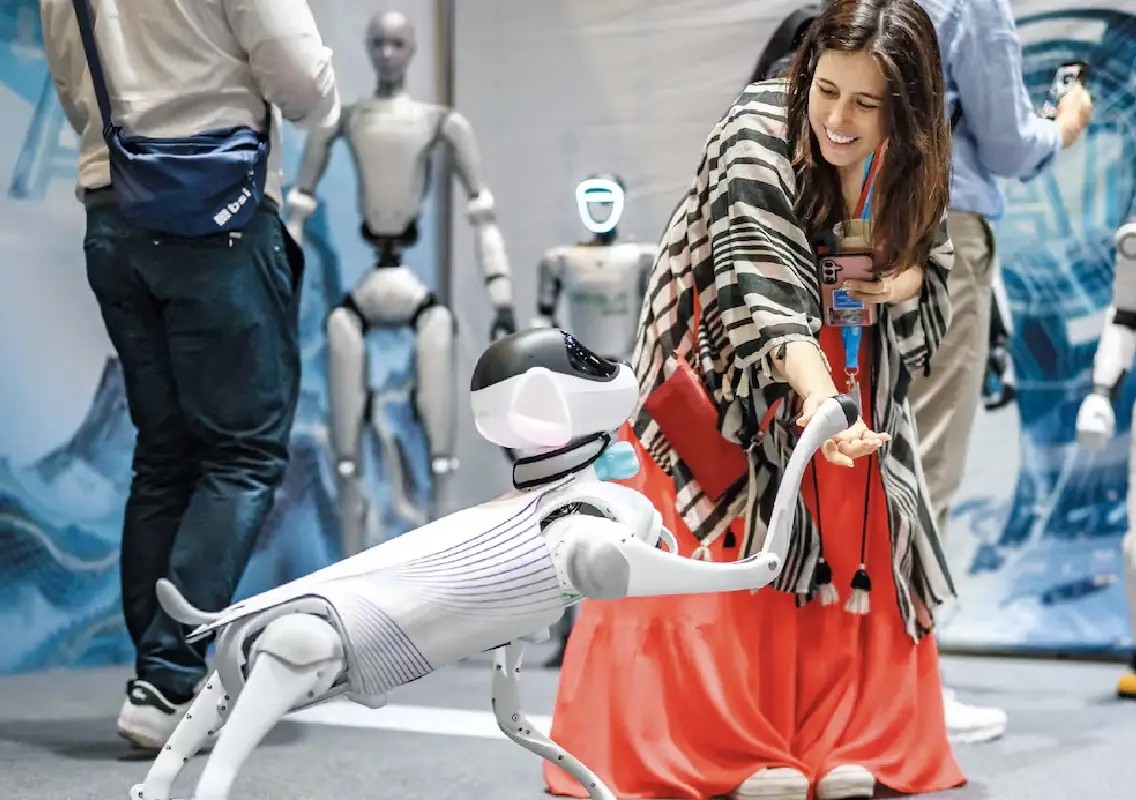


Geneva: Robot dogs, Tesla Cybertrucks, rescue helicopters and humanoid robots turned heads at the United Nations’ AI for Good Summit in Geneva, showcasing the growing role of artificial intelligence in solving real-world challenges.
Hosted by the International Telecommunication Union (ITU), the annual summit brought together technology leaders, policymakers, researchers and humanitarian organisations to explore how AI can help tackle global issues such as hunger, healthcare, disaster response and climate change.
AI’s promise meets real-world concerns
While visitors were drawn to futuristic demonstrations and cutting-edge robotics, discussions at the summit focused on a more pressing question—how to ensure AI benefits everyone rather than deepening global inequality.
Experts warned that many developing nations still lack the computing infrastructure, digital resources and local-language AI models needed to fully participate in the AI revolution. Several speakers stressed that access to AI should be treated as a development issue, not just a technological one.
Call for responsible AI governance
Participants also raised concerns over the growing influence of large technology companies and the need for stronger ethical standards and accountability.
To strengthen international cooperation, the UN announced a new 44-member commission on AI governance, co-chaired by Rwandan President Paul Kagame and Salesforce CEO Marc Benioff. The commission aims to promote responsible AI development and ensure broader global participation in shaping future AI policies.
Innovation moving faster than regulation
Despite the optimism surrounding AI’s potential, many experts cautioned that technological innovation is advancing far more rapidly than governments can agree on regulations.
The summit concluded with a shared message: artificial intelligence has the potential to transform lives, but only if it is developed responsibly, inclusively and with humanity at its core.