







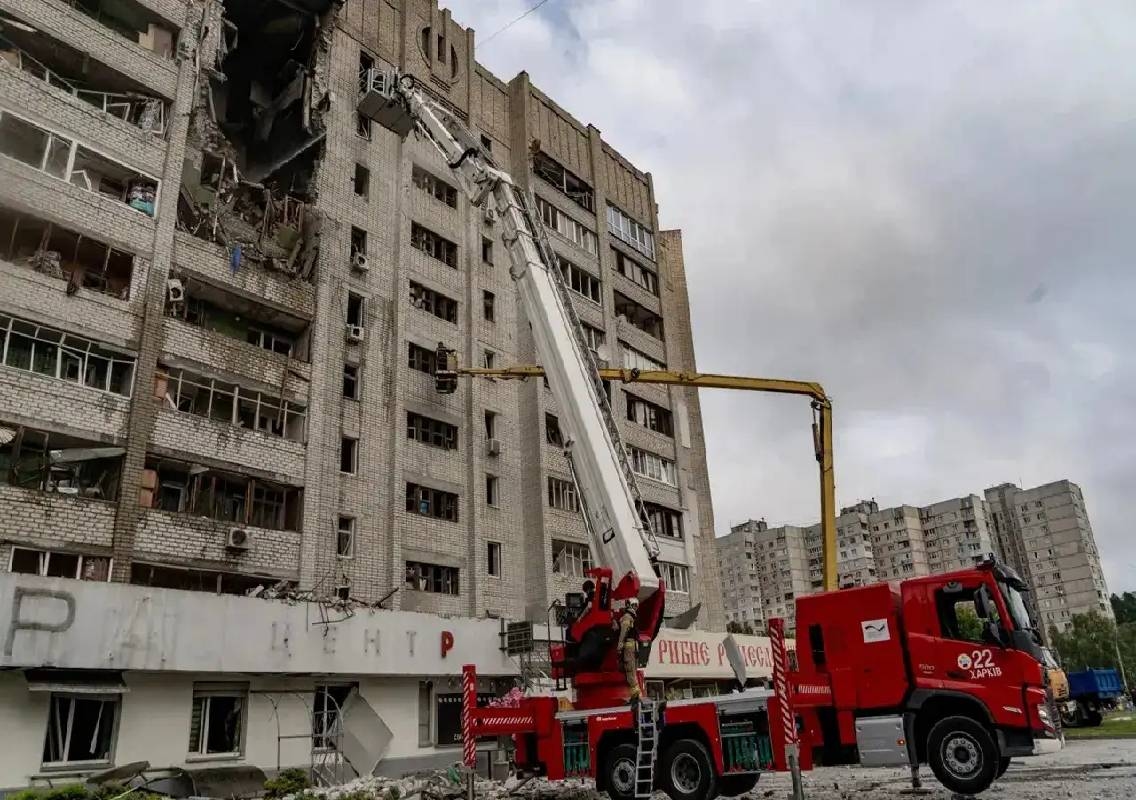


Kyiv: At least seven civilians were killed after Russia and Ukraine exchanged overnight strikes, with attacks causing deaths, injuries and damage on both sides as the nearly four-and-a-half-year-old war continues to intensify. Five people were killed in Russia’s Belgorod region following a Ukrainian drone attack, while Russian missile strikes on Ukraine killed two people, according to local authorities.
The latest exchange highlights the increasingly dangerous nature of the conflict, with both countries using drones and missiles to strike targets deep inside each other’s territory. Dozens of people were also injured in the latest attacks.
The strikes come as Ukraine faces continuing pressure on its air-defence capabilities, particularly amid reported shortages of US-made Patriot interceptors. At the same time, Ukrainian forces have stepped up drone operations against Russian territory and infrastructure.
Five killed in Ukrainian drone attack on Belgorod
In Russia, five people were reportedly killed in the Belgorod region after Ukrainian drones struck the area.
Regional authorities said more than 20 people were injured, including a child. Buildings and other property were also damaged in the attacks.
Belgorod, which borders Ukraine, has repeatedly come under Ukrainian drone and missile attacks during the war. Its proximity to the Ukrainian border makes the region particularly vulnerable to cross-border strikes.
Russian officials have repeatedly accused Ukraine of deliberately targeting civilian areas, while Kyiv maintains that its attacks are aimed primarily at Russian military capabilities and infrastructure supporting Moscow’s war effort.
The latest casualties are likely to increase pressure on Russian authorities to strengthen air-defence measures in border regions.
Russian missile strikes kill two in Ukraine
Russia responded with missile strikes against targets in Ukraine, with attacks reported in Kharkiv and Odesa.
At least two people were killed and 21 others injured, according to local authorities cited by The Associated Press.
Odesa, an important Black Sea port, has been repeatedly targeted during the conflict. Ukrainian authorities have accused Russia of damaging infrastructure connected to the country’s agricultural exports and other critical facilities.
President Volodymyr Zelenskyy has also accused Russia of threatening Ukraine’s ability to maintain its position as a major global food supplier through attacks on port infrastructure. Reuters reported that a recent Russian strike damaged the Odesa port and injured people in the region.
Kharkiv has likewise remained a frequent target because of its location close to the Russian border.
Residential areas among affected locations
The latest attacks have once again raised concerns about civilian safety.
Missile and drone warfare has increasingly brought the conflict into urban areas, where even strikes aimed at military or strategic infrastructure can cause civilian casualties and damage to homes and public facilities.
In Kharkiv, a missile strike reportedly hit a residential building, causing significant casualties in recent attacks. Reuters reported that three people were killed and 37 wounded in one such strike, highlighting the continuing danger faced by residents.
The repeated attacks have forced residents in several Ukrainian cities to spend nights in shelters or underground facilities whenever air-raid warnings are issued.
Russia claims it intercepted Ukrainian drones
Russia’s Defence Ministry said its air-defence forces shot down 153 Ukrainian drones overnight.
Russian authorities also reported damage to infrastructure and buildings in several locations.
The Russian military said its own strikes targeted Ukrainian military-related facilities, including drone storage sites and fuel infrastructure.
As with many battlefield claims made during the war, the individual claims from both sides are difficult to independently verify in real time.
Both Moscow and Kyiv regularly describe their strikes as targeting military or strategic infrastructure, while authorities on the ground frequently report civilian casualties and damage.
Ukraine faces pressure on Patriot missile supplies
The latest wave of Russian attacks comes as Ukraine continues to face shortages of air-defence interceptors.
The US-made Patriot system is particularly important because it is among the few systems available to Ukraine capable of intercepting certain ballistic missiles.
According to the Associated Press, Russia has been exploiting Ukraine’s critical shortage of Patriot interceptors as it carries out increasingly frequent large-scale missile attacks.
Ukraine has repeatedly asked its Western allies for additional air-defence systems and ammunition.
Zelenskyy has also pushed for greater domestic production and additional international support to protect Ukrainian cities from Russian missile and drone attacks.
Ukraine expands drone operations inside Russia
While Russia continues to launch large missile and drone attacks against Ukraine, Kyiv has increasingly used long-range drones to strike targets inside Russia.
Ukrainian attacks have targeted Russian military infrastructure, energy facilities and logistics networks.
Recent attacks have also affected infrastructure around Novorossiysk, where Ukrainian drones have reportedly targeted facilities connected to Russia’s energy and maritime operations.
The expansion of Ukraine’s drone campaign reflects Kyiv’s attempt to impose costs on Russia away from the front line.
It also creates pressure on Russian authorities to devote more resources to protecting cities, industrial facilities and strategic infrastructure across a much wider area.
Odesa remains a major target
The latest Russian strikes have again placed Odesa in the spotlight.
The Black Sea port is strategically important for Ukraine’s economy and its agricultural exports.
Ukraine has accused Russia of repeatedly attacking infrastructure around Odesa in an effort to disrupt logistics and exports.
Reuters reported that a recent strike damaged the Odesa port and that several people were injured.
The continuing attacks have raised concerns about the impact on Ukraine’s ability to transport agricultural products through the Black Sea.
The port region also remains important for military logistics, making it a key target in the wider conflict.
Civilian casualties continue to rise
The latest deaths add to a growing civilian toll from the conflict.
The war has now continued for more than four years since Russia launched its full-scale invasion of Ukraine in February 2022.
Reuters reported that the United Nations has recorded more than 16,000 civilian deaths, with most of those killed being Ukrainians. The number of civilian casualties has increased sharply in 2026, largely because of intensified drone attacks.
The figures reflect only confirmed casualties and may not capture the full human cost of attacks in areas where access is restricted.
Civilian infrastructure, including homes, hospitals, schools and energy facilities, has repeatedly been caught in the fighting.
Pope Leo renews call for peace
The latest violence has also prompted renewed international appeals for an end to the war.
Pope Leo called for an end to attacks and urged Russia and Ukraine to respect international humanitarian law and protect civilians.
His appeal came as the civilian death toll continued to rise and attacks became increasingly frequent.
International organisations and governments have repeatedly called for an end to attacks on civilians, although diplomatic efforts have so far failed to produce a lasting ceasefire.
Drone warfare is changing the conflict
One of the defining features of the current phase of the war is the widespread use of drones.
Both Russia and Ukraine have developed increasingly sophisticated drone programmes.
Drones are relatively inexpensive compared with many missiles and can be deployed in large numbers. They can also be used to attack targets hundreds of kilometres from the front line.
This has changed the geographic scope of the conflict.
Cities and regions far from the immediate battlefield are no longer necessarily outside the range of attack.
The recent strikes in Belgorod and other Russian regions demonstrate how Ukraine’s drone campaign is increasingly reaching deep into Russian territory.
Russia targets fuel and military infrastructure
Russian authorities said its latest attacks targeted Ukrainian military-related facilities, including fuel depots and drone warehouses.
The Russian Defence Ministry claimed that the strikes were aimed at facilities supporting Ukraine’s military operations.
Fuel infrastructure is particularly important because it supports military vehicles, aircraft and logistics.
Ukraine, meanwhile, has pursued a similar strategy by targeting Russian oil facilities and other infrastructure that it says supports Moscow’s military campaign.
This reciprocal targeting has increased the economic and strategic costs of the war for both countries.
The conflict is spreading beyond the battlefield
The latest attacks have also raised concerns about the war’s impact on neighbouring countries.
Moldova reported that a drone exploded near its border with Ukraine.
Bulgaria also reported that a drone entered its airspace before detonating near a gas pipeline. Both countries suggested that the incidents were likely accidental, while Ukraine has cooperated with Bulgaria in investigating the episode.
Such incidents demonstrate how the expanding use of long-range drones creates risks beyond the immediate combat zone.
Even when neighbouring countries are not directly targeted, drones travelling across borders can trigger security alerts and create fears of accidental escalation.
Ukraine seeks stronger air defence
For Kyiv, strengthening air defence remains one of the most urgent military priorities.
Russian forces have increasingly combined drones and missiles in large-scale attacks, potentially overwhelming individual air-defence systems.
Ukraine has sought additional Patriot systems from its allies and has also explored options for increasing domestic production.
Zelenskyy has repeatedly argued that stronger air defence is essential to protecting civilians and critical infrastructure.
The latest casualties reinforce the urgency of those requests.
Russia also faces pressure to defend its territory
Russia’s growing exposure to Ukrainian drone attacks has created a different challenge for Moscow.
Large parts of Russia remain far from the front line, but Ukrainian drones have increasingly demonstrated the ability to reach strategic locations.
This has forced Russia to expand air-defence coverage around military installations, energy infrastructure and major cities.
The repeated attacks on Belgorod and other border regions have also placed additional pressure on local authorities.
Civilian casualties in Russia are significantly lower than those in Ukraine, but Moscow has increasingly highlighted Ukrainian strikes to demonstrate the domestic consequences of the war.
Both sides accuse the other
The latest exchange follows the familiar pattern of reciprocal accusations.
Ukraine accuses Russia of deliberately attacking civilian infrastructure and residential areas.
Russia says its strikes are directed at military facilities and infrastructure supporting Ukraine’s armed forces.
Ukraine similarly describes its attacks on Russian territory as efforts to weaken Russia’s military capabilities.
Independent verification of battlefield claims can be difficult, particularly immediately after an overnight attack.
Casualty figures can also change as emergency workers search damaged buildings and authorities receive additional reports.
Humanitarian concerns remain high
For civilians, the distinction between military and strategic targets offers little comfort when attacks take place in populated areas.
Air-raid sirens have become part of daily life for millions of Ukrainians.
In Russia’s border regions, residents also face repeated warnings about drone attacks.
Damage to electricity, transport, housing and other infrastructure can disrupt ordinary life even when casualty numbers are relatively low.
The psychological impact of living under the threat of repeated attacks is also significant.
A war with no immediate end in sight
Despite repeated diplomatic efforts, the Russia-Ukraine conflict continues to show signs of escalation rather than de-escalation.
The increasing use of long-range drones has made the conflict more geographically widespread.
Russia continues to rely heavily on missile and drone attacks against Ukrainian cities and infrastructure, while Ukraine is expanding attacks on Russian territory and strategic facilities.
The latest overnight strikes demonstrate how quickly the conflict can produce casualties on both sides.
What happens next?
The immediate focus will be on assessing damage, treating the wounded and strengthening air-defence measures.
Ukraine is likely to continue requesting additional Patriot systems and other air-defence equipment from its allies.
Russia, meanwhile, is expected to maintain pressure through missile and drone attacks while expanding efforts to intercept Ukrainian drones.
The possibility of further strikes remains high as both countries attempt to damage each other’s military and logistical capabilities.
International calls for negotiations are likely to continue, but the latest escalation suggests that a durable settlement remains difficult to achieve in the immediate future.
Conclusion
The Russia-Ukraine war has entered another deadly phase, with overnight strikes killing at least seven civilians across both countries. Five people were reportedly killed in Russia’s Belgorod region in a Ukrainian drone attack, while Russian missile strikes in Ukraine killed two people and injured 21, according to local authorities.
The attacks demonstrate the increasingly important role of long-range drones and missiles in the conflict. Ukraine is seeking additional air-defence capabilities as it faces shortages of Patriot interceptors, while Russia is expanding its efforts to protect its own territory from Ukrainian drone attacks.
The latest violence has also raised concerns about the conflict spilling into neighbouring countries, after drone-related incidents were reported in Moldova and Bulgaria.
With civilian casualties continuing to mount, international calls for restraint and respect for humanitarian law are growing. However, the latest exchange of strikes shows that the conflict remains deeply entrenched, with civilians on both sides continuing to bear a heavy cost.