







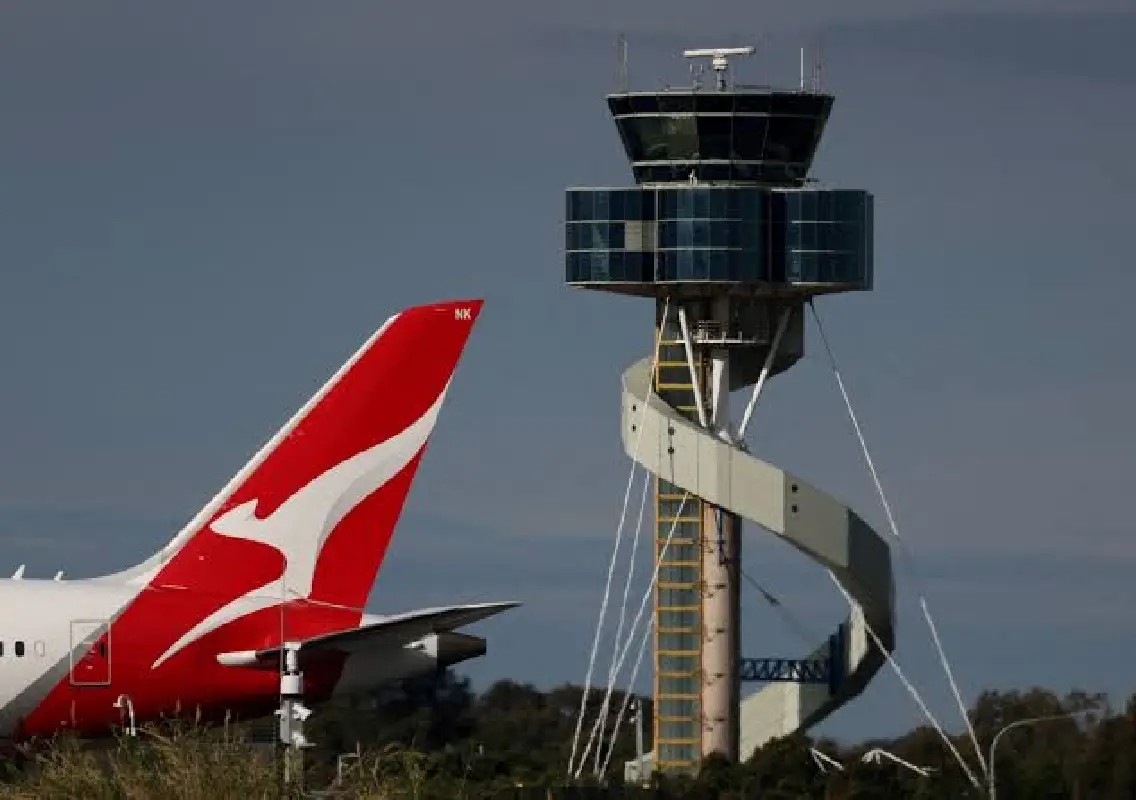


Sydney: Several air traffic controllers working during a near-collision involving two Qantas aircraft at Sydney Airport in July had been flagged as facing a high risk of fatigue, raising fresh concerns over staffing and working conditions in air traffic control.
Five controllers were rated at high fatigue risk
The July 27 incident involved a Qantas turboprop approaching to land and a Qantas Boeing 737 that had been cleared to cross the runway. The aircraft narrowly avoided a collision.
According to internal records reviewed by Reuters, five of the 10 controllers on duty that day were classified as having a high fatigue risk. One was rated medium risk and another low risk, while three were not classified as being at risk.
A shift manager reportedly described the staffing situation as “a bit insane” in an internal call following the incident. Two of the three controllers directly involved were said to have been rated highly fatigued, while the third was at medium risk.
The July incident was the first of six near-misses reported at Sydney Airport within about a month.
Staffing shortages add to pressure
Australia’s fatigue-management system estimates risk using factors such as workload and scheduling rather than directly measuring whether a controller is actually fatigued.
Possible measures include longer breaks, reducing traffic handled by a controller or ending a shift early. However, controllers told Reuters that staff shortages and heavy traffic can make such measures difficult to implement.
Civil Air, the union representing about 85 per cent of Australia’s air traffic controllers, said increasing overtime and fewer days off were contributing to fatigue.
Airservices Australia said unusually high short-term absences in Sydney had affected its ability to fill operational shifts. The agency declined to comment specifically on the near-miss because an investigation is ongoing.
Six near-misses under investigation
The Australian Transport Safety Bureau is investigating all six incidents to determine whether they share common safety issues or contributing factors.
Under Airservices Australia’s enterprise agreement, controllers can work up to 10 consecutive shifts, including additional and emergency duties, with a limit of 80 hours during a continuous run.
The Sydney incidents have renewed scrutiny of air traffic control staffing as countries worldwide face shortages and growing concerns over fatigue-related aviation risks.