







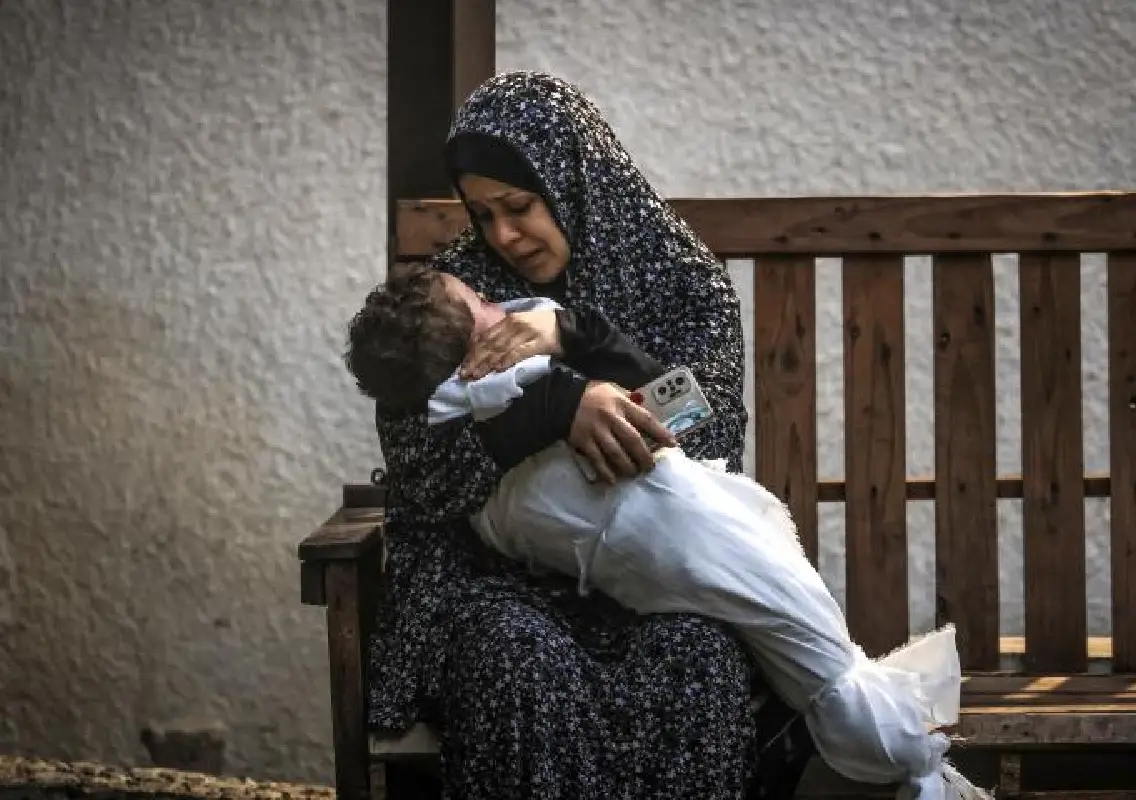


A three-year-old Palestinian girl was killed on Saturday in Gaza’s southern coastal area of Mawasi, near Khan Younis, in what local medics described as apparent gunfire from Israel Defence Forces (IDF) positions. The incident occurred on the Hamas-controlled side of the ceasefire line, where thousands of displaced families continue to seek refuge amid fragile truce arrangements.
The child, identified in Palestinian media as Ahed al-Bayouk, was brought to a nearby medical post with critical injuries and was declared dead on arrival. Health workers in Mawasi reported that the girl had been moving through a densely populated stretch of temporary shelters at the time of the shooting.
Incident reported amid fragile calm
According to accounts carried by the Al Jazeera network, the shot was believed to have come from across the demarcation line, though the precise circumstances remain unverified. Witnesses in the area described sudden gunfire that caused immediate panic among residents, many of whom live in makeshift tents in an area previously designated as a humanitarian zone.
Mawasi, often considered one of the few relatively safer pockets in southern Gaza, has continued to witness sporadic disturbances despite renewed international efforts to stabilise the ceasefire. Families living here have repeatedly expressed concern about the lack of clear communication, unpredictable movement restrictions, and the constant fear of cross-line fire.
No immediate response from IDF
As of publication, the IDF has not issued a statement regarding the report. Without an official response, medical personnel and humanitarian monitors have emphasised the need for independent verification of the incident, noting that the protection of children must remain paramount in all ceasefire frameworks.
International observers have highlighted that areas bordering ceasefire lines are often among the most vulnerable, as even minor misinterpretations of movement can have tragic consequences. Organisations working on the ground reiterated calls for strengthened monitoring mechanisms that can both deter cross-line fire and provide clarity during contested incidents.
Humanitarian voices call for stronger safeguards
Child protection agencies have expressed alarm at the death, noting that the safety of minors in conflict zones relies heavily on predictable, consistently enforced humanitarian corridors. With families in Mawasi already facing overcrowded conditions, limited medical infrastructure, and restricted access to essential supplies, the incident has brought renewed attention to the fragility of civilian safety in the region.
Gaza’s humanitarian landscape continues to evolve rapidly, shaped by displacement, constrained mobility, and a deepening reliance on international relief. Advocacy groups assert that each civilian casualty further underscores the urgency of transparent ceasefire protocols, robust monitoring, and guaranteed access for aid agencies.