







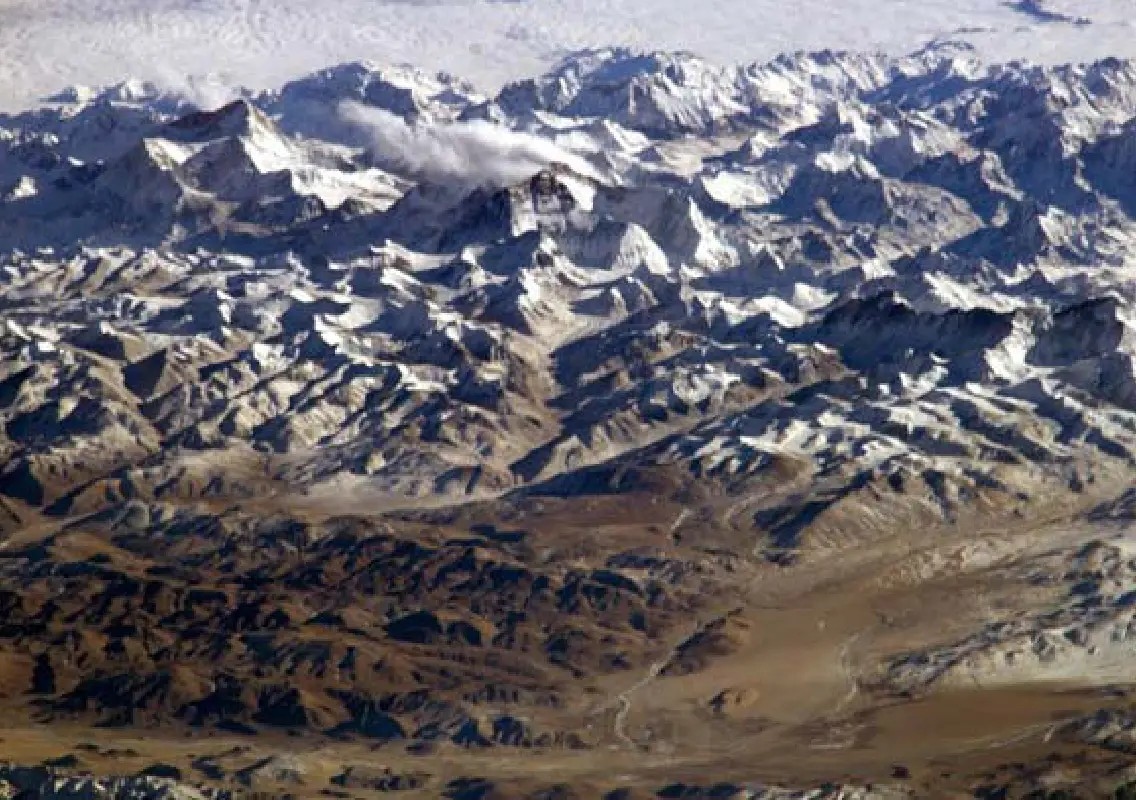


The Tibetan Plateau, often described as “Asia’s water tower”, could face an increasingly unstable and unpredictable future as changes in soil moisture and accelerating glacier melt raise the risk of geological disasters, according to a new study published in Nature Communications.
The study, published on August 21, examined changes in the plateau’s soil moisture system between 2000 and 2024 to assess its stability and the level of disorder developing within the complex system.
Soil moisture changes raise concern
Researchers led by Chen Xiaosong, a physicist at Beijing Normal University, used entropy to measure the stability of the region’s soil moisture system.
The findings suggest that increasing soil water and intensifying glacier melt could contribute to more frequent geological disasters in the coming decades.
Chen said the changes could continue from now until the end of the century, potentially increasing risks across the Himalayan region.
India and other countries could be affected
The Tibetan Plateau plays a major role in the water and climate systems of South and East Asia, influencing conditions for nearly two billion people.
Countries located around the Himalayas could therefore face consequences from increasing instability on the plateau.
Chen said India would “definitely be affected”, although he noted that the specific impacts require further research and analysis.
Nepal-China disaster adds urgency
The study’s findings come shortly before a catastrophic flash flood struck the Nepal-China border, killing hundreds and causing widespread destruction.
The timing has drawn renewed attention to the vulnerability of communities living around the Himalayan region, where glaciers, rivers, soil moisture and changing climatic conditions interact in complex ways.
Researchers caution that the study does not establish that the recent flood was directly caused by the changes identified in their analysis. However, its findings point to a broader concern about how a changing Tibetan Plateau could influence disaster risks across Asia.
As glacier melt intensifies and soil water patterns continue to change, scientists say understanding the plateau’s stability will become increasingly important for countries dependent on its rivers and vulnerable to hazards originating in the Himalayas.