







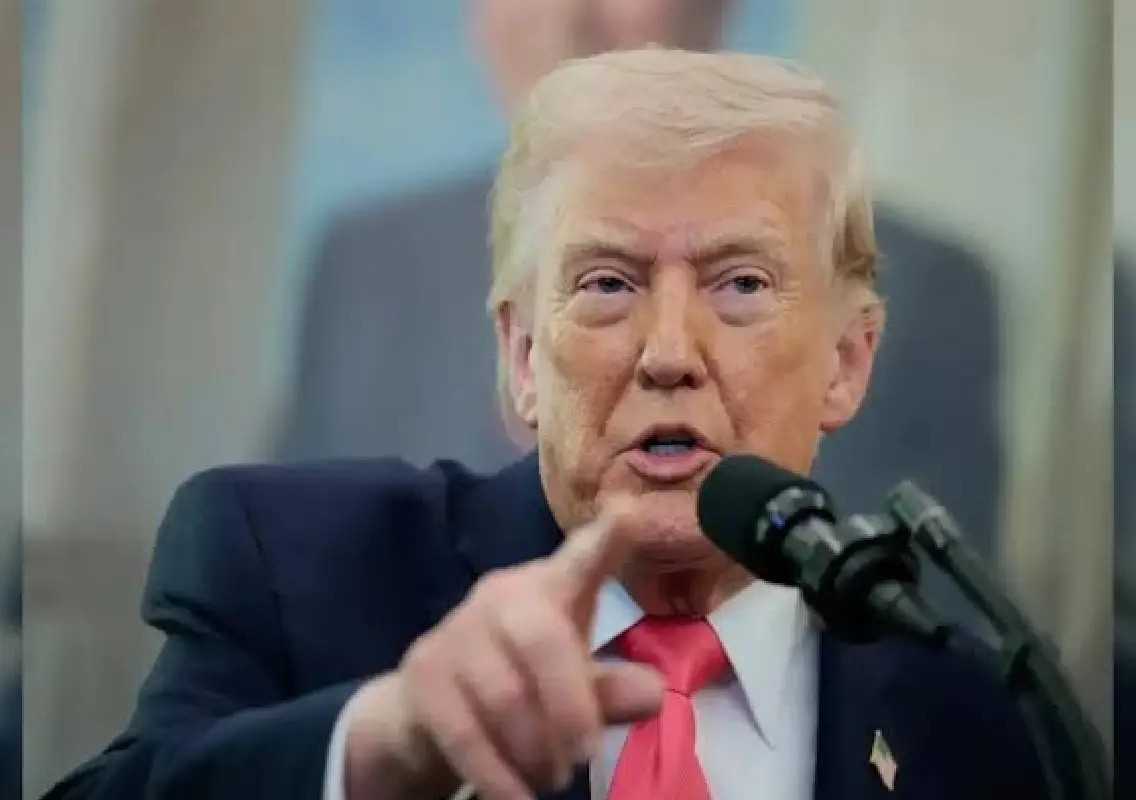


Washington: US President Donald Trump has said the United States is achieving a “very big victory” as the war with Iran approaches its six-month mark, even as the conflict remains unresolved and concerns continue over its economic and geopolitical consequences.
Trump’s comments come at a critical stage of the conflict, with Washington increasingly relying on economic pressure and sanctions after months of military operations failed to produce a clear end to the war.
Recent assessments indicate that the conflict has developed into a costly stalemate, with Iran sustaining significant military and economic damage while retaining capabilities that allow it to disrupt regional stability and shipping.
Trump maintains victory claim
Trump has repeatedly described the US military campaign as successful and has argued that Iran’s military capabilities have been severely weakened.
In his latest comments, he maintained that the United States was achieving a major victory as the conflict nears six months.
However, the prolonged duration of the war has complicated earlier expectations of a quick resolution. The US President had initially indicated that military operations could be completed within weeks, but the conflict has continued far beyond those projections.
The continuing hostilities have also raised questions about Washington’s ultimate objectives and whether military pressure alone can secure the concessions the Trump administration is seeking.
Strait of Hormuz becomes a major concern
One of the biggest consequences of the prolonged conflict has been the disruption surrounding the Strait of Hormuz, one of the world’s most important routes for energy shipments.
The waterway has remained heavily disrupted, putting pressure on oil supplies and contributing to higher fuel and fertiliser prices. Reopening the strait has consequently emerged as an increasingly important US objective.
Iran and Oman have also been discussing arrangements intended to manage commercial shipping through the waterway. Under a proposal being discussed, commercial vessels could continue using Iranian and Omani waters, while military vessels would be excluded.
The situation highlights the difficulty of restoring normal trade while the wider conflict remains unresolved.
US shifts towards economic pressure
After months of military confrontation, Washington has increasingly turned towards economic sanctions in an attempt to pressure Tehran.
The Trump administration has announced additional sanctions targeting Iranian economic and oil-related networks, describing the new strategy as an intensified campaign of economic pressure.
US officials argue that worsening economic conditions could force Iran to negotiate. Iranian officials, however, have rejected the pressure and said the country has been preparing for sanctions for years.
The effectiveness of the strategy remains uncertain. Analysts have warned that sanctions alone may not force Iran to capitulate and could instead increase tensions if Tehran responds with further military or economic measures.
War leaves wider economic consequences
The conflict has had consequences well beyond Iran and the United States.
Disruption around the Strait of Hormuz has affected global energy markets, while higher fuel and fertiliser prices have created additional economic pressure.
Although oil prices rose sharply following disruptions, global financial markets have shown greater resilience than during some previous energy crises. Nevertheless, the longer the conflict continues, the greater the risks to international trade and energy security.
For India and other major energy-importing economies, developments around the Persian Gulf remain particularly important because prolonged disruption can affect crude oil prices, shipping costs and inflation.
No clear end to the conflict
Six months into the war, the United States has inflicted major damage on Iranian military and economic infrastructure, according to US assessments, but the conflict has not produced a decisive political settlement.
Iran continues to retain military capabilities, while questions surrounding its nuclear programme and the future of the Strait of Hormuz remain unresolved. Diplomatic efforts have also struggled to produce a durable agreement.
The prolonged deployment has also placed pressure on US military resources, while domestic support for the war has reportedly weakened. Reuters reported that Trump’s approval rating had fallen amid growing dissatisfaction with the conflict and higher fuel prices.
A critical phase ahead
Trump’s assertion of a major US victory therefore comes at a moment when Washington faces the challenge of converting military gains into a sustainable political outcome.
The coming weeks could determine whether intensified economic sanctions and diplomatic efforts can produce negotiations or whether tensions around Iran and the Strait of Hormuz will continue.
For the region and the global economy, the priority remains preventing further escalation and restoring stability to one of the world’s most strategically important energy corridors.