







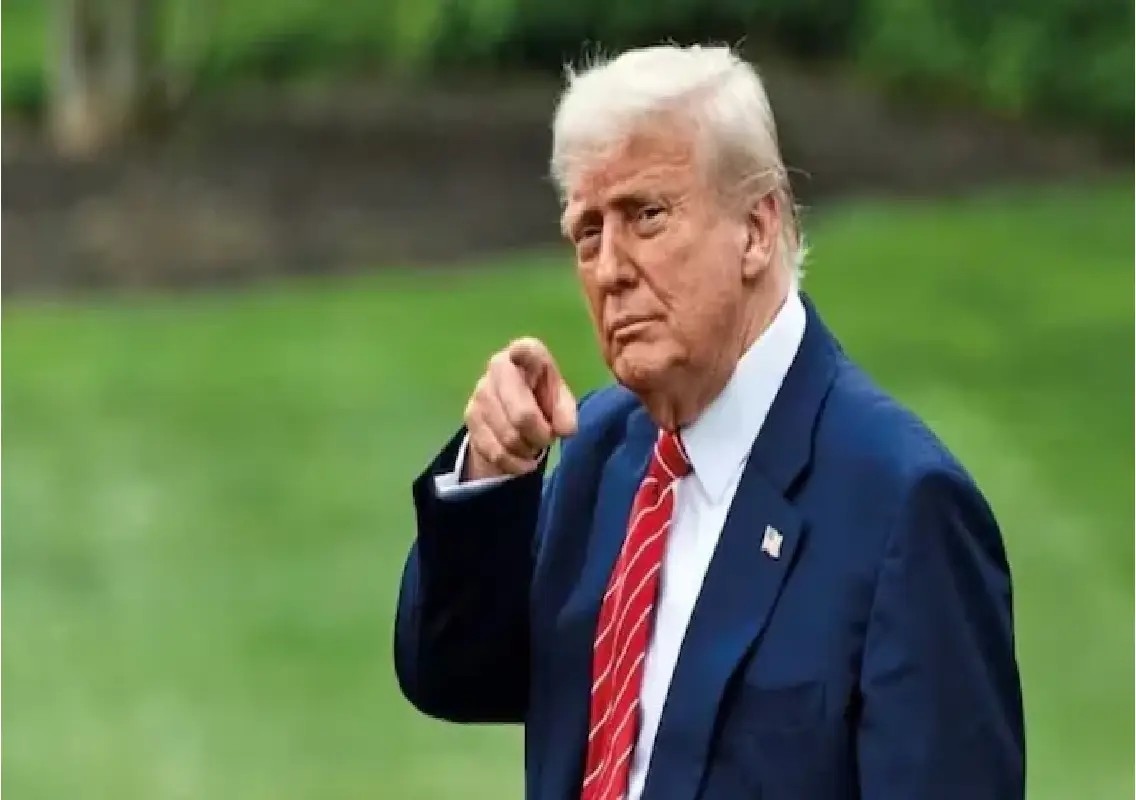


Washington: US President Donald Trump said he expects to receive a response from Iran regarding Washington’s latest proposal aimed at ending the ongoing conflict, even as Tehran indicated that it was still reviewing the offer.
Speaking to reporters outside the White House before departing for his golf course in Sterling, Virginia, Trump said he anticipated hearing from Iran by Friday night.
“I’m getting a letter supposedly tonight. So we’ll see how that goes,” Trump said when asked about the status of negotiations.
He also dismissed suggestions that Tehran may be deliberately delaying the process, stating, “We’ll find out soon enough.”
Iran reviewing US proposal
According to Iranian media reports cited by international outlets, Tehran is continuing to examine messages conveyed by the United States through Pakistani mediators and has not yet reached a final decision on the proposed agreement.
The reported proposal is described as a one-page, 14-point memorandum intended to halt hostilities and initiate formal negotiations between Washington and Tehran.
Under the proposed framework, Iran could temporarily suspend nuclear enrichment activities, while the United States may consider easing sanctions and releasing billions of dollars in frozen Iranian assets.
The proposal reportedly also includes confidence-building measures aimed at reducing tensions in the strategically important Strait of Hormuz, one of the world’s most critical oil shipping routes.
Officials indicated that the arrangement would begin with a 30-day negotiation period designed to pave the way for a broader and long-term diplomatic agreement.
Fresh tensions in Strait of Hormuz
The diplomatic efforts come amid continuing military tensions in and around the Strait of Hormuz.
Iranian military sources reportedly warned that clashes could resume if American forces interfere again with Iranian vessels operating in the region.
While describing the current situation as relatively calm, Iranian officials stated there remained a possibility of renewed confrontation if the United States attempted to disrupt Iranian maritime activity.
Iranian news agencies earlier reported sporadic clashes between Iranian forces and US naval vessels in the strategic waterway.
The escalation followed statements from United States Central Command, commonly known as CENTCOM, which claimed that American forces had targeted two empty Iranian-flagged oil tankers allegedly attempting to breach a US maritime blockade.
According to CENTCOM, US forces also conducted strikes on Iranian military targets after Iranian forces allegedly attacked three American destroyers transiting through the Strait of Hormuz towards the Gulf of Oman.
The US military stated that the strikes were carried out in self-defence following what it described as “unprovoked Iranian attacks”.
Iran accuses US of ceasefire violation
Iran’s central military command, however, accused Washington of violating the ceasefire arrangement and escalating tensions in the region.
The latest developments have heightened concerns over stability in the Gulf region, particularly because the Strait of Hormuz handles a significant portion of global crude oil shipments.
Analysts have warned that any prolonged disruption in the region could impact international energy markets and shipping operations.
Trump issues warning to Tehran
Following the recent military exchanges, Trump issued a strong warning to Tehran through a post on Truth Social.
The US President cautioned Iran against further escalation and urged Tehran to quickly finalise an agreement with Washington.
“We’ll knock them out a lot harder, and a lot more violently, in the future, if they don’t get their deal signed, FAST!” Trump wrote.
At the same time, Trump maintained during an interview with ABC News that the ceasefire with Iran remained intact.
He also described the latest US military strikes as merely a “love tap”, suggesting that Washington did not intend the actions to escalate into a wider conflict.
Diplomatic observers said the coming days could prove crucial in determining whether tensions between the two countries move towards negotiations or renewed confrontation.