







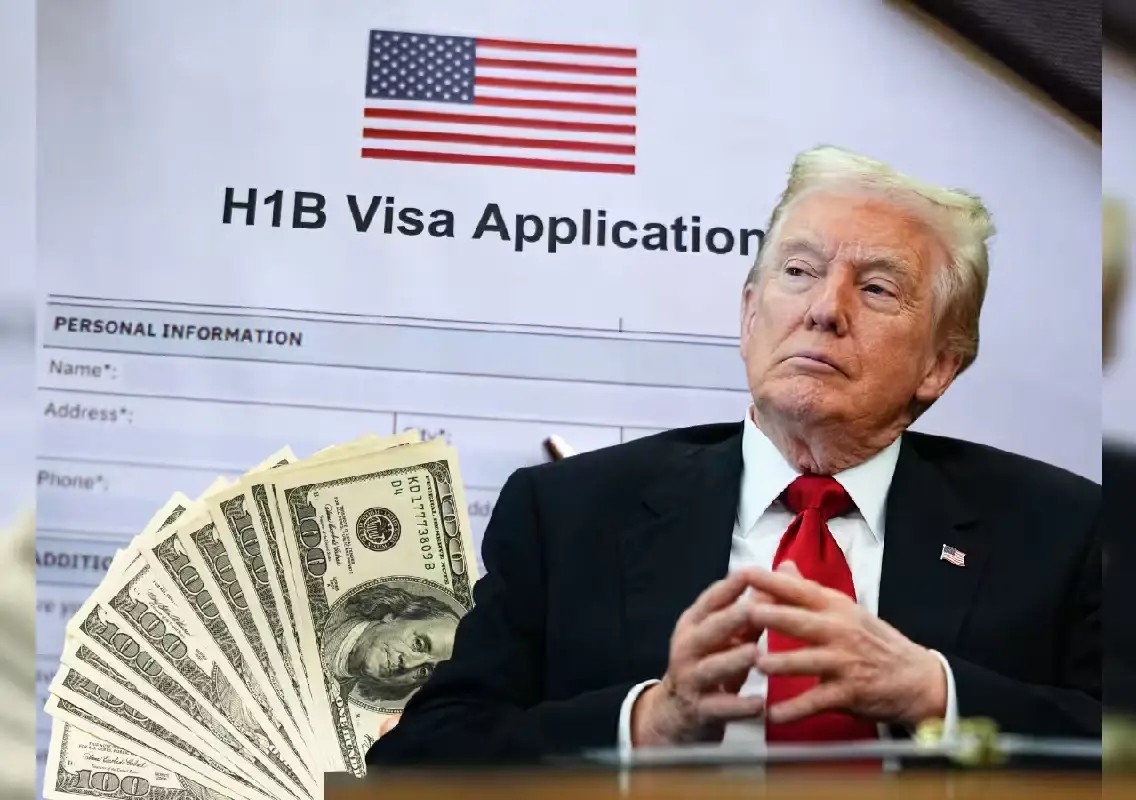


US President Donald Trump has extended restrictions on the entry of certain H-1B workers into the United States, continuing a $100,000 payment requirement for covered petitions involving workers outside the country.
The renewed proclamation, signed on September 18, will take effect at 12:01 am Eastern Daylight Time on September 21, 2026, and remain in place for 12 months unless extended or modified.
$100,000 payment required for covered H-1B workers
Under the proclamation, certain H-1B specialty-occupation workers seeking entry to the US must have their petitions accompanied or supplemented by a $100,000 payment from the petitioner.
The requirement primarily concerns beneficiaries who are outside the United States and need admission to the country based on covered H-1B petitions. Employers must obtain and retain proof that the payment has been made before filing an affected petition.
The State Department will verify payment during the visa process, while the Department of Homeland Security can restrict decisions on covered petitions where the requirement has not been met.
Exemptions possible in national interest cases
The proclamation allows the Secretary of Homeland Security to grant exemptions for individual workers, companies or industries when their employment is determined to be in the US national interest and does not pose a threat to national security or welfare.
The White House said more than 700 petitions had made the $100,000 payment under the previous proclamation. It also said the renewed restrictions are intended to address what the administration describes as abuse of the H-1B programme, including concerns over wages and outsourcing.
Review planned after next H-1B lottery
The Secretaries of State, Labor and Homeland Security, along with the Attorney General, are required to submit a recommendation within 30 days of the next H-1B lottery on whether the restriction should be extended or renewed further.
The White House has also issued a separate executive order directing greater interagency scrutiny of the H-1B programme, including consideration of employers’ recent or planned layoffs of similarly situated US workers.