







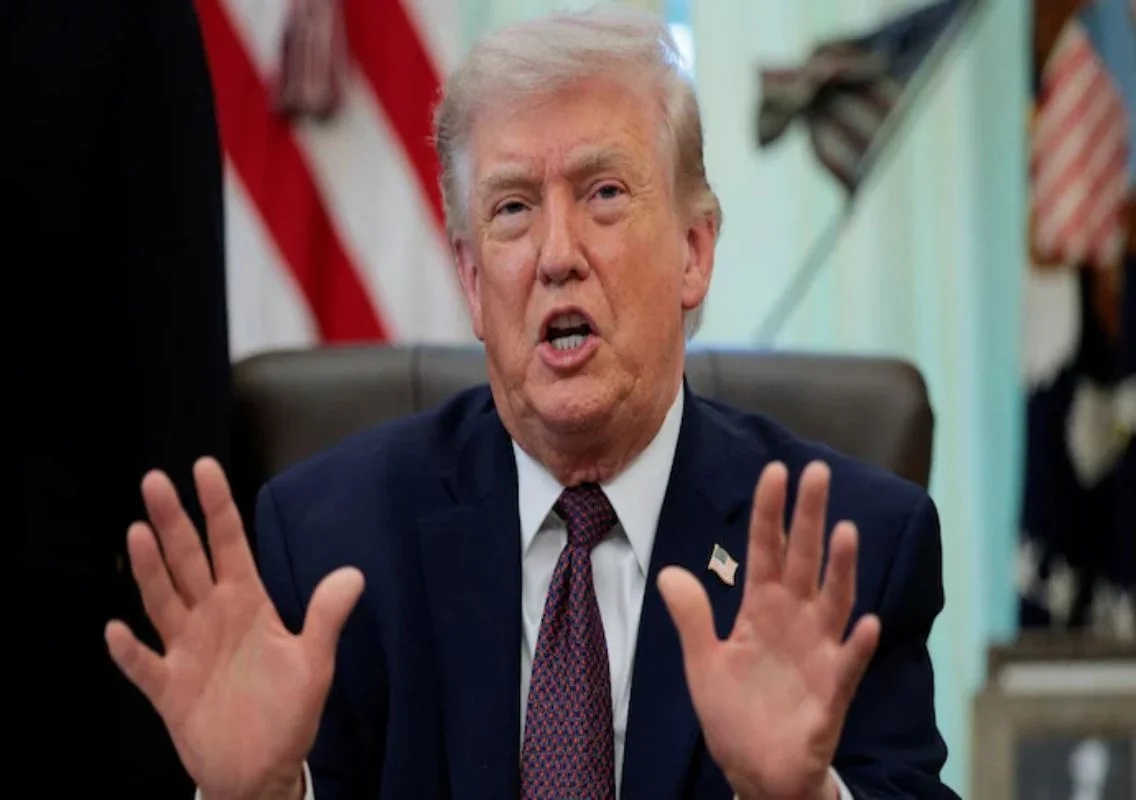


Washington: Donald Trump has said the United States will only consider a ceasefire with Iran if the strategic Strait of Hormuz is reopened to global shipping, linking any pause in hostilities to maritime security in the region.
In a statement, Trump indicated that Iran’s new leadership had reached out seeking a truce but made it clear that Washington’s position remains firm on ensuring free passage through one of the world’s most critical oil transit routes.
Ceasefire conditional on maritime access
Trump stated that the US would only consider halting military operations once the Strait of Hormuz is “open, free, and clear”, underlining the economic and strategic importance of the narrow waterway.
The Strait of Hormuz connects the Persian Gulf to global markets and handles a significant portion of the world’s oil shipments. Any disruption to this route has immediate implications for global energy prices and supply chains.
The US stance reflects growing concerns over maritime security after Iran reportedly moved to restrict traffic following recent military escalations.
Strong warning to Tehran
The US President delivered a stark warning, signalling that military action would continue until Washington’s conditions are met.
“Until then, we are blasting Iran into oblivion,” Trump said, using unusually strong language to emphasise the administration’s hardline approach.
He also described Iran’s new leadership as “less radicalised” and “more intelligent” than its predecessors, suggesting there may be room for negotiations if conditions are fulfilled.
Rising tensions in the Gulf
Tensions in the Gulf have escalated in recent days, with the Strait of Hormuz emerging as a central flashpoint. The waterway’s strategic value makes it a focal point in any confrontation involving Iran and global powers.
Reports suggest that Iranian actions to restrict or threaten shipping have heightened fears of a broader conflict, drawing attention from international stakeholders dependent on uninterrupted oil flows.
The United States, along with its allies, has increased its military presence in the region to safeguard commercial shipping and deter further disruptions.
Global implications of Hormuz blockade
Any prolonged closure or instability in the Strait of Hormuz could have far-reaching consequences for the global economy. A substantial share of crude oil exports from the Middle East passes through this narrow corridor.
Energy-importing nations, particularly in Asia and Europe, are closely monitoring developments, as even short-term disruptions can lead to price spikes and supply uncertainty.
The situation also raises concerns about maritime safety, insurance costs for shipping companies, and the potential for escalation into a wider regional conflict.
Conclusion
The United States has drawn a clear line by tying any ceasefire with Iran to the reopening of the Strait of Hormuz. As tensions continue to rise, the focus remains on whether diplomatic efforts can ease the crisis or if the standoff will intensify further.
For now, the Strait of Hormuz remains at the heart of a geopolitical confrontation with significant global stakes.