







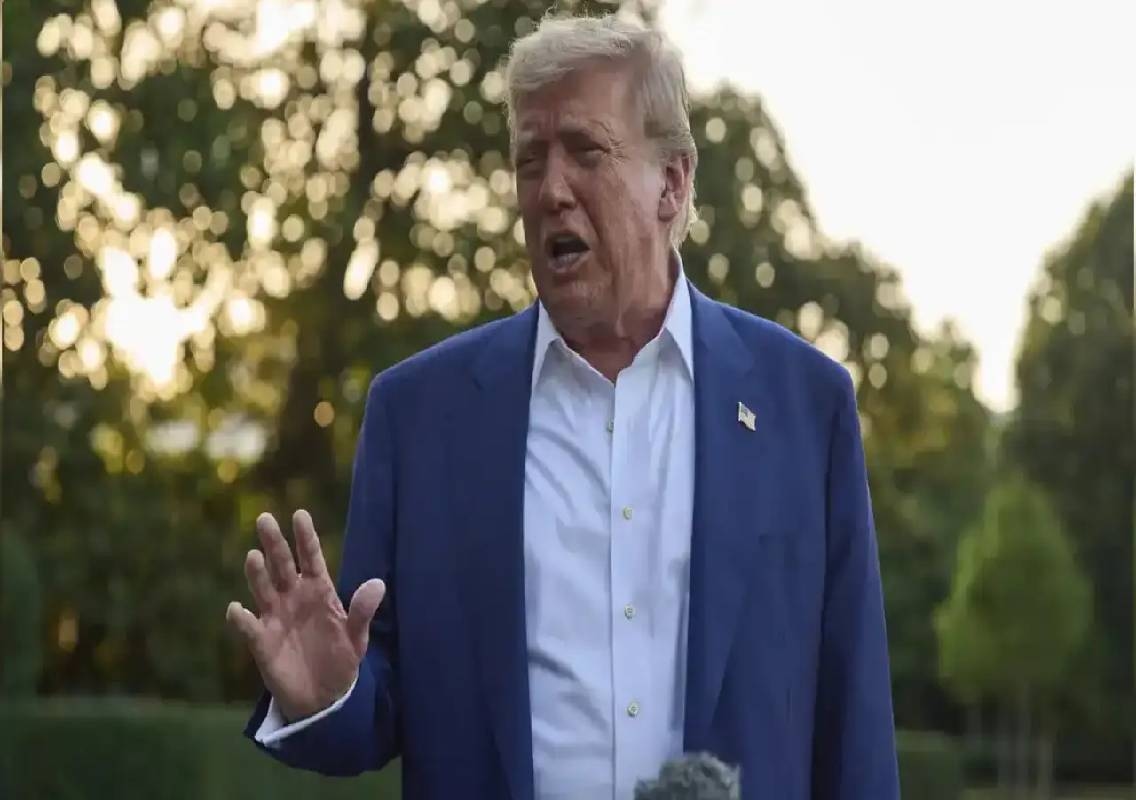


Washington, DC: Donald Trump has signalled a tougher approach towards Iran, stating that the United States will not unfreeze Iranian assets or lift sanctions as part of any initial agreement with Tehran. The remarks come amid ongoing uncertainty over the future of US-Iran negotiations and growing debate over how frozen Iranian funds should be handled.
Speaking in an interview with NBC News’ “Meet the Press”, Trump indicated that economic concessions would not be offered in advance of any deal, despite Iran’s long-standing demand for access to its frozen overseas assets.
The comments highlight the challenges facing diplomatic efforts between Washington and Tehran as both sides continue to negotiate issues related to sanctions, regional security and economic restrictions.
Trump rejects upfront economic concessions
During the interview, Trump was asked whether Lebanon would need to be included in any short-term arrangement involving Iran. He responded that Lebanon was not essential to such an agreement.
However, the US President made it clear that sanctions relief and the release of frozen assets would not be provided at the beginning of any deal.
According to Trump, discussions regarding the potential release of assets could take place later if Iran demonstrates what he considers constructive behaviour and compliance with agreed conditions.
The statement marks a departure from approaches that have previously considered phased sanctions relief as part of broader diplomatic negotiations.
Iran has consistently maintained that access to frozen funds remains one of its key demands in discussions with Western powers, making the issue a significant point of contention in any future agreement.
Frozen assets remain a major sticking point
The question of Iran’s frozen overseas assets has been central to diplomatic negotiations for years. Estimates suggest that Iranian funds held abroad could total as much as $100 billion.
These assets have been restricted under various sanctions regimes imposed by the United States and its allies in response to concerns over Iran’s nuclear programme, regional activities and other geopolitical disputes.
For Tehran, the release of at least part of these funds has often been viewed as a necessary confidence-building measure.
Washington, however, remains divided on how and when such assets should be made available, particularly given broader security concerns in the Middle East.
Trump’s latest remarks suggest that his administration is prioritising behavioural commitments from Iran before considering any economic incentives.
Treasury explores reconstruction support for Gulf allies
Meanwhile, Scott Bessent is reportedly examining options that could allow frozen Iranian assets to be used to support reconstruction efforts in Gulf nations affected by regional conflict.
According to reports, the Treasury Department is assessing whether funds linked to Iran could help finance repairs and rebuilding projects in countries that have experienced damage from retaliatory actions attributed to Tehran.
The proposal follows attacks affecting several of Washington’s regional partners, including Kuwait and Bahrain.
If pursued, the plan would represent a significant shift in policy by redirecting frozen Iranian resources towards supporting countries impacted by regional instability rather than returning the assets directly to Tehran.
Assessing costs of regional damage
Reports indicate that Treasury officials have been directed to gather comprehensive estimates of damage sustained by Gulf allies and evaluate the financial resources required for reconstruction and repairs.
The review is expected to consider both future and historical damage linked to regional hostilities involving Iran.
Officials are reportedly examining legal and financial mechanisms that could enable the use of frozen assets for such purposes while remaining consistent with US policy objectives and international regulations.
The proposal remains under consideration and has not yet been formally adopted.
However, its emergence highlights growing discussions within Washington regarding alternative uses for Iranian funds that remain inaccessible under existing sanctions frameworks.
Regional tensions continue to affect allies
The debate over frozen Iranian assets comes against the backdrop of continued tensions across the Gulf region.
Relations between the United States and several of its regional allies have faced strain due to the prolonged conflict and disruptions affecting regional trade and energy routes.
Particular concern has centred on the de facto closure of the Strait of Hormuz, one of the world’s most important waterways for oil and natural gas shipments.
Any prolonged disruption to maritime traffic through the Strait has significant implications for global energy markets and the economies of Gulf nations that depend heavily on exports.
The evolving security environment has increased pressure on Washington to reassure allies while maintaining its broader strategic objectives in the region.
Future of US-Iran negotiations remains uncertain
Despite ongoing diplomatic contacts, significant differences remain between the United States and Iran regarding sanctions, regional security and the future of frozen assets.
Trump’s comments suggest that negotiations are likely to remain difficult, particularly as Tehran continues to seek economic relief while Washington insists on further commitments before offering concessions.
At the same time, discussions surrounding the potential use of Iranian funds for Gulf reconstruction introduce a new dimension to an already complex diplomatic landscape.
Conclusion
President Donald Trump’s decision to rule out early sanctions relief and asset releases underscores the challenges facing US-Iran negotiations. With the administration also exploring whether frozen Iranian funds could support reconstruction efforts in Gulf nations affected by regional conflict, the future of Tehran’s overseas assets remains highly uncertain. As diplomatic discussions continue, the issue is likely to remain a central point of contention between both sides.