







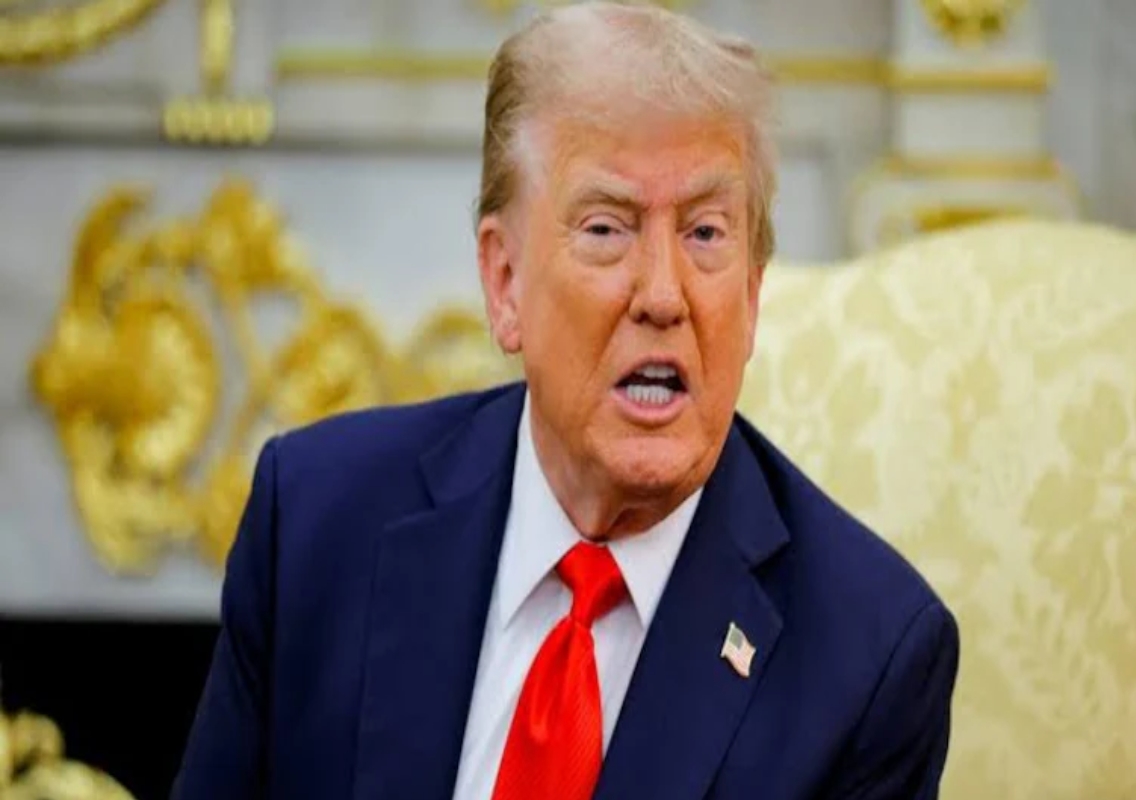


Washington: US President Donald Trump has rejected Iran’s proposal for a seven-day plan to halt hostilities and reopen the Strait of Hormuz, according to a report cited by NDTV. The proposal was aimed at stopping the fighting and restarting negotiations between Washington and Tehran, but the latest development has raised fresh questions over the prospects for a diplomatic settlement.
According to the report, Trump has told aides that he expects US bombing of Iran to resume after the November midterm elections. The claim, attributed to US officials by The Wall Street Journal, represents a reported expectation rather than an announced military schedule.
The development comes as diplomatic efforts over the seven-month-old US-Iran conflict remain uncertain and the Strait of Hormuz continues to be a major focus of negotiations.
Iran proposes seven-day plan
Iranian Foreign Minister Abbas Araghchi said on September 24 that Tehran had presented Washington with a seven-day proposal through intermediaries. Under the proposal, Iran would reopen the Strait of Hormuz within seven days if certain conditions were met, while negotiations on the broader conflict and Iran’s nuclear programme would resume.
The proposal was based in large part on a memorandum of understanding that Washington and Tehran had reached in June. However, the latest plan compressed the timeline considerably, seeking to achieve a ceasefire and reopening of the strategically important waterway within a week.
The Strait of Hormuz is a critical international shipping route and an important passage for global energy supplies. Any prolonged disruption has implications for oil markets, shipping and economies that depend on energy imports.
Iran has previously linked the reopening of the waterway to broader conditions concerning the conflict, sanctions and US military pressure.
Trump reportedly expects strikes to resume
The latest report says Trump rejected the seven-day proposal and told aides that he expected bombing operations against Iran to resume after the US midterm elections in November.
The report is based on unnamed US officials, and there has been no publicly announced timetable confirming that military operations will resume after the elections. Therefore, the reported expectation should be distinguished from a formal US decision or military announcement.
The development follows Trump’s recent comments at the United Nations General Assembly, where he maintained pressure on Tehran and said a diplomatic agreement could eventually be reached. Reuters reported earlier that Trump had indicated a possible deal after the November midterm elections, while Iran continued to signal that it was willing to discuss a settlement under its conditions.
Strait of Hormuz remains central to negotiations
The Strait of Hormuz has emerged as one of the most important issues in the negotiations between Iran and the United States.
Iran’s latest seven-day proposal specifically offered a route towards reopening the waterway while restarting discussions over the conflict and Tehran’s nuclear programme. Iranian officials have previously argued that US military and economic measures must be addressed before a broader agreement can be implemented.
Washington, meanwhile, has accused Tehran of failing to fulfil earlier commitments connected to the reopening of the strait. Tehran has made its own accusations, saying the United States failed to honour commitments involving the lifting of restrictions and the release of Iranian assets.
These competing positions have complicated efforts to revive the June memorandum.
Earlier agreement collapsed
The current diplomatic efforts follow an earlier agreement between Trump and Iranian President Masoud Pezeshkian.
The two sides had signed a 14-point memorandum on June 17 that provided for an immediate cessation of military operations and called for negotiations towards a final agreement within 60 days. However, Trump later declared the agreement over on July 8, while Tehran subsequently suspended its implementation and accused Washington of failing to honour its commitments.
Since then, both sides have continued to exchange demands while military tensions have remained high.
Iran had also presented Washington with seven conditions for restarting negotiations earlier in September. Those conditions included ending the conflict on all fronts, releasing Iranian assets and lifting the US naval blockade of Iranian ports, according to NDTV’s earlier report.
Regional tensions add to uncertainty
The diplomatic uncertainty comes against a wider backdrop of conflict across West Asia.
The US-Iran conflict has been accompanied by fighting involving other regional actors, including Houthi forces in Yemen and Saudi Arabia. Reuters reported that the regional conflict has affected important shipping routes and increased pressure on Gulf countries.
The possibility of renewed US strikes would therefore have consequences beyond Washington and Tehran. Any escalation could affect regional security, shipping routes and energy markets, particularly because of the importance of the Strait of Hormuz.
At the same time, Iran has continued to indicate that diplomacy remains possible. The seven-day proposal is the latest attempt by Tehran to link a reduction in hostilities with the reopening of the waterway and the resumption of negotiations on the nuclear issue.
What happens next
For now, the reported rejection of Iran’s proposal leaves the diplomatic process uncertain. The immediate question is whether Washington and Tehran can find common ground on the conditions for reopening the Strait of Hormuz and restarting formal negotiations.
The reported expectation of renewed US bombing after the November elections does not itself establish that military action will occur. Any such decision would depend on subsequent political, diplomatic and military developments.
Iran’s seven-day proposal, meanwhile, shows that Tehran has put forward a specific framework for halting hostilities and reopening the waterway. Whether that framework can lead to renewed negotiations remains unclear.
Conclusion
The reported rejection of Iran’s seven-day proposal has added another complication to efforts to end the US-Iran conflict. Tehran’s plan sought to reopen the Strait of Hormuz and restart nuclear negotiations within a short timeframe, while a Wall Street Journal report cited by NDTV says Trump expects US bombing to resume after the November midterm elections. The reported timeline is based on unnamed officials and is not a publicly announced military schedule.