







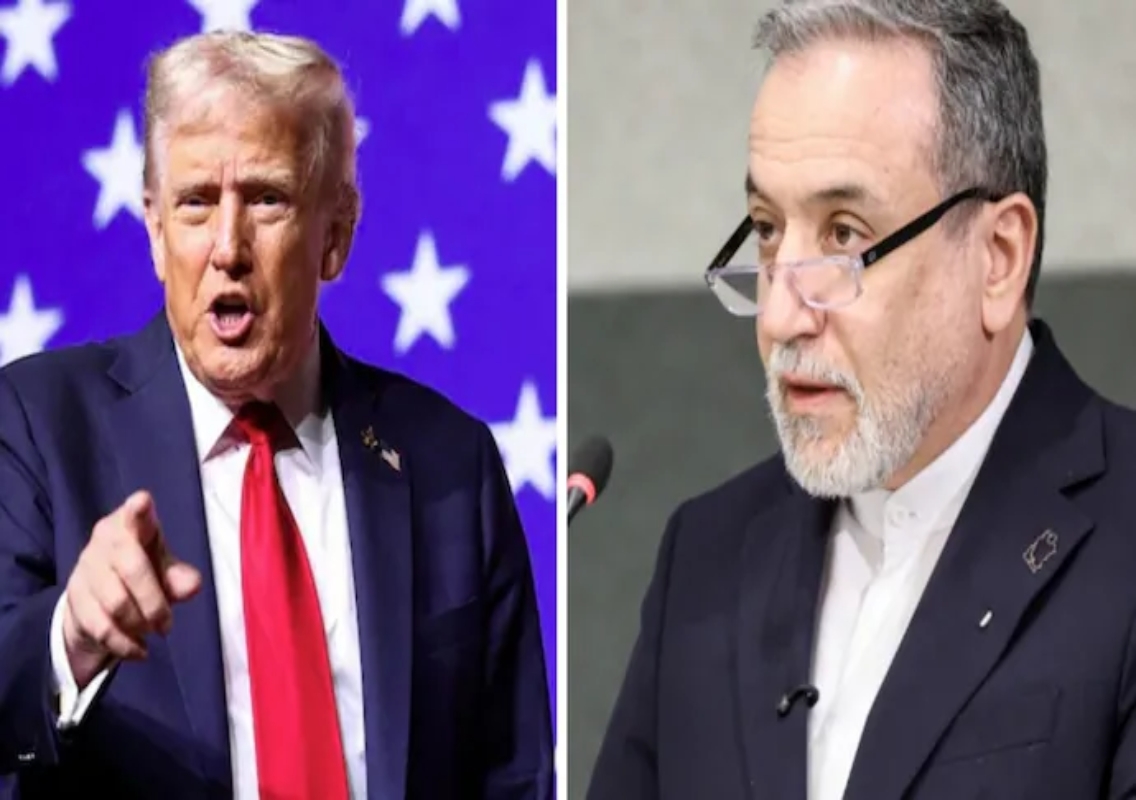


New Delhi: US President Donald Trump has rejected an Iranian proposal aimed at reopening the Strait of Hormuz and ending fighting in the Middle East, even as Tehran continues to push for a diplomatic route to de-escalate the conflict.
Iran had proposed reopening the strategically important waterway within seven days if Washington met several conditions, including lifting its blockade on Iranian ports, releasing frozen Iranian funds and waiving sanctions on Iranian oil sales.
The proposal was conveyed to the United States through Qatari mediators during the United Nations General Assembly in New York. However, Trump has reportedly expressed scepticism about the proposal and told aides that renewed US military action could follow the November midterm elections, according to a Wall Street Journal report cited by India Today.
Iran proposes seven-day Hormuz reopening
Iranian Foreign Minister Abbas Araghchi said Tehran had sent Washington what he described as a concrete seven-day plan through Qatar.
Under the proposal, the seven-day period would begin once the United States accepted the terms. Iran would then reopen the Strait of Hormuz and halt hostilities across the region, including in Lebanon.
In return, Tehran is seeking an end to the US blockade of Iranian ports, the release of frozen Iranian assets and a waiver of sanctions affecting Iranian oil exports. Iran has also linked the diplomatic process to discussions on its nuclear programme.
An Iranian official had earlier told Reuters that Tehran was prepared to reopen the waterway within a week if Washington reduced military pressure and lifted the blockade. Iran’s delegation at the UN was described as having authority to pursue diplomatic engagement with the United States.
Trump rejects the proposal
Trump’s reported response has put the latest diplomatic initiative under further pressure.
According to the Wall Street Journal report cited by India Today, Trump told his staff that he was doubtful Iran would meet his demands and expected the US bombing campaign to resume after the November midterm elections.
The report said the President had rejected Iran’s proposal to reopen the Strait of Hormuz and halt the conflict within seven days. As of September 26, Iran was still awaiting an official US response to its proposal.
Trump’s public position has also remained focused on Iran reopening the strategic waterway. The US President posted an image referring to the waterway as the “Trump Strait” after Tehran announced its proposal, adding another public dimension to the dispute.
Why the Strait of Hormuz matters
The Strait of Hormuz is one of the world’s most important energy shipping routes, connecting the Persian Gulf with the Gulf of Oman and the Arabian Sea.
Disruption to shipping through the narrow waterway has affected oil flows and raised concerns over energy prices and supplies. The ongoing conflict has therefore had consequences beyond the immediate US-Iran confrontation.
The latest diplomatic efforts have taken place against the backdrop of restrictions on shipping through the strait. Iran’s proposal to reopen the waterway within seven days is consequently tied not only to the military conflict but also to international energy markets.
China has also been closely watching developments because of its dependence on energy supplies from the Middle East. Chinese President Xi Jinping has urged Washington and Tehran to return to negotiations and revive an earlier framework aimed at reducing tensions.
US and Iran remain divided over nuclear issue
The Strait of Hormuz is only one of the major disagreements between Washington and Tehran.
Iran has maintained that it will not accept restrictions on its nuclear programme as part of the latest diplomatic discussions. A senior Iranian official separately told Reuters that Tehran would not compromise on its nuclear programme even if Washington accepted the proposal concerning the waterway.
The United States, meanwhile, has continued to demand conditions that Tehran has resisted.
The disagreement over Iran’s nuclear activities, US sanctions, military pressure and control of the Strait of Hormuz has complicated attempts to establish a lasting settlement.
An earlier interim agreement had been intended to provide a framework for ending the conflict and restarting negotiations. However, by August, the 60-day window associated with that arrangement had ended without a final agreement on the key issues.
Qatar plays role in indirect diplomacy
Qatar has emerged as an intermediary between Washington and Tehran during the latest diplomatic efforts.
Iran used Qatari channels to transmit its seven-day proposal to the United States, while US officials have acknowledged discussions through mediators.
A US official previously described the conversations as “positive and constructive”, although the two sides continued to differ publicly over the terms of any possible agreement.
The diplomatic activity around the UN General Assembly has therefore created a channel for communication despite continued military tensions.
What happens next
For now, the status of Iran’s proposal remains uncertain. Tehran has presented the reopening of the Strait of Hormuz and a halt to regional hostilities as part of a broader diplomatic package, while Washington has not accepted the conditions publicly.
Trump’s reported rejection adds to the uncertainty over whether indirect negotiations can produce another ceasefire framework.
The Strait of Hormuz remains at the centre of the dispute because its reopening would have implications for regional security as well as global energy supplies. Any agreement would also have to address the separate disputes over sanctions, Iran’s nuclear programme and military activity across the region.