









Washington: US President Donald Trump has asserted that the India–US trade “deal is on”, even after the Supreme Court of the United States struck down his sweeping emergency tariff policy as illegal.
Speaking to reporters at the White House, Trump said his relationship with India remains “fantastic” and insisted that the top court’s verdict would not impact the trade framework between Washington and New Delhi.
“I think my relationship with India is fantastic, and we’re doing trade with India,” Trump said, adding that “nothing changes” following the Supreme Court’s ruling.
Supreme Court strikes down tariff policy
Washington witnessed a major legal development after the Supreme Court ruled that Trump had violated federal law by unilaterally imposing wide-ranging emergency tariffs on multiple countries.
The judgment marked a significant setback for the administration, as tariffs have been central to Trump’s foreign policy and economic strategy. The court held that the president overstepped his statutory authority in introducing the measures without congressional approval.
According to official figures cited in the ruling, the tariffs had generated approximately $133.5 billion between January 2025 and mid-December. However, the Supreme Court did not directly address whether refunds would be issued. Legal experts indicate that the question of repayments will now be taken up by lower courts, potentially setting the stage for prolonged litigation.
Despite the verdict, Trump vowed to continue pursuing his trade agenda, describing the decision as a temporary obstacle rather than a reversal of policy direction.
‘We did a little flip’ on tariffs: Trump
Addressing questions about the India–US trade framework, Trump said the arrangement involves India paying tariffs while the United States does not.
“They’ll be paying tariffs, and we will not be paying tariffs. So the deal with India is they pay tariffs. This is a reversal of what it used to be,” he said.
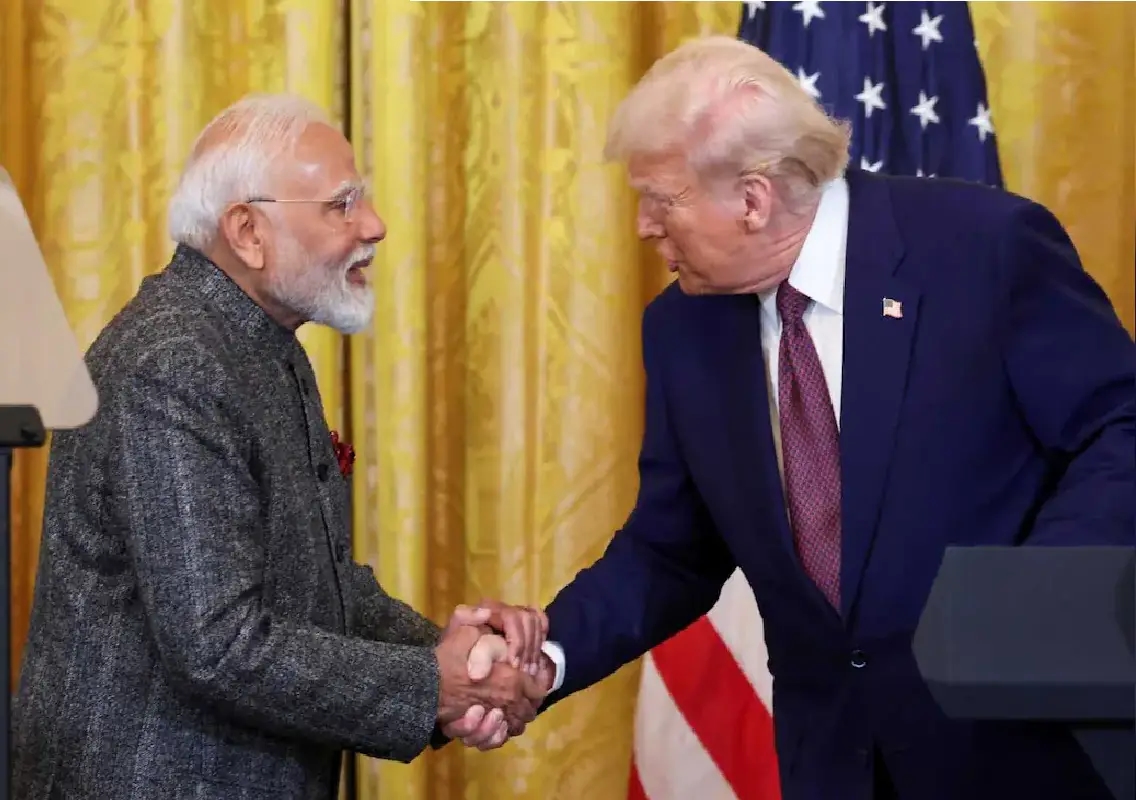
Trump praised Prime Minister Narendra Modi, calling him a “great gentleman” and reiterating that bilateral ties remain strong. He claimed that previous arrangements had disadvantaged the United States but that the new deal was “fair”.
“We made a deal with India. It’s a fair deal now, and we are not paying tariffs to them, and they are paying tariffs. We did a little flip,” he remarked.
Interim framework announced earlier
Earlier this month, India and the United States announced that they had reached a framework for an interim trade agreement. The development followed an executive order from Trump removing a 25 per cent punitive tariff imposed on India over its purchases of Russian oil.
Under the revised structure, reciprocal duties on India were reportedly reduced from 25 per cent to 18 per cent. The US President also claimed that New Delhi had committed to reducing direct or indirect imports of Russian energy and increasing purchases of American energy products.
However, neither government has publicly released the full details of the agreement, and negotiations on a comprehensive trade pact are understood to be ongoing.
Claims on India-Pakistan tensions
During the same interaction with reporters, Trump repeated his claim that he had helped de-escalate tensions between India and Pakistan by threatening steep tariffs.
He said he warned both countries that if hostilities continued, they would face 200 per cent tariffs and lose access to US markets. According to Trump, the threat prompted both sides to call for peace.
Indian officials have previously maintained that bilateral issues with Pakistan are addressed through direct channels and have not publicly confirmed the US President’s account.
Long legal battle ahead
The Supreme Court’s decision is seen as one of the most significant judicial setbacks for Trump’s second administration. Although the conservative-leaning court has often sided with the White House on immigration and executive authority issues, the tariff ruling underscores limits on presidential trade powers.
The legal and economic fallout is expected to unfold over the coming months, particularly concerning the recovery of the $133.5 billion collected under the now-invalidated duties.
For now, Trump has signalled that trade negotiations, including those with India, will proceed under revised mechanisms. Whether the legal constraints reshape the broader US trade strategy remains to be seen.