


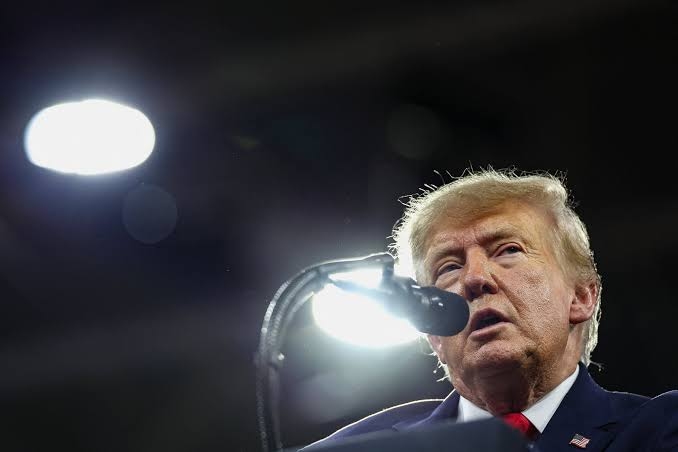


Florida: US President Donald Trump has said the United States could launch fresh military strikes against Iran as early as Sunday, October 25, while leaving open the possibility of reaching what he called a “nice, big, beautiful agreement” with Tehran.
Speaking to reporters in Florida on Saturday after casting his ballot in the US midterm elections, Trump declined to confirm whether he had made a final decision on further military action. His remarks came a day after he warned that Washington could launch another operation against Iran, raising the prospect of renewed hostilities alongside ongoing diplomatic efforts.
“Do you really think I’d tell you that? Maybe tomorrow… There’s a possibility I will. There’s also a possibility we’ll have a nice, big, beautiful agreement,” Trump said, according to news agency ANI.
The comments underline the uncertainty surrounding Washington’s next move as the conflict continues and disagreements persist over the conditions for a possible settlement.
Trump keeps military action and diplomacy as options
When asked whether the US would attack Iran again, Trump did not rule out an operation on Sunday. However, he also indicated that an agreement remained possible, suggesting that his administration was keeping both military and diplomatic options open.
Trump questioned whether Tehran could be trusted to honour an agreement if one were reached.
“They want to make a deal, but the problem is, will they hold the deal?” he said.
The US President has repeatedly said that preventing Iran from developing a nuclear weapon is a central objective of his administration. He has also maintained that military pressure could remain necessary if negotiations fail to achieve Washington’s aims.
However, Trump did not announce a confirmed strike, specify potential targets or provide details about the timing of any military operation. His reference to “tomorrow” indicated a possibility rather than a formal announcement that an attack would take place.
The comments came as tensions between Washington and Tehran continued over the conflict, maritime security and the future of the Strait of Hormuz.
Trump warns of another ‘Epic Fury’ operation
On Friday, Trump warned that the US could undertake another military operation against Iran while speaking at a rally in Florida.
“We may do another little Epic Fury,” he said, referring to the name used for the US military campaign against Iran.
The remark did not include details about the scope or objectives of a potential new operation. It nevertheless added to concerns about a further escalation after months of fighting.
The conflict began on February 28, when the United States and Israel launched strikes against Iran, targeting military infrastructure and sites associated with the country’s leadership. The strikes killed Iran’s then Supreme Leader, Ayatollah Ali Khamenei, according to reports at the time.
The war has since affected regional security and raised concerns about shipping and energy supplies, particularly around the Strait of Hormuz, a strategic passage for global oil and gas shipments.
Trump’s latest comments came amid reports that Iran could consider targeting undersea communications cables in the Gulf if the US and Israel resumed their military campaign. Such infrastructure is important for international communications, adding another dimension to the security concerns surrounding the conflict.
Trump claims heavy losses for Iranian forces
During his interaction with reporters, Trump praised the performance of the US military and claimed that American operations had severely weakened Iran’s military capabilities.
“We have done an amazing job. Our Navy and military have done an amazing job. They have knocked out every jet fighter of Iran. 259 ships are at the bottom of the sea. They are only left with record inflation,” he said.
The figures and battlefield assessments were claims made by Trump and were not independently established in his remarks.
He also pointed to Iran’s economic difficulties, including high inflation, while arguing that US military action had achieved significant results.
His comments suggest that the administration continues to present military pressure as a way to weaken Tehran’s ability to resist US demands. At the same time, Trump’s willingness to discuss a possible agreement indicates that Washington has not publicly closed the door to negotiations.
Iran denies fresh proposal on Strait of Hormuz
Meanwhile, Iran has denied reports that it submitted a new proposal to Pakistani mediators offering to reopen the Strait of Hormuz in exchange for the United States lifting its naval blockade.
The denial was reported by ANI, citing the Iranian news agency Tasnim, which is affiliated with the Islamic Revolutionary Guard Corps.
The reports followed claims by Saudi-owned broadcaster Al Arabiya that Tehran had conveyed a new offer to Washington through Pakistan. Under the reported proposal, Iran would reopen the strategic waterway if the US lifted its blockade.
An informed source cited by Tasnim rejected the account, describing the claims as “a lie and fabrication”, according to Iranian broadcaster Press TV.
The denial concerns the reported new proposal. It does not, by itself, establish that all earlier diplomatic initiatives have been withdrawn.
Iranian Foreign Minister Abbas Araghchi said on October 18 that an earlier seven-day proposal concerning the reopening of the Strait of Hormuz remained on the table. That earlier initiative was separate from the latest report that Tehran has now denied.
The competing accounts underline the uncertainty surrounding the negotiations, including what terms have been communicated through intermediaries and whether Washington and Tehran can agree on the conditions needed to restore normal shipping.
Strait of Hormuz remains central to the standoff
The Strait of Hormuz has become a major point of contention in the conflict because of its importance to global energy markets and maritime trade.
Any prolonged disruption to shipping through the passage could affect oil and gas supplies, increase transportation costs and add pressure to energy prices. The dispute over the waterway is therefore not limited to the immediate military confrontation between Iran and the United States.
The reported proposal involving the strait and the US naval blockade also highlights the difficulty of separating maritime security from the broader political and military dispute.
Iran’s denial of a new offer, alongside its earlier position on the seven-day initiative, leaves questions about the current state of negotiations. Neither Trump’s latest remarks nor the Iranian denial provides confirmation that a settlement is imminent.
What happens next?
Trump’s comments have placed renewed attention on the possibility of US military action against Iran on Sunday, October 25. But the President has not confirmed that an attack will take place, and his remarks also leave room for a negotiated agreement.
For now, Washington’s next steps remain uncertain. A fresh military operation could intensify the conflict, while a diplomatic breakthrough would require agreement on security concerns, the nuclear issue and the terms surrounding the Strait of Hormuz.
Iran’s denial of the reported new proposal adds to the uncertainty over the negotiations. The situation will depend on whether the two sides can clarify their positions and find terms they are prepared to accept.