







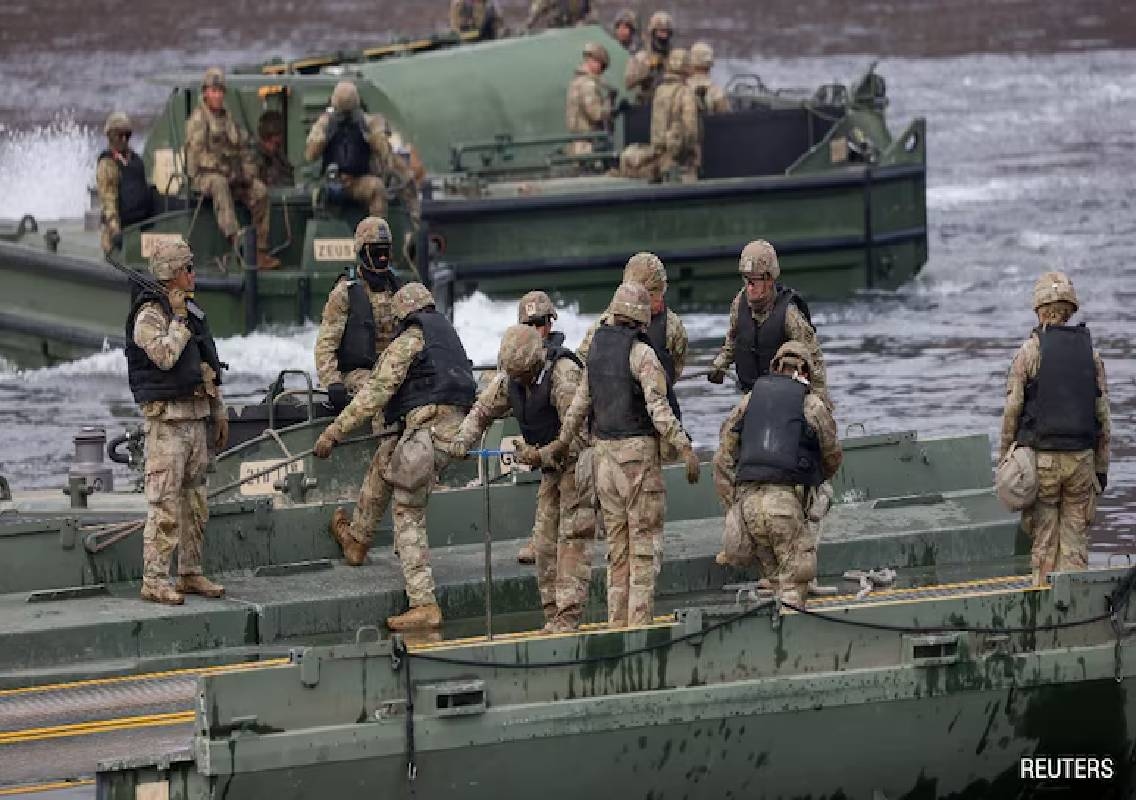


Seoul: US President Donald Trump has directed the Pentagon to substantially reduce joint military exercises with South Korea, citing his “very good relationship” with North Korean leader Kim Jong Un and arguing that the drills send an inappropriate signal to Pyongyang.
The announcement came as the annual Ulchi Freedom Shield exercise was scheduled to begin on August 17. South Korea, however, said the joint drills would proceed as previously planned, creating uncertainty over how much the US participation will ultimately be reduced.
Trump cites relationship with Kim Jong Un
Trump said his decision was influenced by his relationship with Kim, describing the ties between the two leaders as very good.
The US president has previously argued that large-scale military exercises with South Korea are expensive and can be viewed by North Korea as provocative. His latest directive reflects a similar approach, with Trump again questioning the need for extensive joint drills while diplomatic possibilities with Pyongyang remain open.
The decision could also indicate Trump’s interest in reviving direct engagement with Kim after years of stalled negotiations over North Korea’s nuclear and missile programmes.
Ulchi Freedom Shield drills to continue
Despite Trump’s announcement, South Korea’s defence ministry said the Ulchi Freedom Shield exercises would proceed as previously notified and scheduled.
The annual exercise is designed to improve the ability of South Korean and US forces to respond to potential threats from North Korea. This year’s training was expected to involve around 18,000 South Korean troops, with the exercise incorporating computer simulations, field training and other forms of military preparedness.
The US reduction therefore does not mean the entire exercise has been cancelled.
Instead, the main uncertainty concerns the scale and nature of US participation following Trump’s order.
Why the military drills matter
Ulchi Freedom Shield is an important part of the military alliance between Washington and Seoul.
The exercises allow the two militaries to practise coordinated responses to potential North Korean attacks and prepare for a range of scenarios involving missiles, cyberattacks, drones and other emerging threats.
Military officials have argued that regular exercises are necessary because North Korea’s capabilities have continued to evolve.
The latest drills were also designed to incorporate lessons from modern conflicts, including the use of drones, electronic warfare and cyber operations.
North Korea views the drills as provocative
Pyongyang has historically condemned US-South Korean military exercises, describing them as rehearsals for an invasion.
North Korea has repeatedly demanded that such drills be stopped, arguing that they threaten its security.
Trump’s decision to reduce the exercises could therefore be viewed in Pyongyang as a conciliatory gesture.
However, North Korea’s response to the latest development remains important, particularly because the country has continued developing its nuclear and missile capabilities.
North Korea recently resumed missile testing
The announcement comes against a backdrop of renewed military tensions.
North Korea recently conducted a short-range ballistic missile launch, drawing criticism from South Korea, the United States and Japan.
The timing has raised questions about whether reducing the exercises could affect deterrence at a moment when North Korea continues to strengthen its military capabilities.
US and South Korean officials have also expressed concern about North Korea’s growing experience from its military cooperation with Russia.
North Korea’s Russia ties raise concerns
North Korea’s involvement in the Russia-Ukraine war has become another factor in assessments of its military capabilities.
US and South Korean officials have said North Korean troops deployed in support of Russia have gained battlefield experience that could potentially improve Pyongyang’s military effectiveness.
North Korea’s cooperation with Russia has also raised concerns about possible exchanges of military technology and expertise.
Against this backdrop, some officials and analysts have questioned whether reducing joint exercises could weaken the readiness of US and South Korean forces.
Trump has criticised the cost of drills
Cost has also been an important factor in Trump’s position.
The president has previously criticised major US military exercises overseas as expensive and unnecessary. His latest comments again questioned the value of conducting exercises that North Korea considers hostile.
Trump has also linked his decision to broader disagreements with South Korea, including Seoul’s reluctance to support US efforts related to Iran.
The decision therefore appears to involve both diplomatic considerations concerning North Korea and wider questions about the US-South Korea alliance.
Seoul faces a delicate situation
For South Korea, maintaining military readiness against North Korea remains a major security priority.
The country relies heavily on its alliance with Washington, including the presence of US forces and regular joint exercises.
At the same time, South Korean President Lee Jae Myung’s government has shown interest in reducing tensions with Pyongyang.
Seoul must therefore balance its desire for better inter-Korean relations with the need to ensure that its armed forces remain prepared for a potential military crisis.
Could this reopen US-North Korea diplomacy?
Trump’s reference to his relationship with Kim has fuelled speculation about renewed diplomatic engagement.
Trump and Kim held three meetings during Trump’s first presidency, including a historic encounter at the Korean Demilitarised Zone in 2019. However, negotiations over North Korea’s nuclear programme ultimately stalled.
Trump’s latest move could be intended to create a more favourable environment for renewed talks.
For Pyongyang, however, the key question will be whether Washington is prepared to make further concessions on military exercises, sanctions or other issues.
Deterrence versus diplomacy
The decision highlights the longstanding tension between military deterrence and diplomatic engagement on the Korean Peninsula.
Joint exercises are intended to demonstrate military readiness and reassure South Korea that the US remains committed to its defence.
At the same time, reducing exercises could lower tensions and potentially make it easier for Washington and Pyongyang to resume dialogue.
The challenge for the US will be ensuring that any reduction in exercises does not create doubts about its security commitment to Seoul.
What happens next?
For now, the Ulchi Freedom Shield exercise is expected to proceed, with South Korea maintaining that the drills will take place according to the previously announced schedule.
The Pentagon will have to determine how Trump’s order to substantially reduce US participation will be implemented.
The bigger question is whether the move will lead to renewed communication between Washington and Pyongyang.
North Korea’s response, as well as any future statements from Trump or Kim, will provide clues about whether the decision is part of a broader diplomatic strategy.
Conclusion
Donald Trump has ordered the Pentagon to substantially reduce US participation in joint military exercises with South Korea, citing his good relationship with North Korean leader Kim Jong Un and concerns about the cost and provocative nature of the drills.
The decision comes as the Ulchi Freedom Shield exercise begins, although South Korea has said the drills will proceed as scheduled.
The move could potentially create space for renewed US-North Korea diplomacy, but it also raises questions about military readiness and deterrence as Pyongyang continues to expand its missile and nuclear capabilities. How North Korea responds could determine whether Trump’s latest decision becomes the beginning of a new diplomatic opening or simply another shift in US military policy on the Korean Peninsula.