







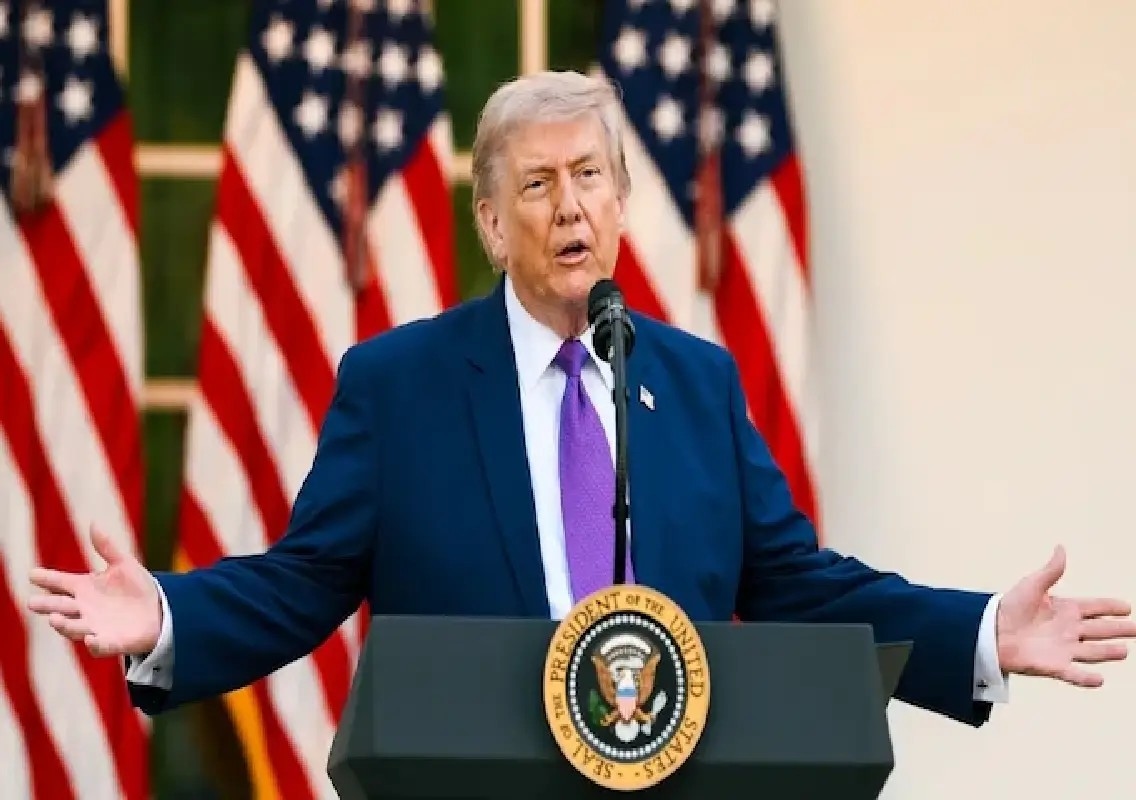


Washington: US President Donald Trump‘s administration has asked Congress to approve an additional $87.6 billion in funding, with the majority of the request aimed at supporting the ongoing conflict with Iran.
The supplemental funding request, submitted to Congress and published by the White House on Thursday, is expected to trigger another political battle on Capitol Hill, where lawmakers from both parties have expressed growing unease over the conflict and its financial implications.
Majority of funds earmarked for defence
According to the White House, the proposed package includes $67.15 billion for defence-related spending.
The funding request comes in addition to nearly $1 trillion already approved for defence last year and another $1.5 trillion that the administration is seeking for the next fiscal cycle.
The White House said the additional military funding would cover operational expenses linked to the Iran conflict, military readiness, replenishment of weapons stockpiles and classified defence programmes.
Of the total amount, $21 billion has been allocated for munitions procurement, boosting domestic defence production and supporting critical military capabilities.
Congress increasingly divided over Iran conflict
The request arrives amid rising resistance in Congress over the administration’s handling of the conflict.
Earlier this week, the Senate passed a war powers resolution directing President Trump to halt military action against Iran. The move came weeks after a similar measure was approved by the House of Representatives.
A small number of Republican lawmakers joined Democrats in supporting the resolution, highlighting growing bipartisan concerns over the administration’s military actions.
Political tensions reportedly intensified during a Republican meeting at the Capitol on Wednesday, where President Trump is said to have clashed with Senator Bill Cassidy, one of the Republicans who supported the war powers measure.
Several lawmakers have criticised the administration for allegedly failing to adequately brief Congress on the conflict and questioned whether executive actions may have exceeded constitutional limits on war powers.
Tough political challenge ahead of midterm elections
The funding request could prove politically challenging for Republicans ahead of the November midterm elections, as public support for the conflict remains uncertain.
Democratic lawmakers argued that the administration should focus on domestic economic priorities instead of increasing war-related expenditure.
Senate Democratic Leader Chuck Schumer criticised the proposal, while Senator Patty Murray said that although military personnel must be adequately supported, additional funding should be subjected to proper scrutiny.
Funding package includes domestic spending
Apart from defence expenditure, the supplemental package also includes funding for several domestic and international programmes.
The proposal allocates:
- $1.4 billion to address the Ebola outbreak in Africa.
- $11.1 billion in assistance for American farmers.
- $1 billion in pension support for former Delphi workers.
- $500 million for construction projects in Washington.
- Another $1 billion for reconstruction work at New York’s Penn Station.
Debate over spending expected to intensify
The latest request is likely to fuel a broader debate over defence spending, executive war powers and government priorities as lawmakers prepare for crucial budget negotiations.
With divisions emerging even within the Republican Party, the administration may face significant hurdles in securing congressional approval for the additional funding package.