







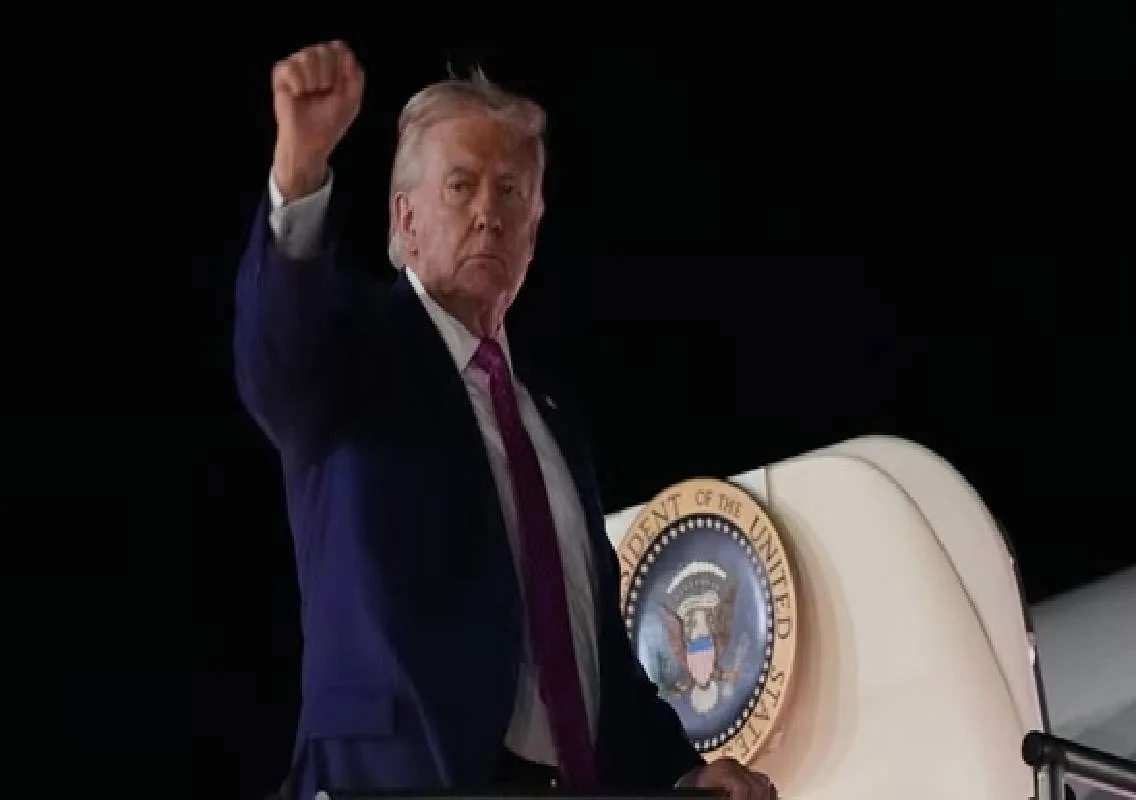


Islamabad: Donald Trump has outlined a firm non-negotiable condition ahead of high-stakes peace talks with Iran in Islamabad, stating that any agreement must ensure Tehran does not possess nuclear weapons.
The US President emphasised that preventing Iran from acquiring nuclear capabilities remains his top priority in the negotiations. “No nuclear weapon. That’s 99 per cent of it,” Trump said while speaking to reporters before departing Washington.
US delegation heads to Pakistan
The United States delegation, led by Vice President JD Vance, has been sent to Pakistan to engage in discussions with Iranian officials. The talks come after a two-week ceasefire in the ongoing West Asia conflict, which came into effect earlier this week.
The US team also includes special envoy Steve Witkoff and senior adviser Jared Kushner. The delegation reportedly made a stop in Paris before proceeding to Islamabad.
On the Iranian side, the delegation is led by parliamentary speaker Mohammad Baqer Ghalibaf and foreign minister Abbas Araghchi.
Strait of Hormuz emerges as key issue
Another major focus of the talks is expected to be the strategic Strait of Hormuz, through which nearly one-fifth of the world’s crude oil supply passes.
Trump reiterated that the US would ensure the passage remains open regardless of Iran’s position. “We’re going to open up the Gulf with or without them… I think it’s going to go pretty quickly, and if it doesn’t, we’ll be able to finish it off,” he said.
The statement underscores the geopolitical importance of the waterway and its role in global energy security.
Cautious optimism from both sides
While the US has expressed hope for a positive outcome, officials have also warned against potential setbacks. JD Vance, speaking en route to Pakistan, said that while he remains optimistic, the US would not be receptive to any attempts to derail the negotiations.
On the other hand, Iranian leaders have taken a cautious stance. Ghalibaf indicated that despite having “good intentions,” Tehran remains wary due to past experiences with the US. “Our experience in negotiating with the Americans has always been met with failure and broken promises,” he said, according to Iranian state media.
Iran’s conditions for talks
Iran has set its own preconditions for engaging in meaningful dialogue. These reportedly include a ceasefire in Lebanon and the release of Iran’s frozen financial assets.
However, complexities remain, as Israel has clarified that the ceasefire between the US and Iran does not extend to Lebanon. Ongoing violence in the region continues to add uncertainty to the peace process.
According to Lebanese authorities, weeks of conflict have resulted in more than 1,950 deaths. Israeli strikes alone reportedly killed over 350 people on Wednesday, the first full day of the ceasefire.
Conclusion
Islamabad: The upcoming US-Iran talks in Pakistan carry significant geopolitical weight, with nuclear disarmament and regional stability at the centre of discussions. While both sides have expressed cautious optimism, deep-rooted mistrust and complex regional dynamics could influence the outcome. The coming days will be crucial in determining whether diplomacy can pave the way for lasting peace.