







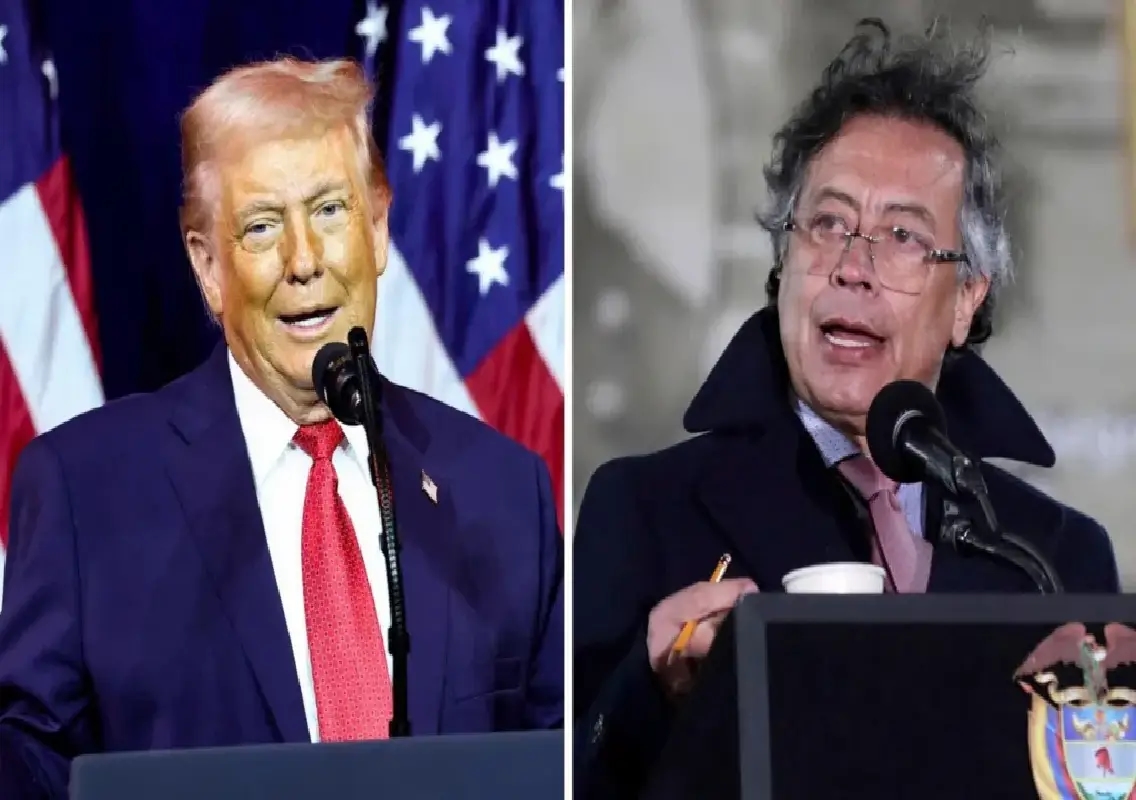


US President Donald Trump has said he will meet Colombia’s President Gustavo Petro at the White House “in the near future,” a notable diplomatic step coming on the heels of heightened tensions in Latin America following a dramatic US military operation in Venezuela that resulted in the capture of Venezuelan President Nicolás Maduro. The relationship between Washington and Bogotá has been under unusual strain over the past week due to conflicting rhetoric and geopolitical pressures, but both sides appear keen to stabilise ties.
The reported meeting was confirmed by Trump in remarks this week, after a telephone call in which Petro explained “the situation of drugs and other disagreements,” Trump said, while praising the Colombian president’s “tone.” The announcement came amid a fraught backdrop shaped by US military action in Venezuela, concerns over regional drug trafficking and friction over leadership style and policy in Colombia.
Tensions rise after Venezuelan raid
The US operation in Caracas early on January 3, in which elite forces captured Maduro and his wife, has sent shockwaves through the region and drawn sharp reactions from governments and civil society alike. Trump has suggested that US oversight of Venezuela, including control over the country’s oil revenue, could last for years — a claim underscored by comments that the US would “run” aspects of Venezuela’s governance until a transition is possible.
Reactions across Latin America have been mixed. Some regional leaders expressed support for action against corruption and drug trafficking, while others criticised the unilateral use of force as a violation of sovereignty. Reuters reported that responses ranged from condemnation to applause from various governments following Maduro’s seizure.
The political and military developments in Venezuela have also drawn worldwide scrutiny, including debates over legality, the use of force abroad, and concerns about potential spillover into neighbouring countries.
Initial Trump–Petro tensions
Earlier in the week, Trump issued a stark public warning to Petro, even cautioning the Colombian leader to “watch his ass,” signalling deep frustrations over Petro’s handling of issues such as drug trafficking and border security. Petro responded forcefully, warning that Colombia would “take up arms” if the US took military action against his country, and writing on X that any detention of a president whom “much of my people want and respect” could provoke strong public resistance.
Both leaders have extensive history with the drug issue. Colombia is a key transit hub for cocaine that often reaches the United States and other international markets, and US officials have repeatedly criticised Petro’s government for failing to curb narco-trafficking effectively — a criticism formalised in US sanctions imposed on Petro in October. At the time, the US Treasury said cocaine production in Colombia had “exploded to the highest rate in decades” under his presidency, a charge Petro denied and rebutted by citing domestic efforts to stem coca cultivation.
Possible White House meeting
Despite earlier tension, Trump said he appreciated Petro’s tone in their recent call and suggested that arrangements are being made for Petro’s visit to Washington, with United States Secretary of State Marco Rubio and Colombia’s foreign minister coordinating details. In remarks posted on Trump’s Truth Social account, the president called the conversation with Petro a “Great Honor,” marking a clear shift from the sharp back-and-forth seen earlier in the week.
The move to invite Petro to the White House is politically significant: it signals a readiness on both sides to engage diplomatically despite prior public disparagement, and suggests that Washington and Bogotá are seeking common ground on issues such as counter-narcotics cooperation, trade, security and regional stability.
Colombia, a key ally of the United States and a major producer not just of oil but also of minerals such as gold, silver and emeralds, remains central to regional geopolitics. Both countries have traditionally collaborated on counter-drug efforts, but the partnership has been tested by political differences and leadership styles.
Broader regional implications
The Venezuela operation has underscored broader concerns in the region about US involvement and unilateral military action. International legal experts and several governments have questioned whether the raid, conducted without congressional authorisation and involving strikes across Caracas, violated principles of sovereignty and international law. Many observers point to statements from United Nations officials and human rights bodies expressing deep concern over the use of force and long-term implications for international norms.
Meanwhile, Venezuelan Vice President Delcy Rodríguez has decried the US action as a severe breach of relations, though she also signalled openness to future energy cooperation on mutually beneficial terms. The political uncertainty remains high, given that interim governance arrangements in Venezuela are subject to contestation and resistance from Maduro allies.
What lies ahead
The reported forthcoming meeting between Trump and Petro could prove pivotal in defining the trajectory of US-Colombia ties at a time of shifting geopolitical alignments in Latin America. If the meeting proceeds, it will likely focus on recalibrating cooperation on counter-narcotics strategies, economic partnership, and shared concerns about regional security following the Venezuela events.
At the same time, the international community will be closely watching how Washington balances its assertive actions with diplomatic engagement — and whether this episode leads to more stable, cooperative relations or continued friction on key issues of mutual concern.