


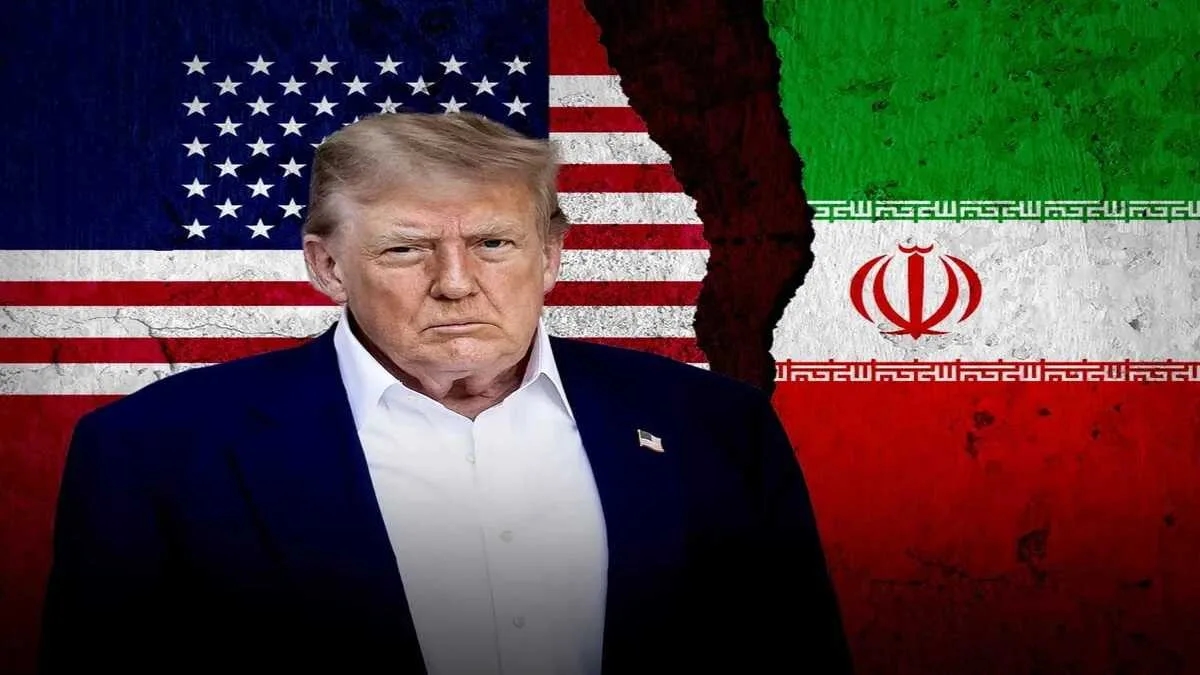


Washington: US President Donald Trump has said he may order further attacks on Iran if necessary to ensure that its nuclear programme is dismantled, as his administration weighs whether to resume military operations against Tehran. Trump met his national security team on Thursday to discuss the options, while the US Central Command (CENTCOM) continued preparations for a possible new wave of strikes.
However, Washington has not issued a formal directive to restart major combat operations. The administration is considering military action alongside continued economic pressure and diplomatic negotiations, leaving the next phase of the conflict uncertain.
The discussions at the White House on Wednesday and Thursday were reported by Fox News, citing US officials. Thursday’s meeting, held during Trump’s weekly intelligence briefing, was the first discussion involving the President and his senior national security advisers on Iran since the US midterm elections.
Speaking to reporters in the Oval Office, Trump said a decision on further action would be made soon. He indicated that the priority was to prevent Iran from restoring its nuclear capabilities.
“Now we will make a decision. Do we want to go further” with strikes to ensure that Iran’s nuclear programme is dismantled and “it will never happen again?” he said.
Trump also warned that further destruction could follow if Washington considered it necessary.
“I would rather not destroy the rest of the country if possible, but maybe I will have to. You’ll know soon enough,” he added.
According to Axios, the administration is weighing three broad approaches: fresh military strikes, continued economic pressure through sanctions and restrictions, or a diplomatic agreement that would require significant concessions from Iran.
CENTCOM prepares for possible renewed military operations
CENTCOM is finalising preparations for a possible resumption of major combat operations in Iran, a US official told reporters. However, the command has not received fresh instructions from Washington to begin military action.
The distinction suggests that the US military is preparing for different possibilities while the President and his advisers consider the next step.
The timing of any potential operation has also attracted attention. Fox News reported that November 9 would bring a new moon in the Middle East, creating conditions with little or no moonlight. Such conditions can offer advantages for certain military operations, although the lunar cycle alone does not establish that an attack is imminent.
Another possible development being watched is the arrival of a third American aircraft carrier strike group in the region. The USS Theodore Roosevelt and its strike group are scheduled to spend a few days in Singapore from Friday for a port visit.
A US official said the carrier group was not expected to reach CENTCOM’s area of responsibility before mid-November. Its possible deployment could add to American military capabilities in the region if Washington decides to resume large-scale operations.
The Pentagon is also pursuing its FORTRESS initiative, announced on October 29. The programme aims to ensure that US military bases can continue operating independently for up to 90 days during major conflicts by securing essential supplies, electricity and infrastructure.
These preparations reflect wider concerns about the ability of American forces to sustain operations during a prolonged conflict. They do not, by themselves, confirm that the administration has decided to launch another round of attacks.
US weighs military strikes, sanctions and diplomatic agreement
The Trump administration’s decision could determine whether the conflict moves towards another military escalation or a negotiated arrangement.
According to the Axios report, officials are examining three broad options. The first involves fresh military strikes against Iran. The second would maintain economic pressure through sanctions and other restrictions. The third would seek a diplomatic agreement in exchange for substantial concessions from Tehran.
The central disagreement remains Iran’s nuclear programme and the conditions under which negotiations could resume.
Washington has maintained that nuclear issues must form part of any initial negotiations. The administration wants assurances that Iran will not restore the capabilities that the earlier strikes were intended to dismantle.
Tehran, meanwhile, has sought broader conditions, including an end to hostilities, the lifting of restrictions and guarantees against future attacks.
The gap between the two positions has complicated diplomatic efforts, even as regional countries attempt to prevent another round of military action.
Regional mediators step up diplomatic efforts
Diplomatic contacts continued on Thursday, with Iranian Foreign Minister Abbas Araghchi holding multiple telephone conversations with regional officials.
His discussions involved representatives from Qatar, Saudi Arabia, Turkey, the United Arab Emirates, Oman and Egypt. These countries have been involved in efforts to facilitate communication between Tehran and Washington.
Qatari mediators are also reportedly holding discussions with both sides over a draft proposal intended to build confidence and create conditions for a broader agreement.
According to regional sources, the proposal would involve a sequence of steps over two days.
On the first day, Washington would lift its naval blockade and release some of Iran’s frozen funds. In return, Tehran would formally invite the International Atomic Energy Agency (IAEA) to send inspectors to nuclear facilities that were bombed.
On the second day, the Strait of Hormuz would reopen, allowing the resumption of nuclear negotiations. Those discussions would include Iran’s stockpile of highly enriched uranium.
The proposed arrangement is intended to address immediate tensions while creating a route towards negotiations on the nuclear issue. However, it remains a proposal under discussion and has not been announced as an agreement accepted by both governments.
The Strait of Hormuz is particularly important to global energy markets because a substantial share of internationally traded oil passes through the waterway. Any prolonged disruption could affect crude oil prices, shipping and energy supplies.
Iran sets conditions for reopening Strait of Hormuz
Despite the diplomatic contacts, Tehran has maintained a firm public position on negotiations.
Mohsen Rezaei, secretary of Iran’s Supreme National Security Council, met Russian President Vladimir Putin at the Kremlin on Thursday to discuss the conflict.
Rezaei said he had conveyed a message from Iran’s Supreme Leader Mojtaba Khamenei to Putin. He also stated that Tehran had presented seven conditions to Washington and would not reopen the Strait of Hormuz or resume negotiations until those demands were met.
Iran has not officially disclosed the complete list of conditions. However, a report by Khaleej Times suggested that Tehran was seeking a complete end to hostilities, including in Lebanon, along with the lifting of the US naval blockade and sanctions.
The reported demands also include the release of frozen Iranian assets, a reduction in the US military presence in the region, compensation for war-related damage and guarantees against further American strikes on Iranian territory.
These reported conditions indicate that Iran wants any settlement to address the wider security and economic consequences of the conflict, rather than focusing exclusively on its nuclear programme.
Washington’s insistence that nuclear restrictions must be included in the initial negotiations remains a major obstacle to reaching an agreement.
The differences over the Strait of Hormuz also underline the challenges facing mediators. While the proposed Qatari arrangement envisages reopening the waterway as part of a two-day process, Iran has said it will not do so before its conditions are met.
Iraq opposes use of its territory for attacks
The possibility of renewed US military operations has also raised concerns among neighbouring countries about the use of their territory.
Iraqi Prime Minister Ali Faleh Al-Zaidi spoke to Trump by telephone on Thursday and reiterated Baghdad’s opposition to the use of Iraqi territory for military operations against neighbouring countries.
A statement from the Iraqi Prime Minister’s Office said Al-Zaidi had called for respect for national sovereignty. He stressed that Iraqi territory must not be used as a launchpad for attacks against neighbouring nations.
Iraq’s position reflects concern about the possibility of the conflict spreading across the region and drawing additional countries into the confrontation.
The country’s geographical position and its security relationships with regional powers make the use of its territory a sensitive issue during any escalation involving Iran.
Baghdad’s statement also highlights the diplomatic challenges facing Washington as it considers military options. Any operation could have consequences beyond Iran, particularly if it involves airspace or territory belonging to neighbouring states.
What happens next in the US-Iran conflict?
Trump’s latest remarks have increased uncertainty over whether the United States will resume military action. CENTCOM’s preparations, the possible movement of another aircraft carrier strike group and discussions at the White House indicate that military options remain under consideration.
At the same time, diplomatic contacts involving Qatar and other regional powers suggest that efforts to find an agreement have not stopped.
The immediate challenge is to bridge the gap between Washington’s demand for restrictions on Iran’s nuclear programme and Tehran’s conditions for ending hostilities, lifting sanctions and reopening the Strait of Hormuz.
A decision to launch further strikes could intensify the conflict and create fresh risks for regional security and global energy markets. A diplomatic breakthrough, on the other hand, would require both sides to make concessions on issues that remain central to their positions.
For now, Trump has not announced a decision to restart major combat operations. His warning that the US could destroy more of Iran if necessary, however, shows that the possibility of another military escalation remains on the table.