







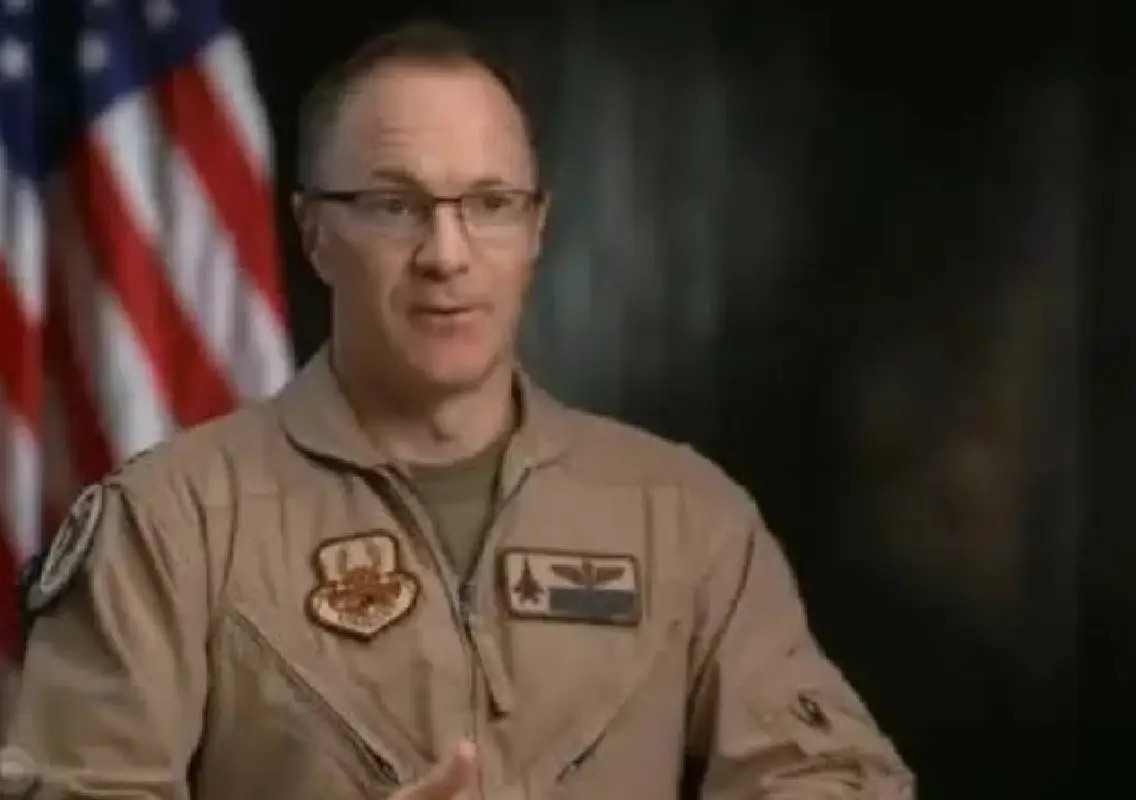


Washington : A US Air Force officer has spoken publicly for the first time about the harrowing experience of surviving for nearly 50 hours behind enemy lines in Iran after the F-15E Strike Eagle he was aboard was shot down during a strike mission in April.
The officer, identified by the call sign Dude 44 Bravo, recounted the ordeal during an interview with CBS programme 60 Minutes. His account has shed new light on the dangers he faced after ejecting from the aircraft, the desperate search for him and the large-scale US military operation that ultimately brought him home.
Fighter jet shot down during Iran mission
The incident began on April 3 when the US Air Force F-15E Strike Eagle was shot down over southwestern Iran. Both crew members ejected from the aircraft, but they landed separately.
Bravo’s fellow crew member, known as Alpha, was rescued by US forces within hours. Bravo, however, was left injured and isolated in hostile territory, beginning an extraordinary struggle for survival.
According to the account reported by 60 Minutes, the aircraft was struck by a shoulder-fired missile. Bravo said the attack severely damaged his parachute, making the ejection particularly dangerous.
As he fell towards the ground, the damaged parachute failed to deploy normally. He estimated that he was travelling at between 70 and 100 miles per hour before reaching the ground.
The impact left him with serious injuries, including a broken back, broken arm and shoulder, as well as a sprained ankle and cuts to his head and face.
Injured and alone in hostile territory
Despite his injuries, Bravo understood that remaining close to the crash site could expose him to Iranian search teams. He therefore moved away from the area and sought shelter in the rugged terrain of the Zagros Mountains.
He eventually climbed towards a high ridgeline and hid in a crevice while Iranian forces searched the surrounding area.
The circumstances were particularly dangerous because Iranian forces were actively looking for the missing airman. Reports said a bounty had also been offered for information leading to his capture.
For almost two days, Bravo remained without normal access to food or water while attempting to avoid detection.
His survival depended not only on physical endurance but also on his military training and ability to remain concealed while injured.
US launches major rescue operation
The disappearance of the airman triggered an extensive US search-and-rescue effort.
More than 90 American service members were ultimately involved in the operation, according to the Times of India report. The mission became one of the most complex US military rescue efforts of its kind, with American forces attempting to locate Bravo while preventing Iranian forces from reaching him first.
Earlier accounts of the operation said the rescue involved a large number of aircraft and multiple efforts to divert Iranian attention away from Bravo’s actual location.
The US military had to contend with difficult terrain, hostile conditions and the possibility that Iranian forces could discover the injured airman before rescuers reached him.
General Dan Caine, chairman of the US Joint Chiefs of Staff, later described the recovery as an extremely demanding personnel-recovery operation. The rescue was completed on Easter Sunday, more than 50 hours after the F-15E was shot down.
Training and determination helped him survive
Bravo said his military training helped him deal with the situation despite his injuries and the uncertainty surrounding his rescue.
One of the most striking aspects of the account was his determination to keep moving and remain hidden despite being badly injured.
At one point during his ordeal, he communicated a brief message indicating his faith and gratitude for having survived the initial fall and subsequent pursuit. His account also highlighted the psychological pressure of knowing that search teams were operating nearby.
For Bravo, survival was not simply a matter of waiting for help. He had to make decisions about movement, concealment and communication while attempting to avoid detection.
A rescue operation involving dozens of aircraft
The scale of the American response demonstrated the priority placed on recovering the stranded airman.
US officials have previously described the second rescue effort as involving a very large force package, including aircraft operating in different parts of Iran to complicate the search for the American officer.
The effort was eventually successful. Bravo was located and extracted, bringing to an end nearly two days of hiding and evasion.
The operation also highlighted the risks involved in recovering military personnel from hostile territory. Rescue crews had to enter an area where the downed airman was being sought by enemy forces while coordinating aircraft, intelligence and ground elements.
A story of survival and teamwork
The story of Dude 44 Bravo has since become an example of military survival, training and the determination to recover personnel left behind enemy lines.
His experience also illustrates the dangers faced by aircrews during combat missions. A routine ejection can quickly become a fight for survival when an aircraft is brought down over hostile territory.
Bravo’s rescue was made possible by the combined efforts of fellow airmen, rescue crews, intelligence personnel and commanders who continued the search despite the difficult circumstances.
His account, released publicly months after the incident, provides a human dimension to what was otherwise a major military operation. For nearly 50 hours, an injured American officer remained hidden in the Iranian mountains while a large US force worked to locate and recover him.
The successful rescue ultimately brought the ordeal to an end and underscored the military principle of recovering personnel stranded in hostile territory.