







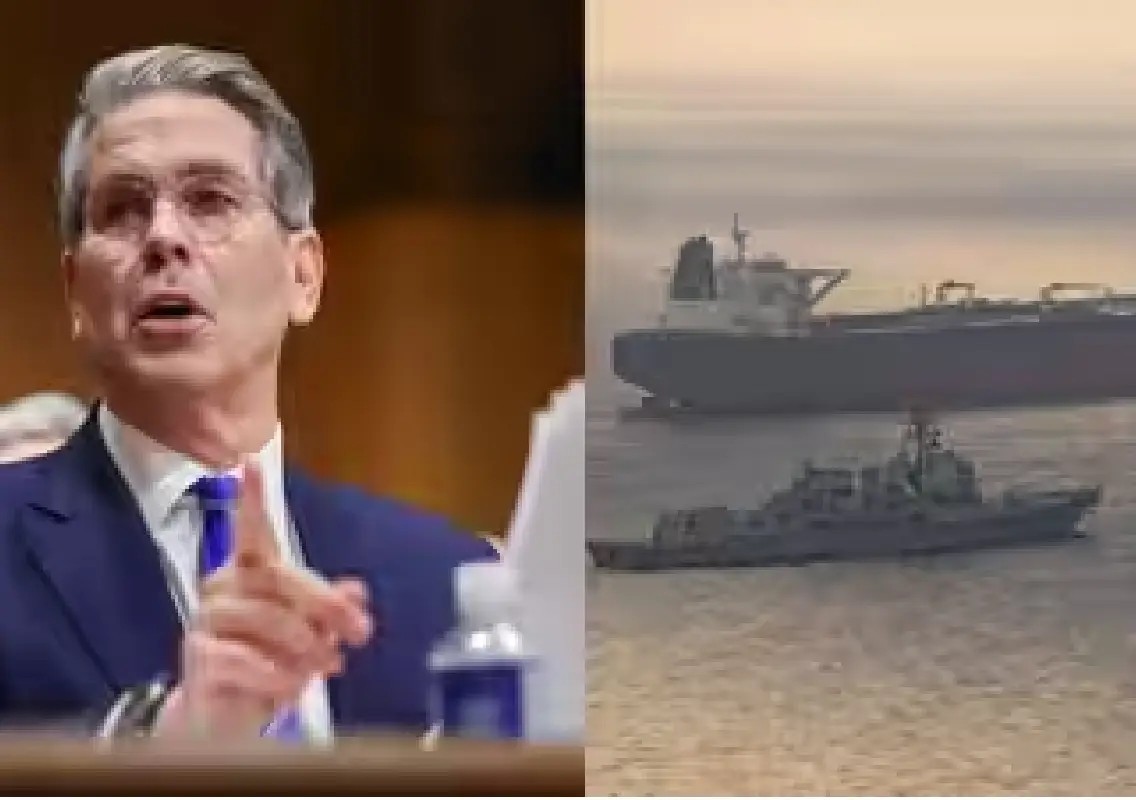


The United States is preparing a major new economic offensive against Iran, with Treasury Secretary Scott Bessent describing the campaign as an “economic D-Day” aimed at cutting off Tehran’s remaining financial lifelines.
US prepares tougher sanctions
The new measures are expected to target countries, companies and financial institutions that continue doing business with Iran. Washington has warned that nations maintaining economic and financial ties with Tehran could face serious consequences.
Bessent said the administration intends to use its available economic powers to isolate Iran further, as direct military action between the two countries remains paused and diplomatic efforts have made little progress.
The campaign comes after months of conflict and existing sanctions that have already weakened Iran’s economy through high inflation, currency pressures and energy shortages.
Iran warns of Gulf oil blockade
Tehran has responded with a serious warning of its own. Mohsen Rezaei, secretary of Iran’s Supreme National Security Council, said Iran could halt oil exports through the Strait of Hormuz and from elsewhere in the Persian Gulf if the economic pressure continues.
He also warned that countries supporting the US campaign could be regarded by Iran as participating in an “act of war”.
The Strait of Hormuz is one of the world’s most important energy routes, making any prolonged disruption potentially significant for global oil supplies and prices.
China calls for diplomacy
Washington has also urged China to cooperate with its pressure campaign, citing Beijing’s dependence on Gulf oil. China, however, has rejected sanctions as a solution and called for diplomacy.
Pakistan, Qatar and Turkey are meanwhile attempting to support diplomatic efforts, while Pakistan’s army chief is expected to visit Tehran.
The latest confrontation has therefore raised concerns that economic pressure could trigger another dangerous escalation across the Gulf.