







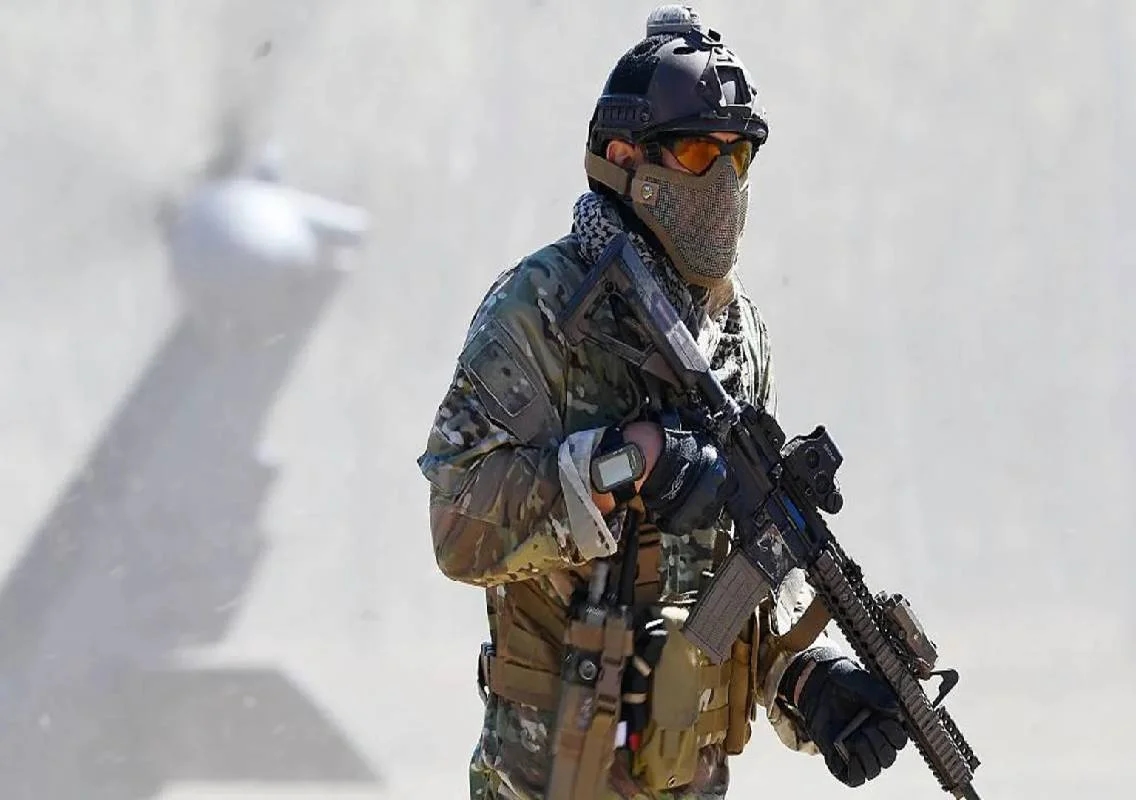


United States: Early reports suggest that the pilot of a US F-15 fighter aircraft shot down over Iran has been rescued, marking what could be one of the latest high-risk combat search-and-rescue (CSAR) operations conducted by the United States military. However, efforts are still underway to locate a second crew member, according to media reports.
The reported rescue operation is believed to be taking place deep inside Iranian territory, underlining the complexity and danger associated with such missions. CSAR operations are among the most challenging military undertakings, often executed in hostile environments where time is critical and risks are extremely high.
Combat search and rescue (CSAR) refers to specialised military missions aimed at locating, assisting and extracting personnel in distress, particularly in combat zones. These may include downed pilots, isolated troops or personnel stranded behind enemy lines.
Unlike conventional rescue operations conducted during natural disasters or humanitarian crises, CSAR missions take place in contested or hostile regions. In situations like the current operation in Iran, such missions may involve entering deep into enemy-controlled territory.
Typically, CSAR missions are conducted using helicopters supported by refuelling aircraft and fighter jets that provide aerial cover and suppress potential threats. Teams involved in these operations are highly trained to operate under extreme pressure and uncertainty.
High-risk operation deep inside Iran
Reports indicate that elite rescue teams, including pararescue jumpers, are actively involved in the ongoing mission. These personnel are trained to deploy rapidly and adapt to evolving battlefield conditions.
According to former military officials cited in US media, such an operation could involve at least 24 pararescue personnel operating from helicopters like the Black Hawk. These teams are capable of parachuting into hostile terrain if necessary and are trained to locate and stabilise injured personnel before extraction.
Once on the ground, their priorities include establishing contact with the missing crew, administering medical aid and evading enemy forces while coordinating evacuation. The danger is heightened by the likelihood that opposing forces may also be searching the same area.
Verified footage reportedly shows US helicopters and at least one refuelling aircraft operating over Iran’s Khuzestan province, indicating the scale and urgency of the mission.
Time-sensitive and strategically complex missions
Military experts emphasise that CSAR operations are extremely time-sensitive. The survival chances of downed personnel depend heavily on how quickly rescue teams can locate them.
Former US Marine Corps Special Operations specialist Jonathan Hackett noted that rescue teams often begin by analysing the last known location of the missing individual and then expand their search based on terrain and possible movement patterns.
In some cases, such missions may involve coordination with local or indigenous groups to improve chances of success. These contingency strategies are part of what experts describe as “non-standard assisted recovery missions”.
The primary objective remains to find signs of life, secure the individual and ensure safe extraction without escalating the situation further.
A long history of daring rescue missions
CSAR missions have a long and storied history, dating back to early aerial combat in the 20th century. During World War I, pilots occasionally landed behind enemy lines to rescue fellow airmen.
The United States formalised such operations during World War II. In 1943, two combat surgeons parachuted into then-Burma (now Myanmar) to assist wounded soldiers — a mission considered a precursor to modern pararescue operations.
A year later, the first helicopter rescue mission was conducted behind enemy lines, marking a turning point in military rescue capabilities. The use of helicopters revolutionised CSAR operations, making them faster and more flexible.
Modern CSAR tactics were further refined during the Vietnam War, where large-scale rescue missions became common. One notable operation, known as Bat 21, highlighted both the importance and the risks of such missions, resulting in significant casualties.
Elite pararescue teams at the core
The US Air Force plays a central role in CSAR missions, primarily through its specialised pararescue units. These personnel, often referred to as pararescue jumpers, are part of the military’s elite special operations community.
Their official motto, “These Things We Do, That Others May Live,” reflects their commitment to rescuing fellow service members under any circumstances.
Pararescue jumpers undergo one of the most rigorous training programmes in the military, which can take up to two years to complete. Their training includes parachuting, combat diving, survival techniques, weapons handling and advanced medical skills equivalent to civilian paramedics.
On missions, they are led by Combat Rescue Officers who plan and coordinate operations, ensuring that rescue efforts are executed efficiently even in the most dangerous conditions.
Rare but critical missions in recent decades
Although CSAR teams were heavily deployed during conflicts in Iraq and Afghanistan, missions to recover downed pilots have become relatively rare in recent years.
Notable past operations include the 1995 rescue of US pilot Scott O’Grady in Bosnia and the 1999 recovery of a pilot shot down over Serbia. These missions demonstrated the effectiveness of coordinated rescue strategies involving multiple branches of the military.
The current operation in Iran, if confirmed, would represent one of the most significant CSAR missions in recent times, given the geopolitical sensitivity and operational risks involved.
Conclusion
The reported rescue of a US pilot in Iran highlights both the enduring importance and the extraordinary difficulty of combat search-and-rescue missions. As efforts continue to locate the second crew member, the situation underscores the commitment of military forces to recover personnel, even under the most dangerous circumstances.
If confirmed, the mission will stand as another example of the precision, bravery and coordination required in modern warfare’s most complex rescue operations.