







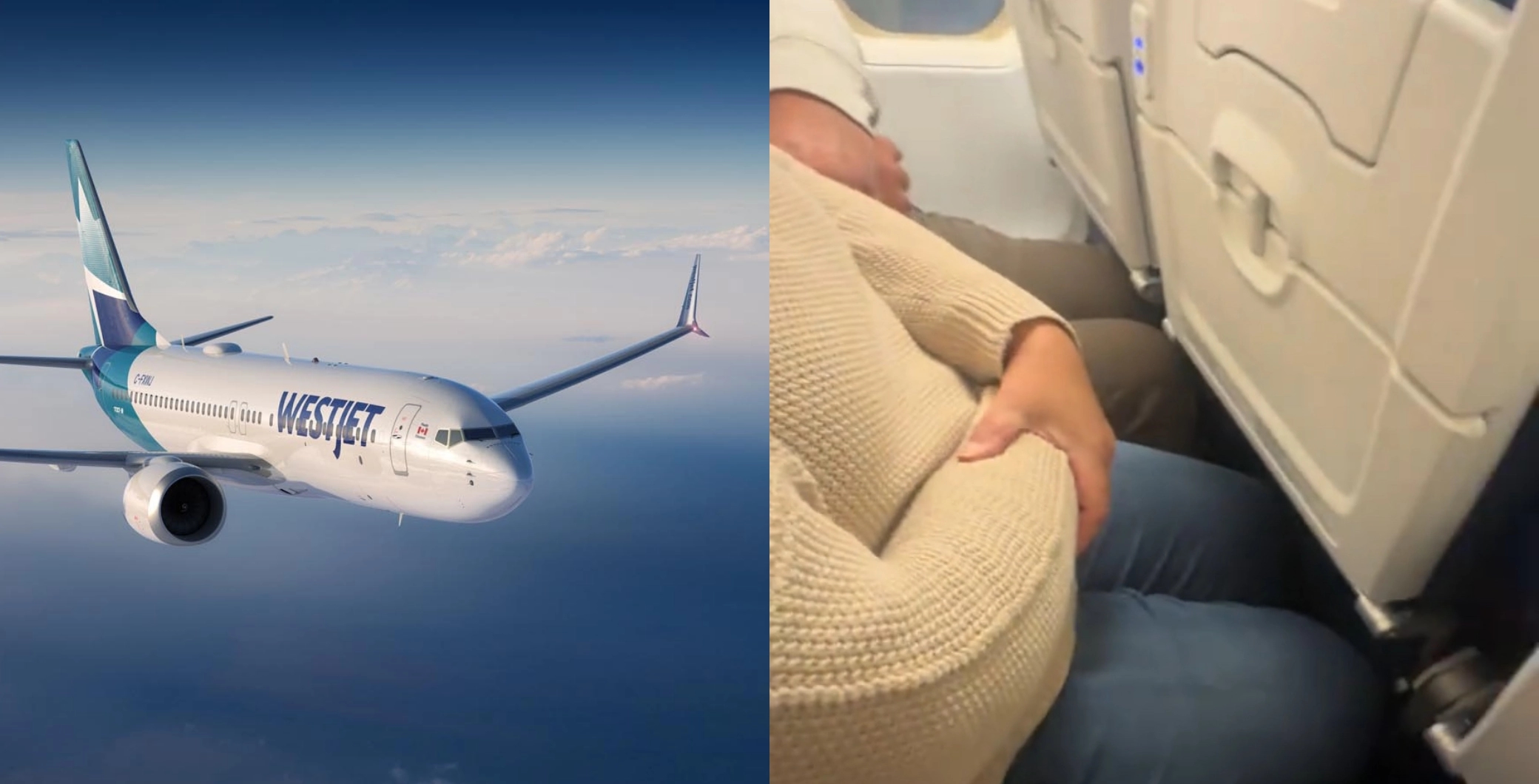


A viral TikTok video showing a passenger struggling to fit into his seat on a newly reconfigured WestJet aircraft has reignited debate over passenger comfort, safety, and how far airlines should be allowed to go in squeezing more seats into commercial planes.
The clip, which has crossed 1.1 million views, shows a man sitting diagonally in his seat, unable to place his legs straight due to what appears to be severely limited legroom. The video quickly triggered concern online, with many users questioning whether such layouts meet basic safety standards.
Safety concerns dominate online reaction
Commenters raised alarms over emergency preparedness. “How are you supposed to put your head between your legs during an emergency landing?” one user asked. Another wrote, “There needs to be federal rules on minimum space — this doesn’t look safe.”
The video features one of WestJet’s 21 newly reconfigured aircraft, part of a broader plan to add an extra row of seats to keep fares competitive.
WestJet defends new layout
Responding to the backlash, WestJet said it is closely monitoring feedback from both passengers and employees.
“We are assessing the product’s performance, comfort and suitability, while ensuring our unwavering commitment to safety remains at the forefront,” the airline said in a statement on X.
The carrier added that the reconfiguration underwent extensive safety checks and certification, fully complying with Transport Canada’s airworthiness standards. According to WestJet, seat pitch on the reconfigured planes ranges from 28 to 38 inches, which it says is comparable with other North American airlines.
Advocate questions passenger fit and evacuation
Air passenger-rights advocate Gabor Lukacs said the video raises a fundamental question: can passengers reasonably and safely occupy the seats?
“If a passenger simply does not fit, the airline may be in breach of its contractual obligation,” Lukacs said. He also questioned how seniors or passengers with mobility issues would evacuate quickly in an emergency under tighter seating conditions.
Lukacs has called on Transport Canada to introduce minimum seat-pitch regulations, noting that Canada currently has no such rules. “That would be a great start,” he said.
How other airlines compare
For context, Porter Airlines operates aircraft with a minimum seat pitch of 30 inches. Air Canada and its subsidiaries go as low as 29 inches, while ultra-low-cost carrier Flair Airlines also maintains a 29-inch minimum, emphasising that it operates a single-class cabin without sacrificing space for premium seats.
Pushback urged
Lukacs encouraged passengers who cannot fit comfortably to ask flight attendants for another seat or seek a refund if accommodation is not possible.
“We’re being pushed and pushed,” he said. “Public pushback is essential. Airlines are testing how far they can go.”
As airlines balance affordability with capacity, the viral video has once again highlighted the growing tension between low fares and passenger well-being — a debate that may soon demand regulatory attention.