







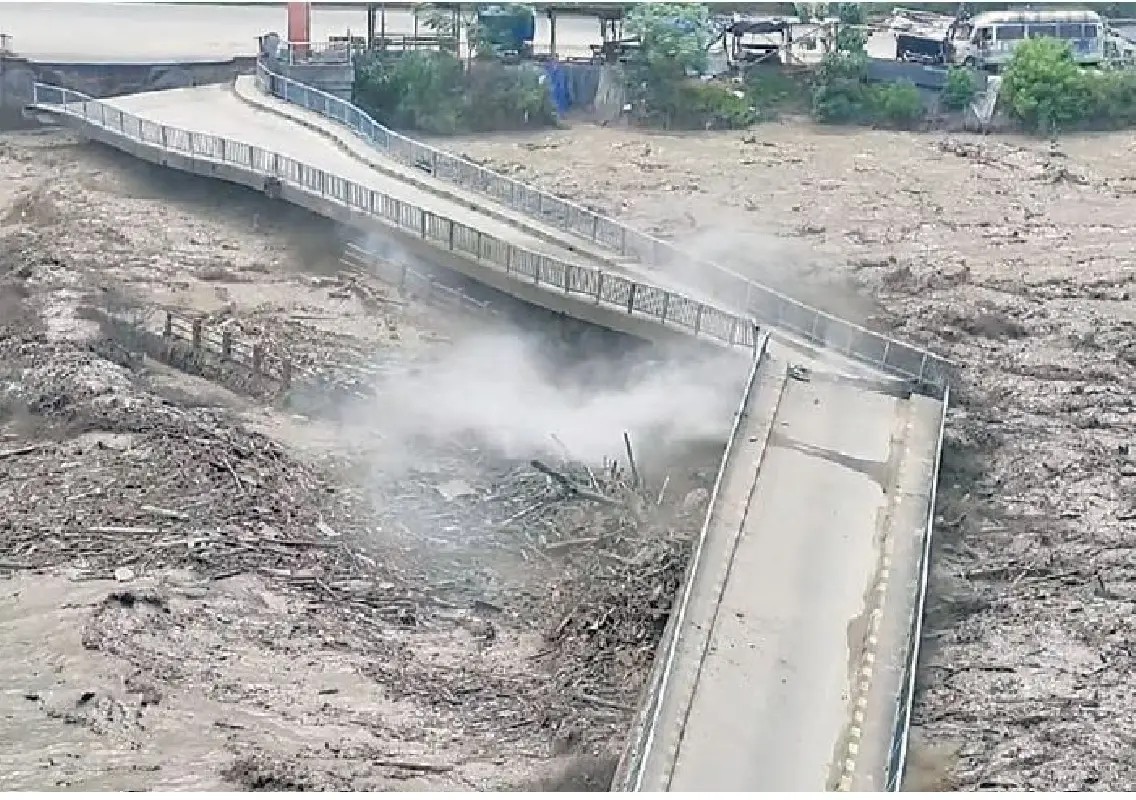


Kathmandu: The devastating floods in Nepal have turned ordinary journeys into desperate evacuation efforts, with washed-out bridges and damaged roads leaving several communities isolated.
At Tribhuvan Trishuli Secondary School in Trishuli Bazar, a routine journey between parts of the same municipality became a helicopter operation after floodwaters swept away a bridge over the Trishuli River.
Students rescued by helicopter
A Nepali Army helicopter airlifted 40 students and teachers from the school to Bidur on Friday. Another 10 to 15 students and teachers were still waiting to be evacuated, school principal Rajendra Dawadi said.
The school, which has around 1,400 students, has been badly affected by the flooding, with the river now flowing through its grounds.
About 100 children stranded on either side of the Trishuli were also rescued and reunited with their families, according to Bidur Municipality Deputy Mayor Prabha Bogati.
Roads and bridges badly damaged
The destruction of roads and bridges has made rescue and relief operations extremely difficult across the affected areas.
The Trishuli-Betrawati road, a key route to Rasuwa, has suffered extensive damage. In Dhading, a bridge over the Trishuli River near Malekhu was swept away, cutting off access to the district headquarters from the Prithvi Highway.
The Department of Roads estimates that the floods damaged around 40 kilometres of road between Rasuwagadhi and Malekhu and destroyed or damaged 41 bridges.
Patients and families struggle to move
In Rasuwa, damaged roads have also made it difficult to transport sick and injured people. Residents in several areas have been forced to depend on helicopters for medical supplies and rescue operations.
The crisis has also affected students who normally cross the river to attend school. Some have remained stranded for days because there is no functioning road or bridge.
Farmers face heavy losses
The disruption has reached markets and farms. With major roads blocked, farmers have struggled to transport vegetables and fruits, leaving perishable produce at risk of spoiling.
In Dhading, authorities are exploring alternative routes to restore supplies of food, medicines and other essentials.
Several roads are being assessed for emergency use, including routes through Phosretar, Siddhalek and Gorkha.
For communities isolated by the floods, these roads are more than transport routes. They are lifelines connecting families with food, medicines, schools, hospitals and rescue teams.