







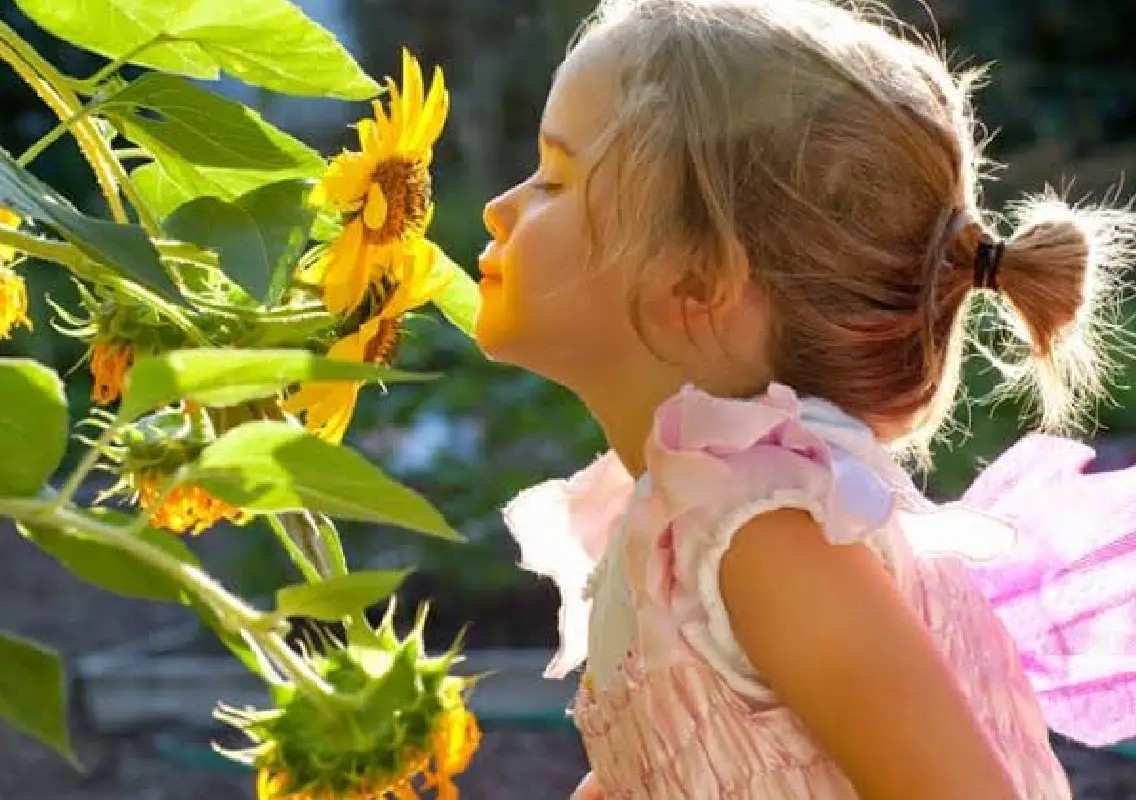


York : Children are taught to observe, listen, read and communicate, but one important sense may be receiving far less attention than it deserves — smell.
Dr Will Tullett, a historian of smells at the University of York, believes children should receive greater education in how to notice, identify and understand different aromas. He argues that developing the sense of smell could improve wellbeing and help young people engage more closely with the world around them.
His comments come amid concerns that modern life is changing the way people experience everyday smells. Pollution can affect the ability to detect odours, while many products and environments are increasingly designed to have particular scents added to them.
From food products and car interiors to household spaces, natural or original smells are often replaced or altered with synthetic fragrances.
Tullett believes children should be encouraged to pay greater attention to what their noses are telling them.
Why smell deserves more attention
Smell is one of the senses people often use without consciously thinking about it.
A familiar aroma can bring back a childhood memory. The smell of rain can evoke a particular place. Food can be recognised before it is seen, while an unfamiliar odour can immediately signal that something is different.
Yet compared with reading, writing, music and visual education, there is relatively little formal teaching about how to use the sense of smell.
Tullett believes that needs to change.
He has called for children in primary and secondary schools to be taught how to “engage their noses”, helping them become more aware of the aromas surrounding them.
The idea is not necessarily about turning children into experts in perfumes or food tasting.
Instead, it is about teaching them to notice and describe an important part of everyday experience.
Our surroundings may be changing our noses
Modern environments present another challenge.
According to Tullett, pollution has been found to impair people’s olfactory abilities. At the same time, many products that once had distinctive natural or manufacturing-related smells are now deliberately given synthetic fragrances.
This process is sometimes described as “reodourisation” — adding or replacing smells to create a particular sensory experience.
A car interior, for example, may be designed to have a specific new-car aroma. Household products can be given fragrances intended to suggest cleanliness or freshness. Food products can also have their aromas modified.
The result is a world in which people may encounter more artificial scents while having fewer opportunities to experience the original smells of materials and environments.
Could synthetic scents affect how we recognise smells?
Tullett says there is still an open question about what widespread exposure to synthetic scents might do to people’s ability to distinguish between different aromas.
That question is particularly interesting for children.
Young people are developing their sensory understanding of the world, and smell can contribute to how they recognise places, foods, people and experiences.
If children are rarely encouraged to consciously examine different aromas, they may have fewer opportunities to develop a detailed vocabulary for describing them.
Teaching smell could therefore become another way of teaching observation.
What could smell lessons look like?
Olfactory education does not have to involve expensive equipment or specialist laboratories.
It could begin with simple activities at home or in classrooms.
Children could be encouraged to smell everyday foods, flowers, herbs, spices, soil or wood and describe what they notice.
They might compare the aroma of fresh and dried ingredients, identify familiar smells with their eyes closed or keep a simple smell journal.
The objective would not be to decide whether a smell is “good” or “bad”.
Instead, children could learn to ask more detailed questions:
Is it sweet, sharp, earthy, smoky, fresh or woody? Does it remind me of somewhere? Does it change after a few minutes?
Such exercises could make children more attentive to their surroundings.
Smell can unlock powerful memories
One reason smell is particularly fascinating is its strong connection with memory and emotion.
A particular scent can unexpectedly transport someone back to an earlier period of life.
The smell of a traditional meal cooking may remind a person of home. A particular flower may recall a garden from childhood. The aroma of a familiar spice may bring back memories of family gatherings.
For children, developing awareness of these connections could help them build a richer understanding of their own experiences.
Smell education could therefore have an emotional dimension as well as a scientific one.
It could also encourage curiosity
Teaching children to engage with smell could make ordinary surroundings more interesting.
A walk through a garden could become an opportunity to identify different plant aromas. A visit to a market could turn into an exploration of spices, fruits and flowers. Even a kitchen could become a small sensory laboratory.
This type of learning encourages children to slow down and observe rather than simply move from one activity to another.
It can also introduce basic scientific ideas.
Children can learn that different substances release different molecules into the air, which interact with receptors in the nose and ultimately produce the sensation we experience as smell.
In that sense, something as simple as smelling a lemon can become the starting point for understanding chemistry, biology and the human brain.
Pollution makes the conversation more important
The discussion also has an environmental dimension.
Air pollution is usually discussed in terms of breathing and cardiovascular health, but pollutants can affect the sensory environment as well.
If exposure to pollution impairs the ability to smell, changes in our environment could influence not only physical health but also how people perceive their surroundings.
That makes awareness of smell potentially useful in another way.
A sudden change in an environment’s smell can sometimes provide information about smoke, chemicals, spoiled food or other hazards.
Understanding aromas does not replace scientific testing or safety equipment, but greater sensory awareness can help people notice when something is different.
Parents can begin at home
Tullett believes olfactory education does not have to wait for schools.
Parents can introduce simple smelling activities at home.
Cooking provides an easy starting point. Children can smell ingredients before they are combined and then notice how the aroma changes during cooking.
Herbs and spices offer another opportunity to explore different scents.
A child could smell cinnamon, cardamom, cloves, pepper, coriander or mint and try to describe the differences.
There is no need for children to get every answer correct.
The important part is encouraging them to notice, compare, remember and describe.
A simple sense could open a bigger world
The proposal to teach children about smell may initially sound unusual, but its underlying idea is straightforward.
Children learn about the world through their senses. The more consciously they use those senses, the more details they may notice.
Smell can connect science with memory, food with culture and nature with personal experience.
In an increasingly artificial sensory environment, learning to recognise natural aromas could also help children understand what is changing around them.
The challenge is not simply to make children better at identifying smells.
It is to encourage them to pause for a moment and ask what their surroundings are telling them.
Perhaps the lesson begins with one simple question
The next time a child encounters a familiar smell, instead of simply asking whether they like it, an adult could ask something more interesting:
“What does it remind you of?”
That question could open the door to memory, science, language and imagination all at once.
Dr Tullett’s call for olfactory education ultimately asks us to reconsider a sense that is often taken for granted. Children may already be surrounded by thousands of smells every day.