







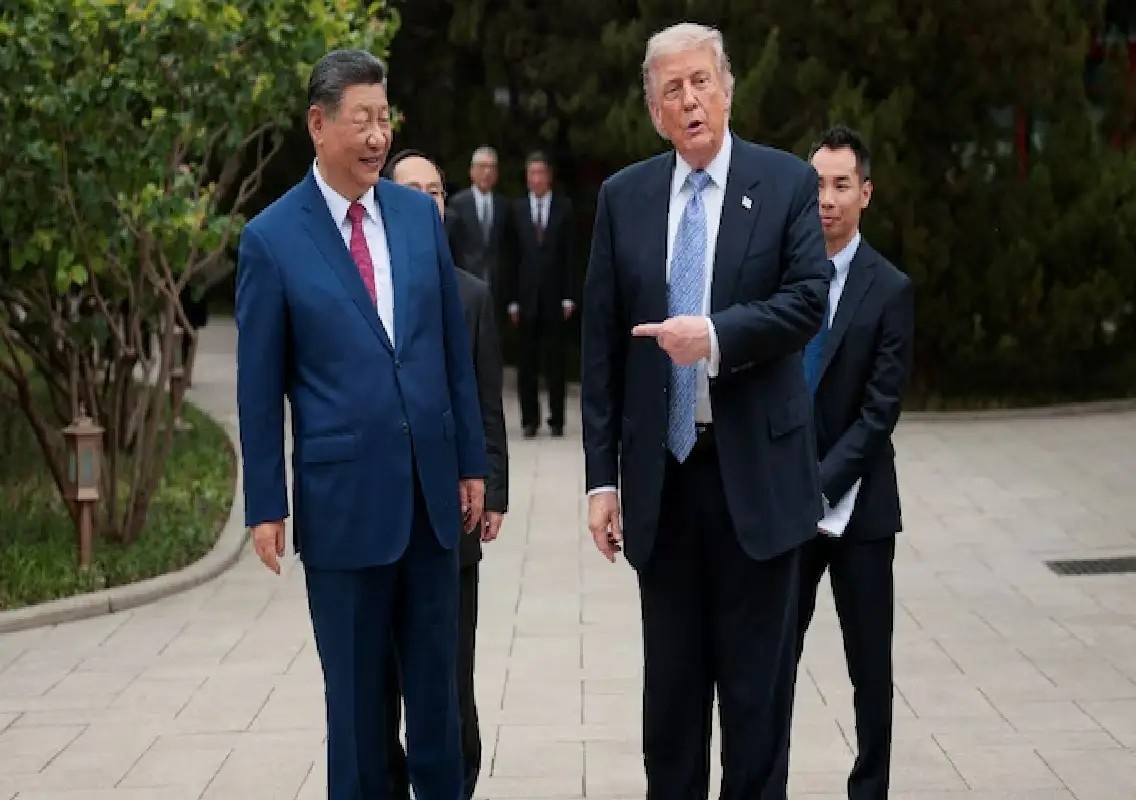


Beijing: Chinese President Xi Jinping gave US President Donald Trump a rare tour of Zhongnanhai, the tightly guarded political compound that serves as the headquarters of China’s Communist leadership, during the concluding phase of their Beijing summit. The meeting came amid discussions on issues including Taiwan, trade relations, Iran and wider Indo-Pacific security matters.
The visit carried symbolic significance as Zhongnanhai is considered one of China’s most restricted and politically important locations. Chinese officials described the engagement as part of broader diplomatic efforts aimed at strengthening communication between the two countries.
Rare access given to Chinese leadership compound
According to official information and media reports, Xi personally accompanied Trump through sections of Zhongnanhai, including its gardens and historic areas. The leaders also held tea and a working lunch inside the compound.
Xi reportedly said the visit was intended as a reciprocal gesture following Trump’s hosting of him at Mar-a-Lago during their earlier meeting in 2017.
Zhongnanhai, located adjacent to the Forbidden City in Beijing, functions as the administrative and residential centre for China’s top leadership. Access to the site is heavily restricted and details regarding its operations are tightly controlled.
Leaders discuss key international issues
The Zhongnanhai visit followed two days of meetings focused on bilateral and international issues.
According to official accounts, discussions covered economic and trade relations, regional security matters and broader geopolitical concerns.
Reports indicated that no major breakthrough announcements emerged from the discussions, although both sides signalled continued engagement on key issues.
Zhongnanhai remains a symbol of political power
Originally developed as an imperial garden complex, Zhongnanhai later became the centre of modern Chinese political administration after the Communist Party came to power in 1949.
The compound combines historical architecture, lakes and gardens with offices and residences used by China’s senior leadership. During the visit, Xi reportedly highlighted historical elements including centuries-old trees within the complex.
Officials and observers noted that the visit represented not only diplomatic hospitality but also a symbolic display of continuity and state authority.