







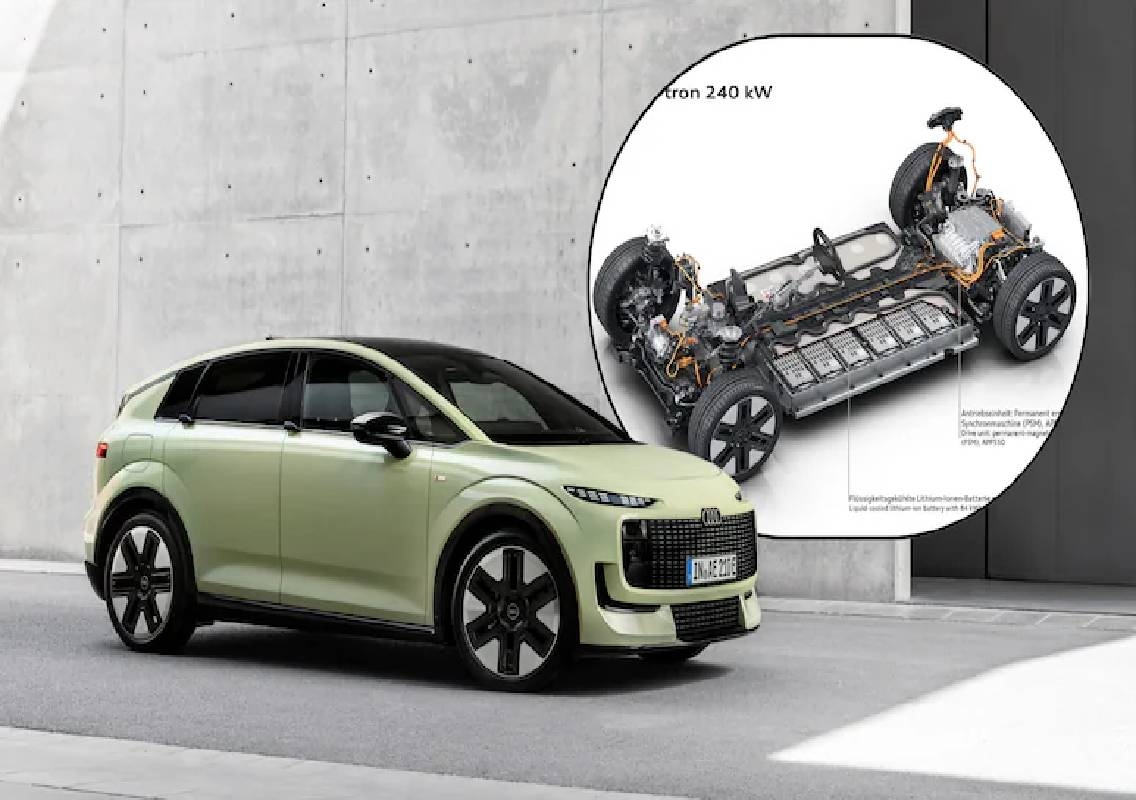


Ingolstadt: Audi has unveiled the new A2 e-tron, an all-electric compact hatchback that brings back the A2 nameplate with a focus on efficiency, artificial intelligence and everyday practicality. The new EV offers a claimed range of up to 646 km on a single charge and will go on sale in Europe from December 2026.
Audi has positioned the A2 e-tron as its new entry-level electric model for European customers. The company says it is the most efficient Audi production model to date, with energy consumption as low as 12.8 kWh per 100 km under the WLTP test cycle.
Audi A2 e-tron price and launch
The Audi A2 e-tron will be available to order in Germany from September 10, 2026, while deliveries are scheduled to begin in December. The entry-level version is priced from €38,200 in Germany, which is approximately ₹42 lakh based on the conversion cited by NDTV.
Audi has not announced an India launch for the A2 e-tron. The model has been developed primarily for the European market and will be manufactured at Audi’s Ingolstadt plant in Germany.
The A2 e-tron is part of Audi’s broader strategy to strengthen its compact electric vehicle portfolio. The company had announced earlier this year that the A2 e-tron would form part of a new entry-level electric model family.
Audi A2 e-tron range and battery options
The electric hatchback will be offered with three battery sizes: 52 kWh, 61 kWh and 84 kWh. Audi is also offering four power outputs, ranging from 125 kW in the entry version to 240 kW in the top variant. All versions use rear-wheel drive and permanently excited synchronous electric motors.
The maximum claimed range is 646 km under the WLTP cycle, depending on the configuration. The 140 kW version equipped with the optional efficiency package achieves consumption of 12.8 kWh per 100 km, making it the most efficient Audi production model in the company’s history.
The 84 kWh battery can support DC fast charging at up to 183 kW. Audi says charging from 10 to 80 per cent takes about 29 minutes with this battery. The smaller 52 kWh battery takes around 24 minutes for the same charging window at up to 100 kW.
AI features take centre stage
One of the major highlights of the A2 e-tron is its integration of artificial intelligence into the vehicle’s digital systems.
The car comes with Audi’s AI-powered assistant, which can respond to natural-language requests and provide information based on the owner’s manual. AI models operating in the cloud are also used to improve speech recognition, navigation searches and other interactions.
The A2 e-tron also supports connected productivity features. Audi says Microsoft Outlook and Microsoft Teams can be accessed through the vehicle, while voice commands can be used for tasks such as checking calendar entries, writing emails and joining Teams calls.
The e-tron route planner can also calculate charging stops by considering traffic, road conditions, route topography and charging-station availability. The system can pre-condition the battery before a charging stop to help maximise charging performance.
Interior gets minimalist design
The cabin of the A2 e-tron follows a simplified layout with extensive use of recycled materials. The dashboard features an 11.9-inch digital instrument cluster and a 12.8-inch MMI touchscreen arranged as a curved panoramic display.
Audi has introduced its Fidlock magnetic storage system as standard equipment. The system allows certain storage accessories to be attached magnetically inside the cabin.
The EV can also be equipped with a 1.6-square-metre panoramic glass roof. Audi says more than 300 components in the vehicle use recycled materials, including steel, aluminium and plastics, with more than 100 parts containing post-consumer recycled content.
For audio, the standard system has seven speakers, while buyers can opt for an upgraded Sonos system with 14 speakers, 15 amplifier channels and 660 watts of power.
Compact design focused on efficiency
The A2 e-tron has been designed around aerodynamic efficiency. Audi quotes a drag coefficient of 0.24, which it says is the best figure in its compact segment. Features such as a largely enclosed underbody, aerodynamic wheels and integrated door handles contribute to reducing air resistance.
The electric hatchback has a 2.77-metre wheelbase and short overhangs, allowing Audi to maximise interior space while retaining a compact footprint.
At the front, the headlights and driver-assistance sensors are integrated into a black panel. The vehicle also gets slim daytime running lights and digital light signatures.
The rear features horizontal LED lighting, while the optional rear light setup adds further visual elements to the design.
Safety and bidirectional charging
Audi has equipped the A2 e-tron with several driver-assistance systems as standard. These include emergency braking assistance, evasive assistance, attention assistance, adaptive cruise control, parking system plus and a rear-view camera.
Another notable feature is bidirectional charging. The A2 e-tron supports Vehicle-to-Load (V2L), allowing the battery to supply electricity to external devices such as e-bikes and other equipment.
Vehicle-to-Home (V2H) capability is also available in certain European markets when used with compatible DC wall boxes. This allows the vehicle’s battery to supply stored electricity back to a household.
Audi revives A2 name for electric era
The original Audi A2 was known for its compact dimensions and lightweight construction. The new A2 e-tron carries the name into Audi’s electric era, although the new model is focused more heavily on digital technology, efficiency and premium equipment.
Audi says the vehicle was developed with greater use of existing production infrastructure. More than 1,200 existing production components and around 250 robots at the Ingolstadt facility are being reused, helping reduce the need for additional investment and resource consumption.
With its combination of a 646 km claimed range, AI-enabled technology, compact dimensions and a starting price of €38,200 in Germany, the A2 e-tron is positioned as an important entry point into Audi’s electric range.
For now, the model is intended for European markets, with customer deliveries expected to begin in December 2026. Audi’s plans for an India launch remain unconfirmed.