







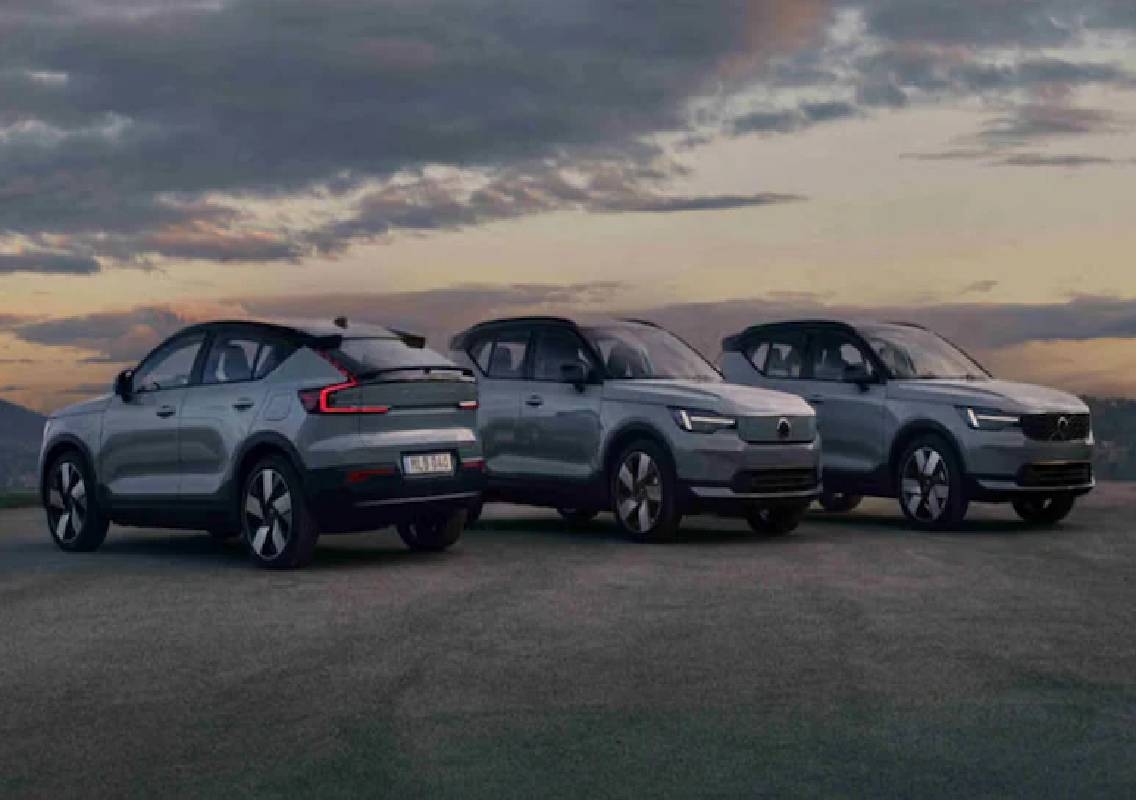


New Delhi: Volvo has revealed facelifted versions of its XC40, EX40 and EC40 compact SUVs, bringing updated styling, a larger infotainment screen, Google Gemini integration and upgraded safety technology to the 40-series range. The refreshed models receive subtle exterior changes while the biggest upgrades are focused on technology and driver assistance.
The facelifted range continues Volvo’s approach of offering petrol and electric powertrains in the compact luxury SUV segment. While the XC40 remains the mild-hybrid option, the EX40 and EC40 are positioned as fully electric models in markets where they are offered.
Volvo 40-series gets a sharper look
The exterior changes are evolutionary rather than a complete redesign. The three models receive revised front-end styling, including updated Matrix LED headlights with Volvo’s familiar Thor’s Hammer daytime-running-light signature.
The front bumper has also been redesigned for a cleaner appearance. The XC40 gets a new grille design, while the electric EX40 and EC40 use a more closed-off treatment suited to their electric powertrains.
At the rear, the XC40 and EX40 receive redesigned LED tail-lamps, along with an updated tailgate and rear bumper. The EC40 retains its existing rear-light design, although it receives other updates as part of the facelift.
Volvo has also introduced new alloy wheel designs across the range. The XC40 can now be specified with wheel sizes ranging from 18 inches to 20 inches.
Larger 11.2-inch touchscreen
One of the most significant changes is inside the cabin.
The facelifted models receive a larger 11.2-inch central infotainment screen, replacing the previous display setup. The system runs Volvo’s latest software and continues to use Google’s connected ecosystem.
A major addition is Google Gemini, Google’s AI-powered assistant. It enables more natural voice-based interaction and can assist with tasks such as navigation, route planning and messaging.
The move brings the compact Volvo SUVs closer to the brand’s newer models, which increasingly rely on software-based functions and connected services.
New upholstery and interior trim options have also been introduced, allowing customers to personalise the cabin with different materials and decorative finishes.
Safety technology gets major upgrade
Volvo has placed considerable emphasis on safety with the facelift.
The updated SUVs receive an enhanced sensor and safety technology package that includes additional radar sensors, an improved front-facing camera and 12 ultrasonic sensors. These systems work together to improve the vehicles’ ability to detect other road users and obstacles.
The updated models can offer features including automatic emergency braking, collision avoidance assistance and improved lane-support functions.
An upgraded 360-degree camera provides a three-dimensional view around the vehicle, helping drivers while parking and manoeuvring in tight spaces.
The available Level 2 driver-assistance package also includes enhanced Pilot Assist functionality, with additional support for lane changes.
Petrol and electric powertrains continue
The facelift does not bring a complete overhaul of the powertrain range.
The XC40 continues with mild-hybrid petrol engines. In European markets, the updated SUV is offered with B3 and B4 powertrains producing around 163 hp and 197 hp, respectively. Both are paired with front-wheel drive and automatic transmissions.
The electric EX40 continues with multiple power outputs depending on market and specification. Current European specifications include single-motor versions and a higher-performance all-wheel-drive variant.
The EX40’s electric range can extend to around 576 km WLTP in the long-range specification, while the performance AWD version offers a claimed range of around 538 km.
The EC40 continues as the coupe-style electric sibling of the EX40, offering a sportier roofline while sharing much of its technology and electric drivetrain architecture.
What about the Indian market?
The facelift is particularly relevant to India because Volvo currently offers the EC40 in the country’s premium electric SUV segment. The model was launched in India at ₹59 lakh (ex-showroom) and is sold with a 78 kWh battery pack and all-wheel drive.
However, the arrival of the facelifted 40-series models in India has not been fully confirmed.
Automotive reports note that Volvo has delisted the EX40 from its Indian website, while the earlier petrol XC40 was discontinued in India in 2023. The EC40 remains the key 40-series SUV currently associated with the Indian market.
This means Indian buyers may have to wait for Volvo to announce which of the updated models will be introduced locally.
Volvo focuses on technology and safety
The facelift demonstrates Volvo’s strategy of improving existing models through software, safety technology and subtle design changes rather than completely redesigning the vehicles.
The larger screen and Google Gemini integration are among the most visible cabin upgrades, while the additional sensors and improved driver-assistance systems are designed to make the vehicles safer and easier to operate.
For Volvo, the 40-series remains important in the compact luxury SUV segment, where it competes with models from brands such as BMW, Mercedes-Benz and Audi.
Conclusion
The facelifted Volvo XC40, EX40 and EC40 receive a combination of styling, technology and safety upgrades. The larger 11.2-inch display, Google Gemini integration, redesigned lighting and enhanced sensor suite are among the key changes. While the updated models have been revealed globally, Volvo has yet to confirm the full India launch plan for the refreshed 40-series range.