







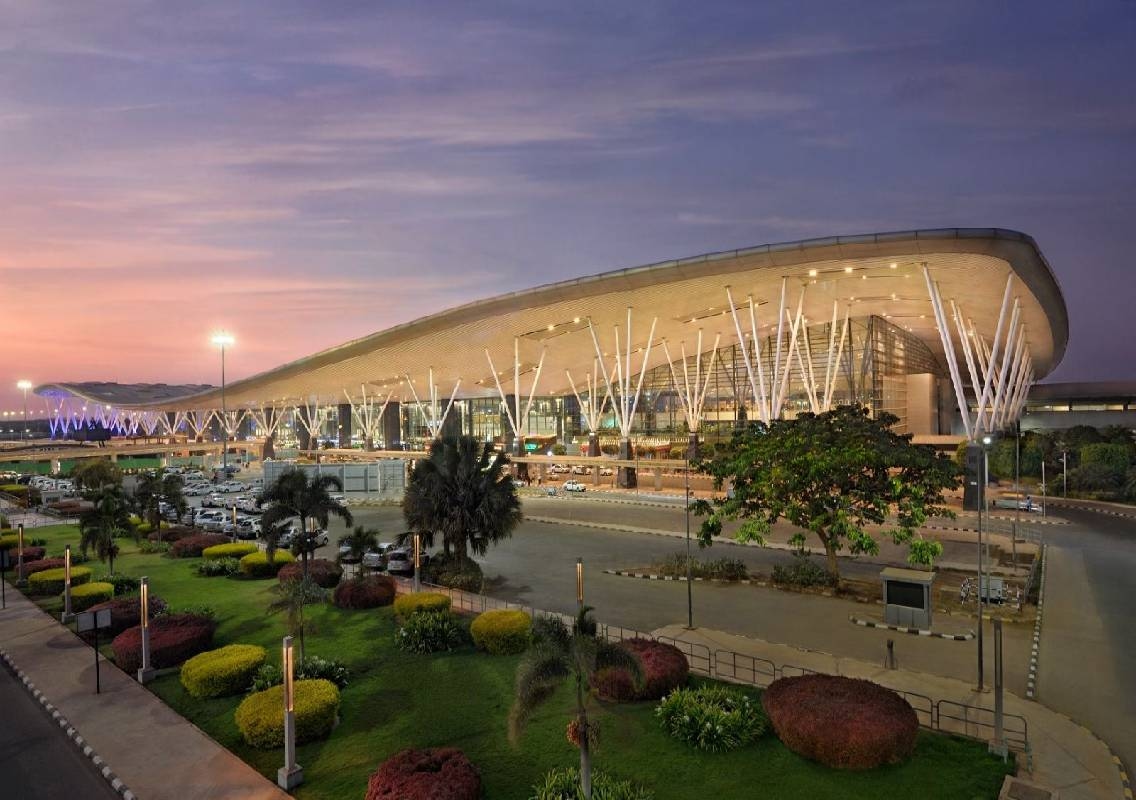


Bengaluru: Kempegowda International Airport (KIA) recorded strong growth in international traffic during 2025–26, with passenger numbers rising by 23.9 per cent to 7.23 million, according to Bangalore International Airport Limited (BIAL).
Overall, the airport handled 44.47 million passengers during the financial year, marking a 6.2 per cent increase compared to the previous year. The growth reflects sustained demand and Bengaluru’s expanding role as a global business and innovation hub.
International traffic drives growth
International travel emerged as the primary growth driver for the airport. While international passenger numbers saw a sharp 23.9 per cent rise, domestic traffic grew at a relatively moderate pace of 3.3 per cent, reaching 37.24 million passengers.
Officials noted that the figures account for the period between April 2025 and March 2026. Despite geopolitical tensions such as the West Asia conflict that began in late February, the impact on overall traffic remained limited.
Rise in transfer traffic
KIA also recorded significant growth in transfer traffic, which refers to passengers, baggage, or cargo transiting through the airport without starting or ending their journey there.
Transfer traffic grew by 22 per cent year-on-year. While domestic transfers increased by 3.2 per cent, international transfers surged by over 50 per cent, indicating strong long-term potential for Bengaluru as a transit hub.
The airport’s “Connections by BLR” initiative was credited with enhancing passenger experience and improving operational efficiency for airline partners.
Expanded global connectivity
During the year, KIA expanded its connectivity by adding new international routes to Hanoi and Riyadh. Additionally, flight frequencies were increased on several major routes, including London Heathrow, Bangkok, Bahrain, Jeddah, Phuket, Kuwait, Kathmandu, Munich, and Mauritius.
Among international sectors, Dubai, Abu Dhabi, Singapore, London Heathrow, and Kuala Lumpur remained the busiest routes.
On the domestic front, cities such as Delhi, Mumbai, Kolkata, Hyderabad, and Pune accounted for the highest passenger traffic. New routes were also introduced to destinations like Navi Mumbai, Jaisalmer, Bidar, Silchar, and Dimapur, further strengthening regional connectivity.
Increase in air traffic movements
The airport recorded 2,80,800 air traffic movements during the financial year, marking a 4.5 per cent increase year-on-year.
On average, KIA handled 769 movements per day, with a peak of 837 movements recorded on a single day. Passenger traffic also reached a new high, with 1,39,111 travellers handled in a single day.
Cargo operations show steady growth
Cargo operations at the airport also witnessed consistent growth. KIA handled 5,32,000 metric tonnes of cargo during the year, representing a 6 per cent increase compared to the previous year.
This growth was supported by a network of 15 cargo airlines operating across 38 destinations, connecting Bengaluru to major global logistics hubs such as Chicago, Singapore, London Heathrow, Frankfurt, Shenzhen, and Hong Kong.
The launch of the AISATS BLR Logistics Park further strengthened cargo handling capacity and improved processing efficiency, BIAL said.
Conclusion
The strong performance of Kempegowda International Airport in 2025–26 highlights Bengaluru’s growing importance in global aviation. With robust international growth, expanding connectivity, and steady cargo performance, the airport is well-positioned to further strengthen its role as a key gateway for both passengers and trade in the coming years.