







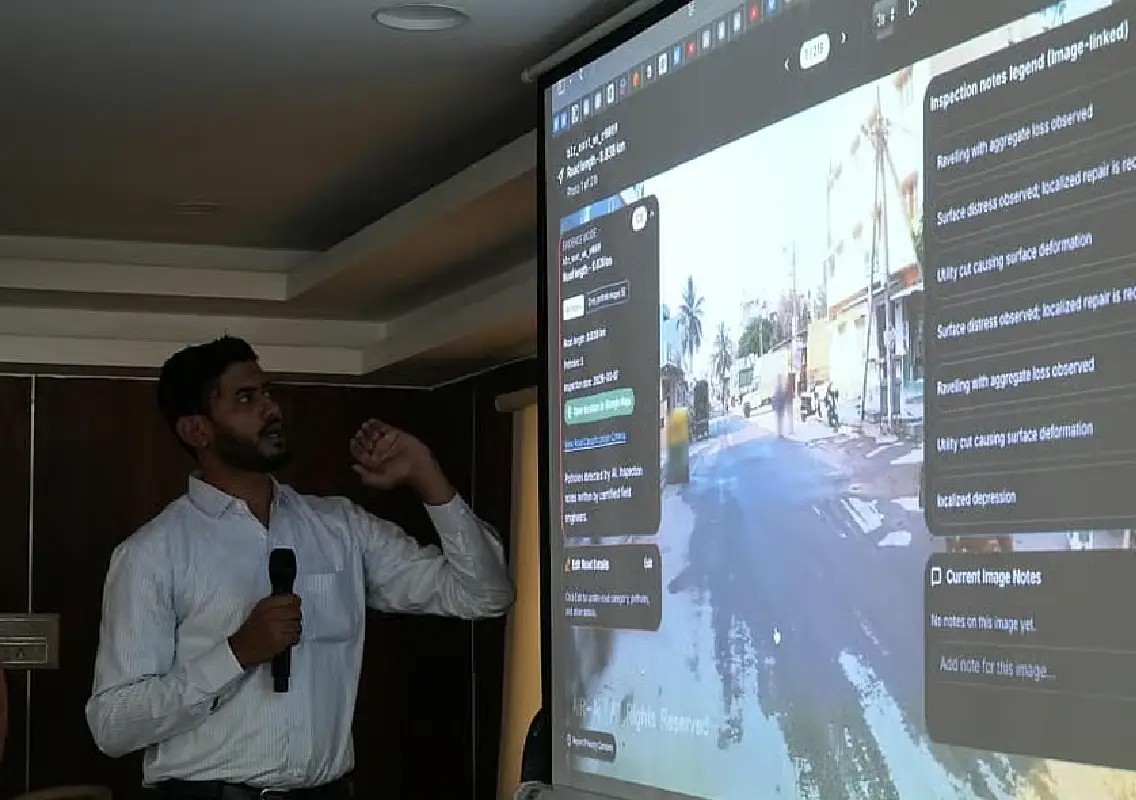


Bengaluru: In a major step towards smarter urban infrastructure, the Bengaluru East City Corporation (BECC) has launched an artificial intelligence (AI)-powered road monitoring system to detect potholes, assess road conditions and help authorities plan repairs more efficiently.
The initiative replaces conventional manual inspections with AI-driven surveys, enabling engineers to identify damaged roads, prioritise maintenance and allocate resources based on real-time data.
AI scans roads for defects
As part of the project, survey vehicles equipped with high-resolution cameras have mapped nearly 1,600 km of roads across the BECC region.
The captured footage is analysed using YOLO (You Only Look Once), a computer vision-based AI model capable of identifying potholes, road cracks, rutting and utility cuts. Based on the findings, every road segment is classified into one of five condition categories, helping officials determine which stretches require immediate attention.
Every road gets a digital identity
The corporation has also assigned each road a unique Road Identification Number (Road ID).
The digital platform stores road names, ward details, GPS coordinates, road length, photographs and damage reports in a central database. A Vision Language Model (VLM) works alongside image segmentation technology to estimate the length and width of potholes, enabling engineers to calculate the quantity of hot mix asphalt required before repair work begins.
However, officials noted that pothole depth still requires on-site verification.
Pilot project identifies 144 potholes
The first phase of the survey has covered all 50 wards under BECC.
Vibhuthipura has been selected as the pilot ward for repairs, where the AI system identified around 144 potholes requiring nearly 144 square metres of patching work—an average of 17 potholes per kilometre.
Authorities have instructed field teams to make the ward pothole-free within one week.
Towards smarter infrastructure management
Officials say the AI-based platform reduces repeated field inspections, improves transparency in repair estimates and allows engineers to focus on the worst-affected roads first.
If the pilot proves successful, BECC plans to expand the initiative to more wards and conduct road surveys before and after every monsoon, using predictive maintenance to detect problems before they become major hazards.
The project marks another step in Bengaluru’s efforts to use emerging technologies to improve civic infrastructure and road safety.