







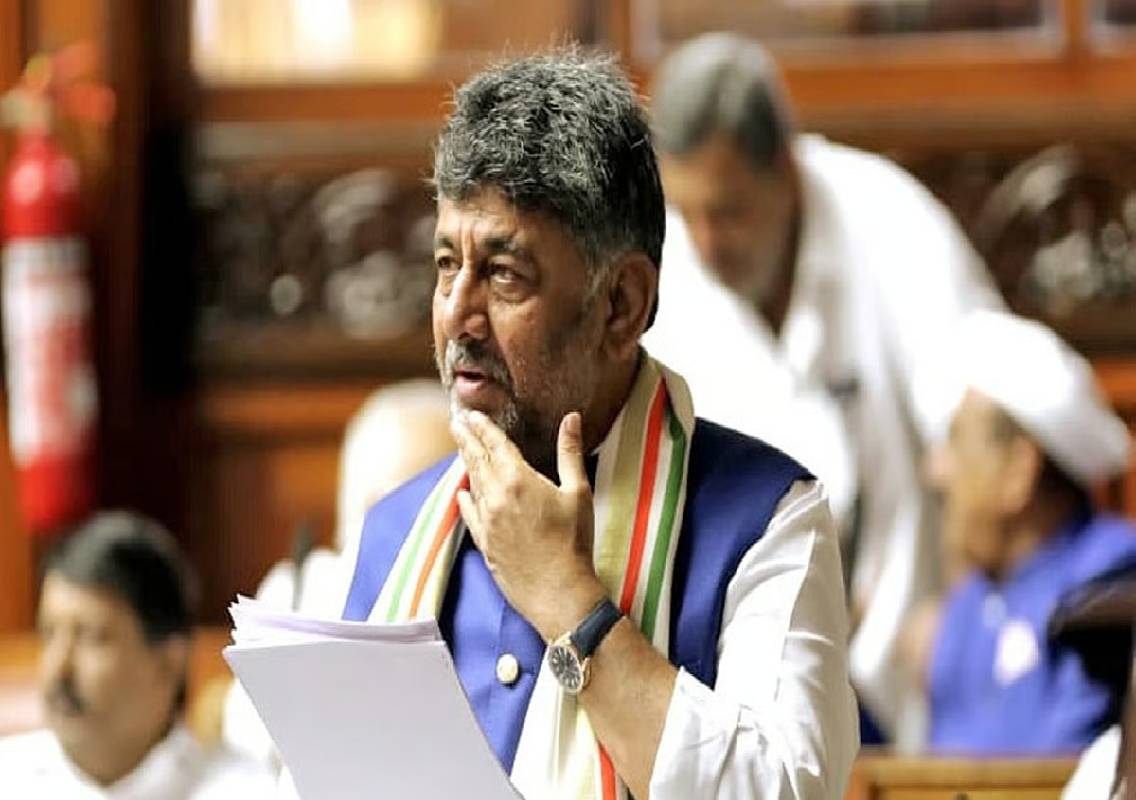


Bengaluru: Karnataka Chief Minister D K Shivakumar has put Bengaluru’s roads, traffic management, flood control and civic services at the centre of the government’s urban development agenda, with greater emphasis on coordination among agencies responsible for the city’s infrastructure.
The focus comes as Bengaluru continues to grapple with persistent traffic congestion, poor road conditions, flooding during heavy rain and concerns over the delivery of basic civic services. The government’s approach is aimed at improving coordination between various agencies and ensuring that infrastructure works address the city’s immediate requirements.
Shivakumar, who also oversees the Greater Bengaluru development portfolio, has been pushing for a more coordinated approach to managing the rapidly expanding city. The Greater Bengaluru Authority (GBA) is intended to bring different civic agencies together for integrated planning and administration.
Roads emerge as a key priority
The condition of Bengaluru’s roads remains one of the major concerns for residents and commuters. Damaged road surfaces, potholes and delays in road repair have repeatedly affected daily travel across the city.
The government’s latest focus seeks to improve the quality and maintenance of roads while ensuring that infrastructure projects are better coordinated. The issue has gained further importance with the expansion of Bengaluru and the increasing pressure on its existing road network.
The city is also witnessing a major push for infrastructure projects, although civil society groups have questioned whether large road and elevated-corridor projects adequately address the needs of public transport users, pedestrians and other road users.
Traffic management under scrutiny
Traffic congestion remains another major challenge for Bengaluru. Recent restrictions on vehicles using some elevated corridors have already prompted authorities to reassess how traffic is being managed.
The Bengaluru Traffic Police recently reviewed restrictions on major flyovers and elevated corridors. While traffic movement improved on some stretches, officials found that diversions around the Kempegowda International Airport Road Elevated Corridor were creating queues and congestion on approach roads. As a result, some restrictions are being introduced in phases.
The developments underline the need for traffic measures to be assessed based on their impact on the wider road network rather than individual corridors alone.
The government’s broader civic planning exercise is therefore expected to consider traffic flow, public transport and road infrastructure together.
Flood control gets renewed attention
Flood management is another major concern for Bengaluru, particularly during periods of intense rainfall.
Rapid urbanisation, construction and pressure on stormwater infrastructure have made several parts of the city vulnerable to waterlogging. Effective flood control requires not only emergency measures during heavy rain but also better maintenance of stormwater drains, protection of natural water channels and coordinated planning of roads and surrounding infrastructure.
The renewed focus on flood control comes as Bengaluru continues to seek long-term solutions to its recurring urban flooding problem.
Greater Bengaluru Authority seeks better coordination
The Greater Bengaluru Authority is expected to play an important role in the government’s approach to civic administration.
At a recent GBA meeting chaired by Shivakumar, government officials, elected representatives and heads of key civic agencies discussed coordinated development and administration across Bengaluru’s five city corporations. The meeting was aimed at improving coordination between agencies and strengthening planning for the city.
The restructuring of Bengaluru’s civic administration has created the need for clear coordination between the individual city corporations and the GBA. Roads, drainage, waste management, traffic and other services often involve multiple agencies, making coordination essential for effective implementation.
Civic services remain a major concern
Along with infrastructure, the government is also focusing on the delivery of everyday civic services.
Waste management, sewage treatment, road maintenance and public infrastructure require regular monitoring rather than only short-term responses when problems become severe. The Karnataka government has also recently ordered inspections of sewage treatment plants in Bengaluru to ensure compliance with environmental standards.
Such measures indicate a wider push towards improving the city’s basic infrastructure and environmental management.
For Bengaluru residents, however, the effectiveness of these initiatives will ultimately depend on implementation on the ground.
Public transport also part of Bengaluru’s mobility push
The government has simultaneously been working on improving public transport and creating a more integrated mobility system.
Karnataka recently launched the One Karnataka Mobility App, bringing services of KSRTC, NWKRTC, KKRTC and BMTC into a unified digital platform. The initiative also includes a common grievance-redressal system and plans for digital monthly passes.
The move is part of a broader effort to make public transport easier to access and improve connectivity across the state.
For Bengaluru, stronger public transport could also help address pressure on roads by providing commuters with alternatives to private vehicles.
Focus shifts towards coordinated urban planning
Bengaluru’s rapid growth has created a complex mix of infrastructure and mobility challenges. The city continues to attract technology companies, investment and a growing workforce, but its expansion has also increased pressure on roads, drainage systems, public transport and civic infrastructure.
The government’s current focus on roads, traffic, flood control and civic services reflects an attempt to address these issues through a more coordinated administrative structure.
The challenge will now be to translate policy decisions and government meetings into visible improvements for residents. Better roads, smoother traffic movement, improved flood management and reliable civic services remain some of the most immediate expectations from Bengaluru’s urban administration.
With the Greater Bengaluru Authority taking a larger role in coordinating the city’s development, the coming months are likely to be important in determining whether the new approach can deliver measurable improvements in Bengaluru’s civic infrastructure.