







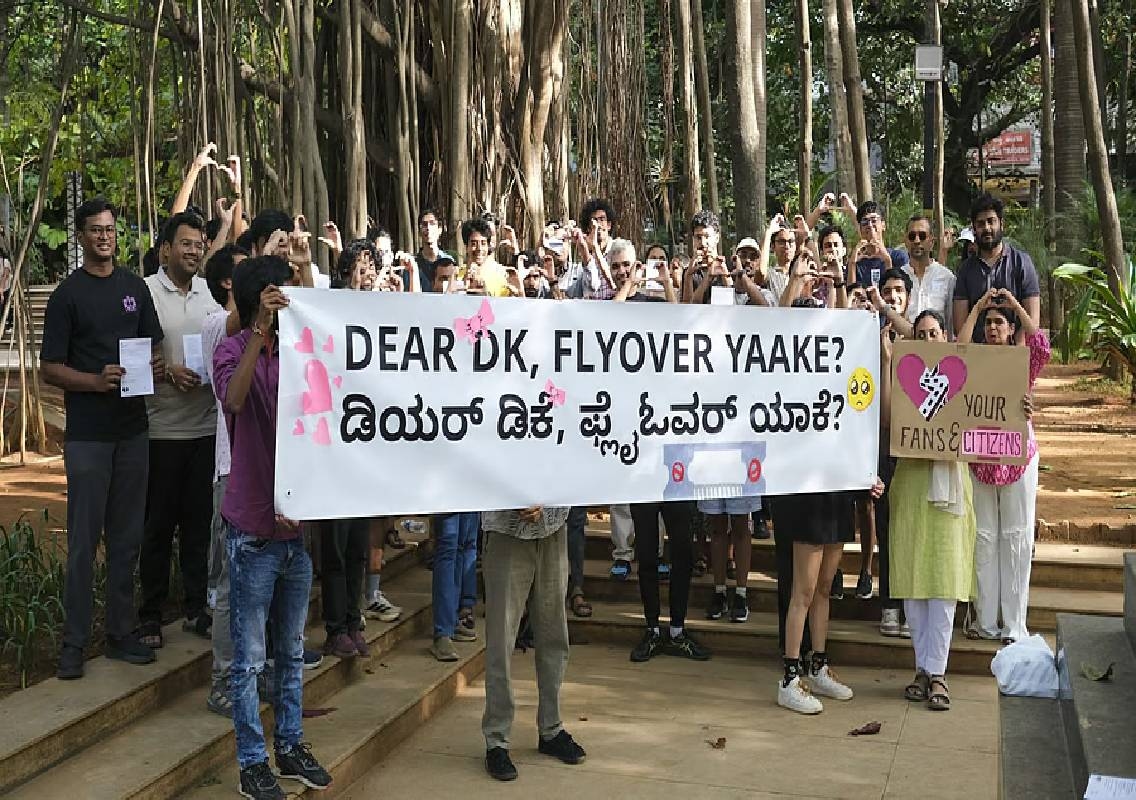


Bengaluru: A group of Bengaluru citizens has launched an online campaign questioning the Karnataka government’s push for new elevated corridors and flyovers across the city, arguing that the focus should be on better public transport, scientific urban planning and people-friendly infrastructure.
The campaign, titled “Dear DK, Flyover Yaake?”, directly addresses Deputy Chief Minister and Bengaluru Development Minister D K Shivakumar. The organisers say they are not opposed to infrastructure development but want major transport projects to be properly planned and discussed with citizens before implementation.
Citizens question the need for more flyovers
The campaign comes amid plans for elevated corridors intended to address Bengaluru’s traffic congestion. Citizens involved in the movement have questioned whether adding more flyovers is the right long-term solution for a city already struggling with traffic, pedestrian infrastructure and public transport connectivity.
The campaign’s social media account says new infrastructure is necessary for a growing city but argues that such projects should be planned in consultation with residents. It has called for the proposed elevated corridors to be withdrawn, describing them as short-sighted.
The campaign has been using the hashtag #DearDKFlyoverYaake, with supporters sharing posts questioning the effectiveness and long-term impact of elevated roads.
The phrase “flyover yaake?” translates to “why a flyover?”, reflecting the campaign’s central question about whether flyovers should continue to be the primary response to Bengaluru’s traffic problems.
Campaign focuses on elevated corridors
One of the key concerns raised by citizens is the proposed network of elevated corridors. The campaign says these projects could affect neighbourhoods and transit patterns while creating prolonged construction-related disruption.
The group has specifically urged citizens to discuss the upcoming elevated corridors and participate in efforts to make their views heard. Its social media account announced a neighbourhood discussion in Indiranagar, inviting residents to join the conversation and sign an appeal against the proposed projects.
The campaign also argues that infrastructure decisions should consider the city’s existing public transport network and the needs of pedestrians and other road users rather than focusing primarily on moving private vehicles faster.
Bengaluru’s flyover debate gains fresh momentum
The debate over flyovers is not new in Bengaluru. The city has previously seen prolonged construction of major flyover projects, with some projects becoming symbols of delays, cost escalation and traffic disruption.
Citizens participating in the latest campaign have pointed to such experiences while questioning whether additional elevated roads would address the root causes of congestion.
Discussions on social media have also raised concerns that building more flyovers could encourage greater dependence on private vehicles. Some residents have argued that investment should instead be directed towards public transport, wider and safer footpaths, cycling infrastructure and better road management.
A Reddit discussion around the campaign similarly highlighted concerns about the proposed elevated corridors and called for greater public participation rather than relying only on online campaigns. Some participants also argued that improving existing roads and public transport could be more effective than repeatedly constructing elevated structures.
Campaign seeks public participation
The organisers are positioning the campaign as a citizens’ movement rather than simply an objection to individual projects. Their stated argument is that Bengaluru’s infrastructure should be designed around the needs of its residents.
The campaign’s social media messaging says a city should be built for its people and calls for a greener and more people-friendly Bengaluru. It has also urged citizens to participate in neighbourhood-level discussions and sign the appeal.
The movement has received support from several Bengaluru-based urban mobility and civic voices online. Posts supporting the campaign have questioned the assumption that flyovers automatically reduce congestion and have called for greater attention to public transport and urban planning.
Public transport remains central to the debate
For critics of the elevated corridor approach, the larger issue is how Bengaluru should manage mobility as its population and traffic volumes continue to grow.
Urban transport planning typically involves more than increasing road capacity. Public transport, pedestrian connectivity, last-mile access, road design and land-use planning all influence how people move through a city.
Campaigners therefore want authorities to examine whether proposed elevated corridors complement Bengaluru’s Metro and bus networks and whether they will provide lasting improvements or simply shift congestion from one junction to another.
The campaign has also called for infrastructure decisions to be based on proper planning and consultation rather than short-term responses to traffic pressure.
Citizens seek a different approach to Bengaluru’s traffic
The “Dear DK” campaign reflects a broader debate about Bengaluru’s future: whether the city should continue expanding road infrastructure for private vehicles or prioritise a more integrated mobility system.
Supporters of the campaign believe the government should consult residents, mobility experts and other stakeholders before proceeding with major elevated projects. They argue that Bengaluru needs solutions that improve everyday mobility without compromising neighbourhoods, public spaces and the city’s liveability.
For now, the online campaign has brought the proposed flyovers back into public discussion, with citizens using social media to directly question the state government’s infrastructure priorities.
As the debate develops, the key question for Bengaluru will be whether new elevated corridors can deliver sustainable congestion relief or whether greater investment in public transport and existing road infrastructure would offer a more effective long-term solution.