


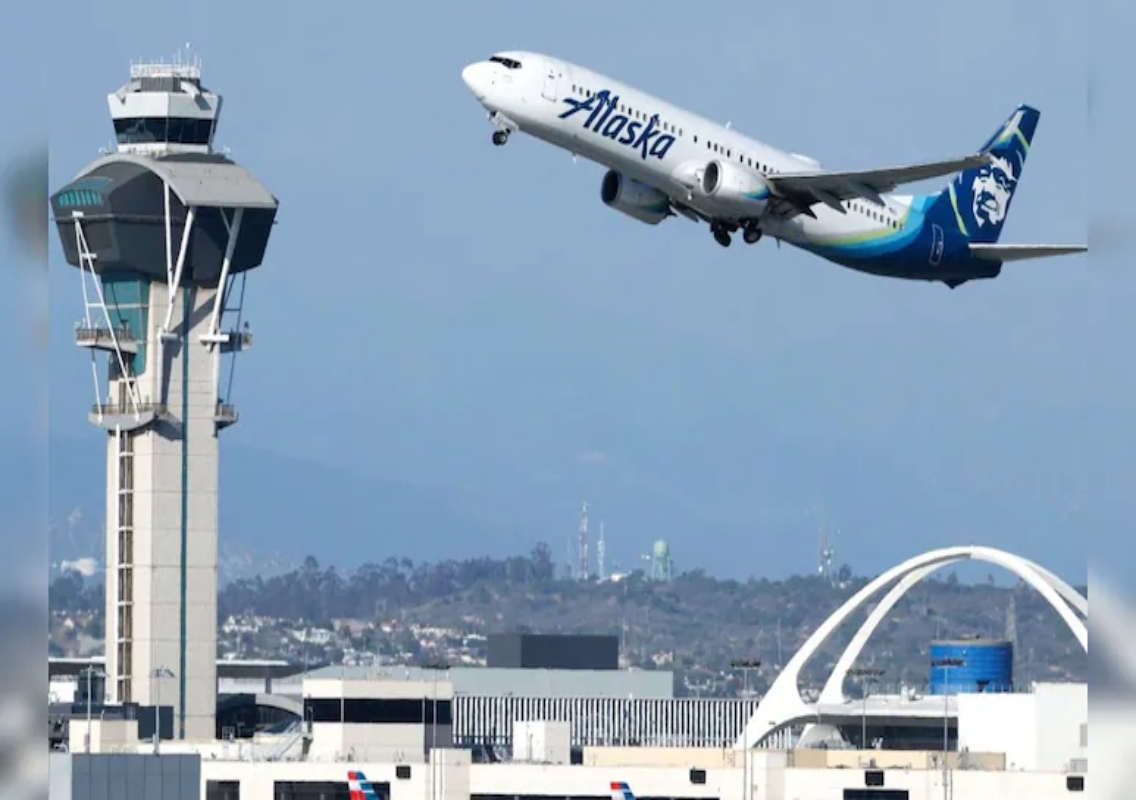


Seattle: Alaska Air Group plans to eliminate around 200 non-contract positions as soaring jet fuel prices and geopolitical uncertainty put pressure on its finances. The job cuts come even as the US airline group reports revenue growth and continues investing in premium cabins and international routes following its acquisition of Hawaiian Airlines.
The proposed reduction represents less than 1% of the company’s workforce of approximately 32,500 employees. Alaska Air Group owns Alaska Airlines and Hawaiian Airlines, along with regional carrier Horizon Air.
The development highlights how rising aviation fuel costs are affecting airline profitability, with higher passenger revenue proving insufficient to offset the increase in operating expenses. Chief Executive Ben Minicucci has warned employees that the company could face a loss of as much as $700 million this year if current conditions continue.
Nearly 200 non-contract positions to be eliminated
The job reductions will primarily affect non-contract roles and will not include frontline, non-management employees
Of the positions identified in the report, 125 are in Washington state and 48 are in Hawaii. The company has not publicly provided a complete breakdown of all the affected roles.
Employees affected by the cuts are expected to have their last working day on November 13. However, they will continue receiving pay through December 31, along with severance and other support, according to an internal memo reviewed by Reuters.
Minicucci told employees that overhead expenses had grown at a disproportionate rate compared with revenue over the past few years. The company is now seeking to restore financial discipline while managing the cost pressures facing its operations.
The cuts are relatively small compared with the group’s overall workforce, but they reflect the growing financial challenges facing airlines as fuel prices rise and operating costs increase.
Fuel prices erode gains from revenue growth
Alaska Air Group’s third-quarter financial performance illustrates the pressure created by higher fuel expenses.
The company reported revenue of $4.3 billion, representing a 14% increase compared with the corresponding period last year. Premium revenue grew by approximately 25%, while managed corporate revenue increased by 30%.
Despite the growth, the group recorded a GAAP net loss of $147 million and an adjusted net loss of $35 million.
Fuel costs were a major factor behind the weaker earnings. Alaska had budgeted for an average fuel price of $3.75 per gallon during the quarter but ended up paying approximately $3.94 per gallon.
The increase came amid disruptions to crude oil shipments linked to the conflict involving the United States and Iran. Geopolitical uncertainty and supply disruptions have contributed to volatility in energy markets, increasing the cost of operating aircraft.
The company’s adjusted pre-tax margin also declined to 1.1% from 4.6% a year earlier, despite the increase in revenue.
Company warns of up to $700 million loss
Alaska Air Group has revised its financial outlook in response to the fuel-cost shock.
The company expects fourth-quarter fuel prices to average between $4.65 and $4.85 per gallon. This is significantly higher than the $2.50-per-gallon assumption used in its original 2026 plan.
For the full year, Alaska has forecast an adjusted loss of $5 to $5.50 per share. It estimates that fuel expenses will be around $1.8 billion higher than originally planned.
Minicucci’s warning of a potential $700 million pre-tax loss underlines the scale of the challenge. If realised, it would be the company’s first adjusted pre-tax loss outside the pandemic period since 2003, according to Reuters.
The warning is particularly significant because Alaska has continued to record growth in passenger-related revenue. The figures suggest that the rise in fuel expenses is outpacing the benefits of stronger demand and higher-value travel products.
Hawaiian Airlines integration and international expansion continue
The job cuts come as Alaska Air Group works to integrate Hawaiian Airlines into its wider business.
The acquisition has expanded the group’s network and provided opportunities to strengthen its presence in international markets. The two airlines unified their booking and mobile application systems in April, allowing customers to book journeys across the combined network more seamlessly.
Alaska is also pursuing a strategy focused on premium travel, international routes and an enhanced customer experience. Its investments include premium cabins, loyalty programmes and fleet development.
The company recently announced direct services from Seattle to Osaka in Japan and Tahiti, reflecting its plans to expand its long-haul network.
Minicucci has indicated that the airline will continue investing in its fleet, customer experience and route network even as it tightens spending elsewhere.
This creates a balancing act for the company: it wants to protect its longer-term growth strategy while reducing overheads to manage the immediate impact of higher fuel costs.
US airlines face wider cost pressures
Alaska Air Group is not the only US airline facing pressure from higher fuel expenses.
Delta Air Lines, American Airlines and Southwest Airlines have also reduced their 2026 earnings forecasts. The industry is dealing with a combination of higher fuel prices, geopolitical uncertainty and changes in capacity planning.
US airfares rose by an average of nearly 23% year on year during the seven months through September, according to US Labor Department data cited in the Reuters report. However, higher fares have not fully protected airline earnings from the rise in operating costs.
Airlines have responded by increasing ticket prices and slowing some planned capacity growth. Alaska’s decision to reduce non-contract positions suggests that the cost pressure is also beginning to affect staffing decisions.
The airline’s latest move reflects the difficulty of maintaining expansion plans during a period of sharp input-cost increases. While its premium and international business continues to develop, the company must also address the immediate impact of fuel expenses on profitability.
The coming quarters will show whether fuel prices ease sufficiently to support a recovery in margins or whether airlines will need further adjustments to fares, capacity and operating costs.