







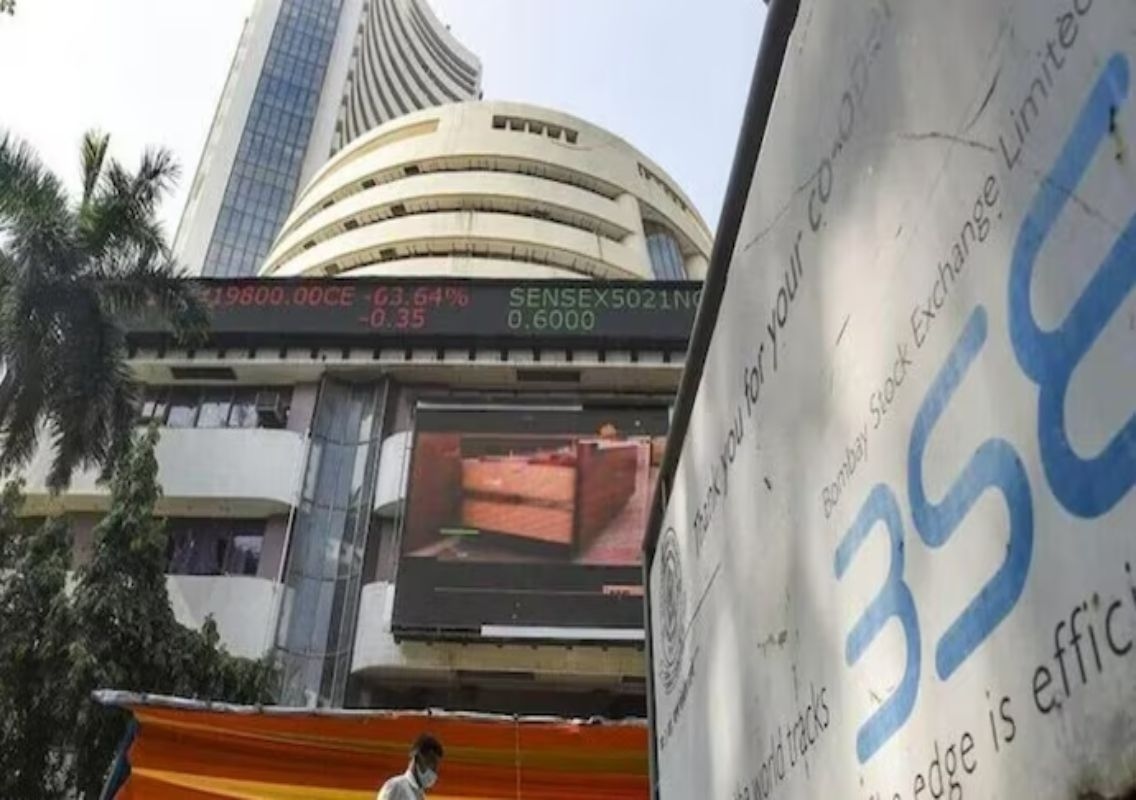


Mumbai: Indian stock markets are expected to open lower on Monday, weighed down by rising crude oil prices, escalating geopolitical tensions in the Middle East and concerns over higher interest rates in the United States.
Early indicators suggest a weak start for benchmark indices. GIFT Nifty futures were trading at 23,138 at 8:06 am IST, signalling that the NSE Nifty50 could open nearly 1% below its previous close of 23,366.70. Analysts expect heightened volatility as global and domestic factors continue to pressure investor sentiment.
Rising crude oil prices trigger concerns
One of the primary reasons behind the expected market decline is the sharp rise in crude oil prices. Brent crude surged about 3.5% to around $96.5 per barrel after Iran launched missile strikes at Israel in response to Israeli military action in Beirut.
The escalation has heightened fears of prolonged conflict in the region and raised concerns about disruptions to global oil supply. The Strait of Hormuz, a critical energy route, remains at risk, further adding to market anxiety.
For India, which imports over 85% of its crude oil needs, higher oil prices pose significant challenges. Increased import costs can push up inflation, widen the trade deficit and exert pressure on the rupee, all of which are negative for equity markets.
Weak global markets add pressure
Global market cues remain unfavourable, contributing to the bearish outlook. Asian markets witnessed a sharp selloff, with the MSCI Asia ex-Japan index falling 3.4%.
South Korea’s KOSPI plunged 6.9%, while Japan’s Nikkei dropped 4.4%, led by declines in technology and artificial intelligence-related stocks. The weakness follows a steep fall in US markets on Friday, where the Nasdaq index dropped more than 4% after strong jobs data raised concerns about prolonged high interest rates.
Higher US interest rates typically make American assets more attractive, leading to capital outflows from emerging markets like India. This shift in global investment patterns has added to the pressure on Indian equities.
Fears of US rate hike and FII outflows
Another key factor weighing on sentiment is the growing expectation that the US Federal Reserve may raise interest rates later this year. According to market data, the probability of a rate hike by December 2026 has increased sharply to 72.3% from 45.2% just a week ago.
This has intensified concerns about foreign portfolio investor (FPI) outflows. In 2026 alone, FPIs have already sold equities worth $28.63 billion, surpassing the record outflows seen in the previous year.
Sustained outflows from foreign investors can reduce market liquidity and increase volatility, further weakening stock market performance.
RBI policy and domestic outlook
On the domestic front, the Reserve Bank of India (RBI) kept interest rates unchanged in its recent policy review. However, it revised its economic projections, raising inflation estimates for FY27 to 5.1% from 4.6% and lowering GDP growth forecasts to 6.6% from 6.9%.
Despite these revisions, India’s economy continues to show resilience. Official data released after market hours on Friday indicated that GDP growth stood at 7.8% in the March quarter, supported by strong domestic demand.
Analysts believe that while global uncertainties may dominate in the short term, India’s strong macroeconomic fundamentals could provide some cushion to the markets.
Technical indicators signal weakness
From a technical perspective, the Nifty50 remains under pressure. Analysts note that the index is trading below key moving averages and continues to form a lower high-lower low pattern, indicating a bearish trend.
The crucial support zone is placed between 23,100 and 23,000. A break below this level could trigger further selling, potentially dragging the index towards 22,700.
On the upside, resistance is seen at 23,500, with stronger resistance around 23,700. The index recently formed a bearish candle on the daily chart and failed to hold above the 23,400 mark, which had previously acted as support.
Momentum indicators also remain weak. The Relative Strength Index (RSI) is at 40.64, suggesting limited buying strength, while the MACD continues to remain in negative territory.
Options data and market positioning
Derivatives data indicates cautious sentiment among traders. The Nifty Put-Call Ratio (PCR) has declined to 0.83 from 1.00, signalling reduced bullishness.
Option chain data shows strong support near the 23,000 strike, while heavy call writing is visible in the 23,500–23,700 range, reinforcing it as a key resistance zone.
Bank Nifty shows relative resilience
In contrast to the broader market, Bank Nifty has shown some resilience. The index has extended gains for four consecutive sessions and is trading above its 20-day exponential moving average.
Momentum indicators for Bank Nifty have improved, with the RSI rising to around 50 and showing a positive crossover. Immediate support is seen between 53,700 and 52,700, while resistance is placed near the 55,000 level.
Conclusion
The overall market setup points to a weak opening for Indian equities, driven by rising oil prices, geopolitical tensions and concerns over tighter US monetary policy. While domestic economic fundamentals remain relatively strong, external factors are likely to dominate in the near term.
Investors are expected to remain cautious, with volatility likely to persist. The Nifty’s immediate range is seen between 23,000 and 23,500, and a decisive move beyond this band could determine the market’s next direction.
(Disclaimer: The views, opinions, recommendations, and suggestions expressed by experts/brokerages in this article are their own and do not reflect the views of the News Karnataka Group. It is advisable to consult a qualified broker or financial advisor before making any actual investment or trading choices.)