







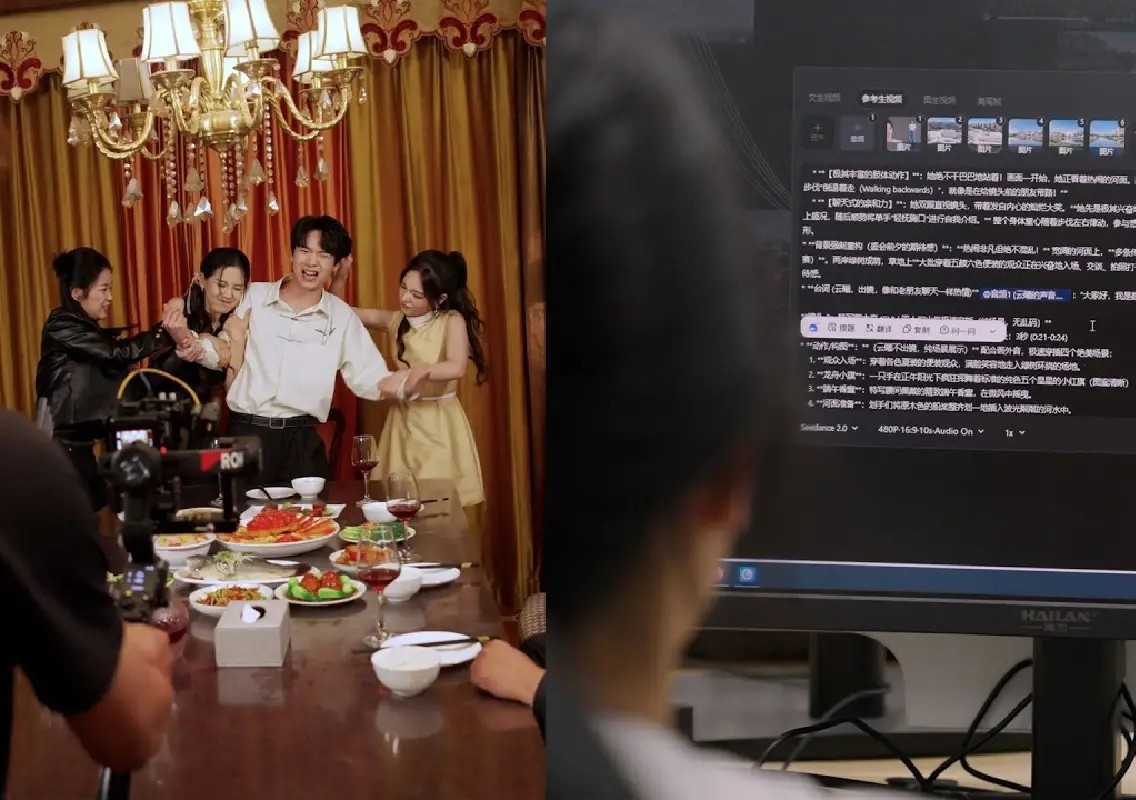


Artificial intelligence-generated dramas are rapidly transforming China’s entertainment industry, moving from low-quality social media clips to prime-time television.
The shift became particularly visible this week when a fully AI-generated adaptation of the classic Chinese novel Journey to the West premiered on Hunan Satellite Television, a major broadcaster. The 30-episode series has episodes of around 40 minutes and reportedly took only three months to move from commission to broadcast.
The development has also attracted investor interest, with shares of Mango Excellent Media, the listed company linked to the broadcaster, reaching their daily trading limit twice during the week.
AI drama production is growing rapidly
The technology is spreading quickly across China’s short-drama industry. According to the China Netcasting Services Association, 367,000 microdramas were released across Chinese platforms during the first half of 2026.
More than 74% were AI-generated, amounting to an average of more than 1,500 new AI dramas each day.
Producers say AI can dramatically reduce production time and costs. A small team can reportedly produce a 100-minute vertical drama within a week, while more sophisticated productions can progress at roughly one 45-minute episode per week.
New jobs are replacing traditional production roles
Fully AI-generated productions can reduce the need for conventional roles such as actors, cinematographers, lighting teams and set crews.
Instead, production teams increasingly rely on workers sometimes referred to as “card pullers”. These specialists combine prompt engineering with visual editing, repeatedly adjusting instructions and reference images until an AI model produces a usable scene.
Streaming platforms are also encouraging the trend through financial incentives and increased algorithmic promotion for AI-generated productions.
Speed has arrived before quality
Despite the rapid progress, AI video technology still faces technical limitations.
Maintaining consistent characters and locations, interpreting complicated instructions and producing longer clips remain challenges. Emotional scenes can be particularly difficult for AI systems to reproduce convincingly.
Some producers believe audiences are willing to overlook visual glitches when stories offer rapid twists and dramatic entertainment.
However, critics worry that the enormous volume of inexpensive AI content could encourage repetitive storytelling and lower expectations for quality.
Concerns grow over younger viewers
Consultant Ivy Yang said short dramas were particularly vulnerable to becoming formulaic because the genre already relies heavily on familiar plots designed to attract algorithmic attention.
AI could make reproducing those formulas even cheaper and faster.
She has also raised concerns about younger viewers, who are still developing their understanding of storytelling and visual quality. An abundance of simplistic content could, she argued, reduce viewers’ patience for slower stories, ambiguity and narratives that require greater attention.
AI cannot replace human creativity
China’s rapid adoption of AI entertainment has also raised questions about regulation and the future of traditional filmmaking.
The country’s cyberspace regulator recently announced a major campaign targeting harmful AI-generated material, including fake information, explicit and violent content, impersonation and content involving minors.
At the same time, some filmmakers remain concerned that distributors increasingly expect AI to be incorporated into productions even when it may not be suitable.
The technology is lowering barriers to entry and making production faster and cheaper, but industry professionals stress that AI cannot replace the creative talent needed to develop compelling stories.
China’s experience could therefore offer an early glimpse of the future of entertainment: AI may make producing stories dramatically easier, but deciding which stories are worth telling could remain a distinctly human skill.#ArtificialIntelligence #AIDrama #AIContent #China #Entertainment #GenerativeAI #FilmIndustry #Technology