


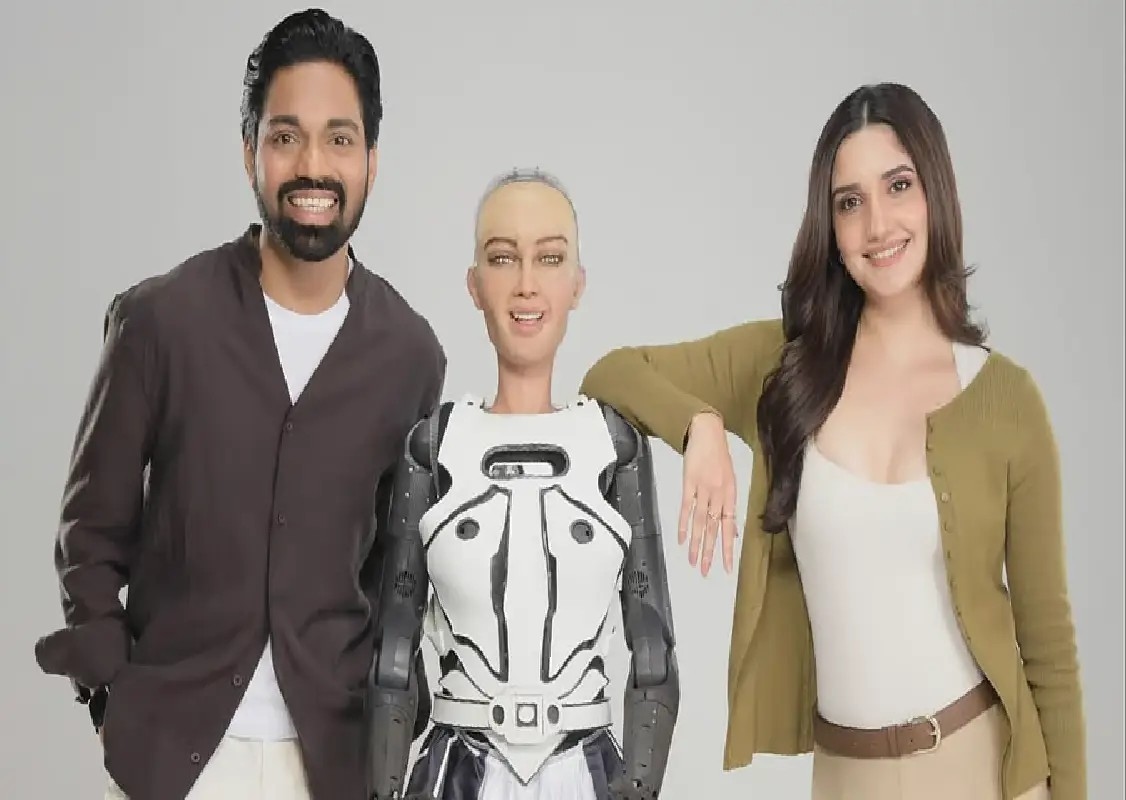


Bengaluru: Kannada filmmaker Simple Suni is exploring a new frontier in science fiction with Lambodara 2.0, a high-concept thriller that brings an actual humanoid robot into a lead role instead of relying entirely on computer-generated imagery (CGI).
The film features ‘JIA’, a state-of-the-art physical humanoid developed by Bengaluru-based technology company Machani Robotics. Unlike digitally created robotic characters that are added during post-production, JIA will be physically present on the sets and perform alongside the human actors in real time.
The approach is being positioned as a significant experiment for Indian cinema, combining filmmaking with advances in robotics and artificial intelligence.
A real humanoid on the sets
One of the most distinctive aspects of Lambodara 2.0 is Simple Suni’s decision to use a functioning humanoid robot rather than creating the character through visual effects.
JIA is designed to interact with the actors and environment directly, allowing the filmmakers to capture the robot’s physical presence during filming. The approach reduces the need for extensive CGI or conventional prosthetic techniques to create the robotic character.
The physical presence of JIA also introduces a different dimension to the filmmaking process. Instead of actors imagining their interactions with a digital character that will be inserted later, they can perform alongside the robot during the actual shoot.
The film’s makers see this as more than a technical novelty. The presence of JIA is closely connected to the central themes of the story, which examines the increasingly complicated relationship between people and technology.
Bengaluru becomes the backdrop for a sci-fi thriller
Set in Bengaluru, Lambodara 2.0 explores the impact of technology on everyday human life. The story follows an ordinary man who becomes caught in the psychological maze created by the modern digital environment.
The narrative touches upon issues including excessive screen time, loneliness despite constant digital connectivity and the growing presence of surveillance in people’s lives.
Through its science-fiction framework, the film examines how technology can influence emotions, behaviour and personal choices. The story also raises questions about the distinction between authentic human experiences and increasingly sophisticated synthetic realities.
The decision to use a real humanoid therefore becomes an extension of the film’s subject matter. The robot is not merely being introduced as a visual attraction but as a physical representation of the technological world explored by the story.
Anil Shetty makes his big-screen debut
Lambodara 2.0 marks the acting debut of Anil Shetty, who takes on the lead role opposite Sachi Bindra.
Speaking about the project, Anil described the film as a reflection of the world people live in today. According to the actor, the story examines how modern technology can influence human emotions and choices.
For Anil, beginning his film career with a science-fiction project of this scale also provides an opportunity to work with Simple Suni and a distinctive technological concept.
The film brings together newcomers and established performers, with Bollywood actor Kunal Kapoor joining the Kannada project in a pivotal role.
Kunal Kapoor enters Kannada cinema
Kunal Kapoor, known for films including Rang De Basanti and Don 2, is making an important entry into Kannada cinema with Lambodara 2.0.
His character plays a crucial role in the film’s central storyline and is connected to a major plot development. His presence adds another established name to a project that otherwise features a new lead actor and an unusual technological element.
The casting also gives the film a wider reach beyond the Kannada film industry while retaining Bengaluru and Kannada cinema as its creative base.
When robotics meets acting
The use of JIA could have implications beyond the film itself. Physical robots have previously been used in demonstrations, research, advertising and entertainment, but placing a functioning humanoid in a principal cinematic role presents a different challenge.
Actors and filmmakers must account for the robot’s physical movements, timing and interaction with the surrounding environment during production. At the same time, the robot provides filmmakers with something that a completely computer-generated character cannot: a tangible presence that can be photographed directly by the camera.
This could also change the way audiences perceive artificial characters on screen. Rather than seeing an entirely digital creation, viewers will be watching a real machine interacting with human performers in the same physical space.
For Indian cinema, Lambodara 2.0 therefore represents an experiment at the intersection of filmmaking, robotics and AI.
A story about AI that experiments with AI-era cinema
Simple Suni’s decision to place a real humanoid at the centre of the production mirrors the film’s broader concerns about synthetic reality and human emotion.
The story examines how people are being affected by technologies that increasingly dominate their daily lives. The filmmaking process itself reflects that question by bringing a machine into direct interaction with human performers.
Rather than treating robotics simply as a futuristic visual element, Lambodara 2.0 attempts to make the technology part of the filmmaking experience.
As the boundaries between humans and machines continue to evolve, the film offers Kannada cinema an opportunity to explore those changes not only through its narrative but also through the way the movie is made.