







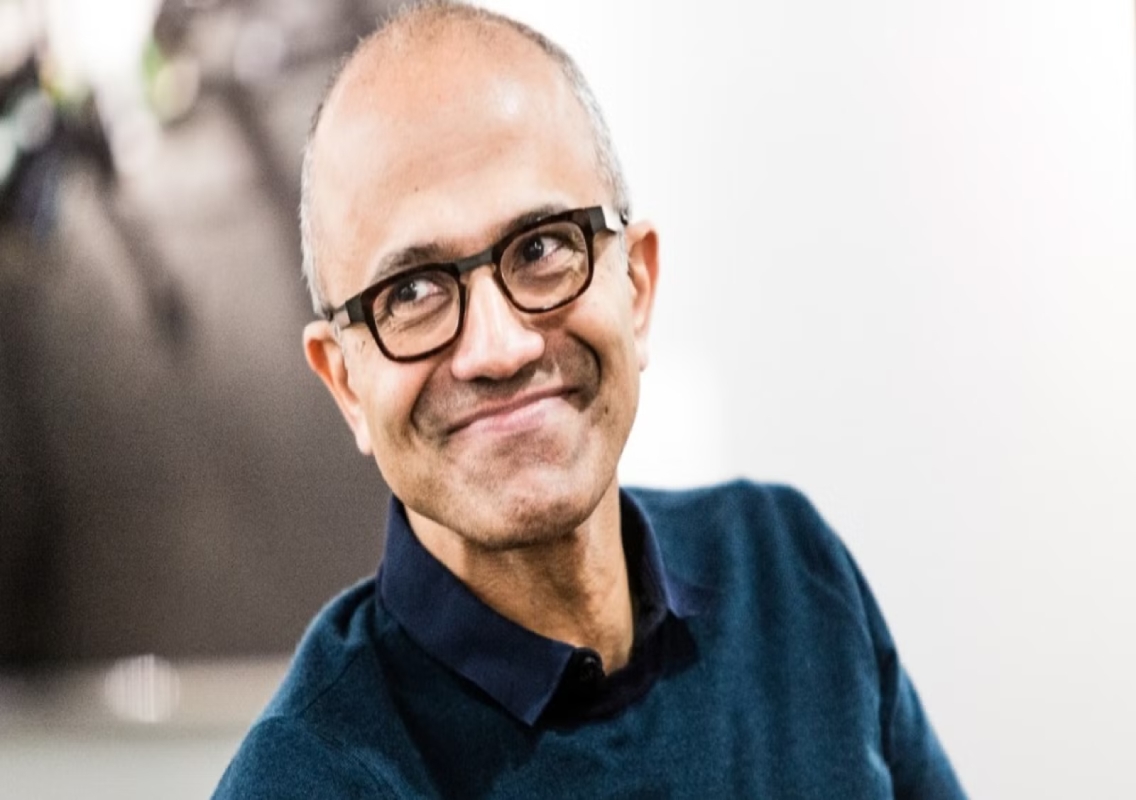


Redmond: Microsoft CEO Satya Nadella has said the company needs to make its Xbox gaming business economically sustainable while continuing to invest in games, hardware and services.
Speaking during a Hard Fork podcast event in San Francisco, Nadella discussed the challenges facing Xbox and the company’s plans to reassess how the gaming business operates. His comments came shortly after Xbox leadership announced a broader reset focused on hardware, content, services and the platform’s long-term business model.
Nadella said Microsoft has invested heavily in gaming over the past 25 years but now needs to ensure that its gaming business can generate sustainable returns.
The comments come at a significant point for Xbox, with Microsoft working on its next-generation hardware while also expanding the reach of Xbox games across PC, cloud, mobile and other devices.
Nadella says Xbox must become sustainable
Nadella acknowledged Microsoft’s long history of investment in gaming and said the company now needs to find an economically sustainable model for the business.
He pointed to the challenge of monetising gaming entertainment while Microsoft continues to invest in hardware and software.
Nadella also discussed the relationship between Xbox and the wider gaming ecosystem, noting that players increasingly consume and interact with games across multiple platforms.
His comments do not amount to an announcement of a specific price increase or a decision to abandon traditional Xbox consoles. Instead, they reflect Microsoft’s broader review of how the gaming business should operate in the coming years.
Xbox leadership has separately said that the company needs to reassess its investments after spending more than $20 billion over five years on content, platforms and hardware subsidies, excluding Activision Blizzard King.
Xbox faces hardware and component challenges
Hardware costs are another major issue identified by Microsoft.
In its June 2026 “Xbox Reset” message, Xbox CEO Asha Sharma and Xbox Studios chief Matt Booty said the company was facing a hardware component crisis. They noted that the price Microsoft pays for console storage components had risen substantially and that memory costs were also increasing.
The company said these conditions were affecting its ability to produce as many consoles as players wanted.
Nadella similarly referred to shortages affecting semiconductors and memory across consumer electronics. He described these supply pressures as a temporary challenge but said Xbox also faced a longer-term question over what its business model should look like.
Microsoft has said it remains committed to its next-generation console project, known as Project Helix. The company announced in March that the hardware is being developed with AMD and is designed to support Xbox console and PC games. Developer versions of the hardware are planned to begin reaching developers in 2027.
Xbox plans to reach players across devices
Microsoft’s strategy is increasingly centred on making Xbox games available across multiple types of hardware.
The company has said players should be able to access games through consoles, Windows PCs, mobile devices and streaming services. Xbox Play Anywhere already allows supported games to be purchased once and played across Xbox and Windows, with progress carried between devices.
The Xbox Play Anywhere catalogue has grown to more than 1,500 games, according to Microsoft, with hundreds of development teams supporting the programme.
Xbox leadership has also described multiple ways for players to access games, including purchasing titles outright, subscribing through Game Pass and using cloud gaming.
Matt Booty said in a June interview that Xbox wants to provide players with multiple ways to play, including purchases, subscriptions, cloud gaming and handheld devices.
Game Pass strategy is also changing
Game Pass remains an important part of Microsoft’s gaming strategy, but the company has acknowledged the need to reassess its offering.
Microsoft said its Game Pass service had begun growing again after more than eight months of decline, following changes to the service. The company has also said it wants to improve the value it provides to players while ensuring the business remains financially sustainable.
The wider strategy is therefore not limited to hardware. Microsoft is examining how its games, subscription services, cloud infrastructure and devices work together.
The company has also acknowledged that maintaining a large portfolio of studios and simultaneously supporting several strategies — including subscriptions, streaming and devices — had left the organisation stretched.
Xbox leadership said the company needs to reassess the balance between first-party exclusives, third-party games and new intellectual properties over the next five years.
Project Helix remains part of Microsoft’s plans
Despite the questions surrounding Xbox’s business model, Microsoft has continued to publicly discuss its next-generation console.
Project Helix is being developed as a next-generation Xbox platform capable of playing both Xbox console games and PC games. Microsoft has described it as part of a broader effort to reduce barriers between console and PC gaming.
The company also plans to make the Xbox experience more consistent across different screens. Xbox mode is being brought to Windows, while the company is working to make its platform accessible on additional devices.
Microsoft’s comments indicate that the next generation of Xbox will not be built around the traditional console model alone.
Xbox is reassessing its studio investments
The business review has also affected Microsoft’s game development organisation.
In June, Xbox leadership said its studio system had expanded significantly while the company’s strategic priorities were changing. The company acknowledged that it had become overextended and said it needed to reconsider its investment priorities.
That reassessment has been accompanied by workforce reductions and changes involving some Xbox-owned studios. Fortune reported in July that Xbox CEO Asha Sharma described the restructuring as a fundamental reset of how the division operates and invests.
At the same time, Microsoft has said that major franchises remain central to the company’s future gaming plans.
The company has highlighted established properties and the need for a reliable pipeline of first-party and third-party games as part of the reset.
What Nadella’s comments mean for Xbox
Nadella’s remarks point to a broader shift in how Microsoft views the Xbox business.
The company continues to invest in a new generation of hardware, but it is also expanding Xbox beyond the traditional console market. PC gaming, cloud streaming, mobile devices, Game Pass and cross-platform play are increasingly part of the same ecosystem.
At the same time, Microsoft is examining the costs associated with maintaining hardware, funding studios and offering games through subscriptions.
For players, the immediate direction remains centred on more ways to access Xbox games rather than a single device. Microsoft has not announced an end to Xbox consoles, while Project Helix remains in development.
The precise shape of Xbox’s long-term business model is still being worked out. Nadella’s comments, together with the June Xbox reset announcement, show that Microsoft is focusing on making its gaming operations financially sustainable while maintaining investment in games, hardware and services.
More details are expected as Microsoft continues its transition towards the next generation of Xbox.