







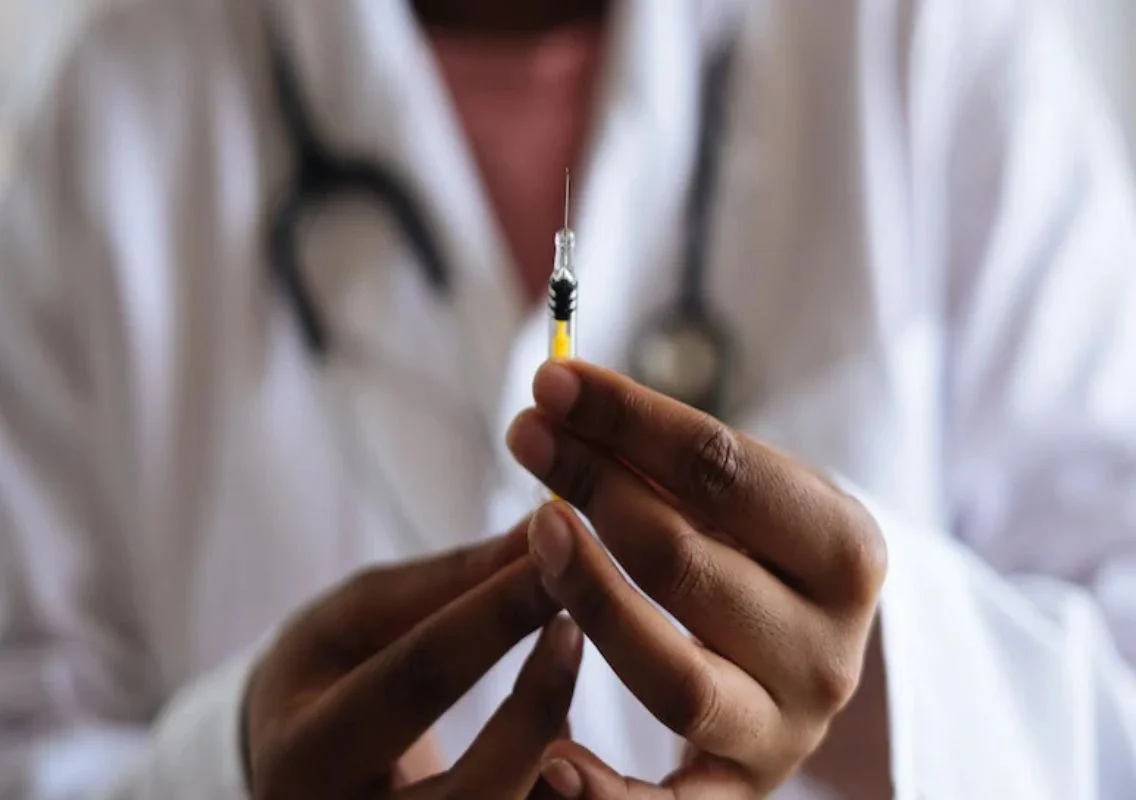


New Delhi: A new “fridge-free” vaccine that remains stable at room temperature has shown encouraging results in early human trials, raising hopes of a major breakthrough in global immunisation efforts.
The experimental vaccine, designed to eliminate the need for refrigeration, could significantly improve vaccine access in remote and resource-limited regions, including large parts of India.
A breakthrough in vaccine technology
The vaccine, known as SPVX02 vaccine, targets tetanus and diphtheria and has been developed by UK-based biotech firm Stablepharma in collaboration with the UK Health Security Agency.
Early findings from a Phase I clinical trial indicate that the vaccine can remain stable at temperatures of around 30°C for up to two years without losing effectiveness.
This marks a significant departure from conventional vaccines, which typically require storage at 2°C to 8°C under a strict temperature-controlled system known as the “cold chain”.
Challenges of the cold chain system
Most vaccines are highly sensitive biological products that degrade when exposed to temperature variations. To maintain their potency, they must be transported and stored under carefully regulated conditions.
However, maintaining this cold chain is both expensive and logistically complex. It requires continuous refrigeration, specialised transport systems and reliable electricity — resources that are not always available in rural or low-income regions.
Public health experts estimate that a significant proportion of vaccines globally are lost due to cold chain failures, including power outages, equipment breakdowns and transportation delays.
How the new vaccine works
The SPVX02 vaccine uses a proprietary stabilisation technology that protects its active ingredients from heat exposure, allowing it to remain effective even outside refrigerated conditions.
The Phase I trial, conducted in the United Kingdom, evaluated the vaccine’s safety and immune response in healthy volunteers. While these early trials primarily focus on safety and dosage, the results have been described as promising.
Further clinical trials will be required to confirm its effectiveness and compare it with existing vaccines before it can be approved for widespread use.
Implications for India’s immunisation programmes
The development could have major implications for India’s Universal Immunisation Programme, one of the largest vaccination drives in the world.
India relies heavily on an extensive cold chain network to deliver vaccines across diverse geographic and climatic conditions. Maintaining this infrastructure can be particularly challenging in remote areas where electricity supply is inconsistent.
A thermostable vaccine could simplify logistics by allowing storage and transport at room temperature, reducing dependence on refrigeration and lowering the risk of spoilage.
Wider benefits beyond distribution
Experts say the impact of fridge-free vaccines could extend beyond logistics:
- Reduced wastage: Fewer vaccines lost due to temperature fluctuations
- Lower costs: Reduced investment in cold storage and transport systems
- Faster emergency response: Easier deployment during outbreaks and disasters
- Environmental benefits: Lower energy use and reduced carbon footprint
Such improvements could help increase vaccination coverage globally, particularly in underserved populations.
What lies ahead
Despite the promising early results, the vaccine is still in the early stages of development. It must undergo larger Phase II and Phase III trials to establish its safety, efficacy and long-term benefits.
Researchers also believe the same stabilisation technology could be applied to other vaccines and temperature-sensitive medicines in the future.
Conclusion
The emergence of a fridge-free vaccine represents a potentially transformative step in public health. By removing one of the biggest logistical barriers to vaccine delivery, it could make immunisation programmes more efficient, accessible and cost-effective.
For countries like India, where reaching every individual remains a challenge, such innovations could play a crucial role in strengthening healthcare systems and saving lives.
Disclaimer: This content including advice provides generic information only. It is in no way a substitute for a qualified medical opinion. Always consult a specialist or your own doctor for more information.