


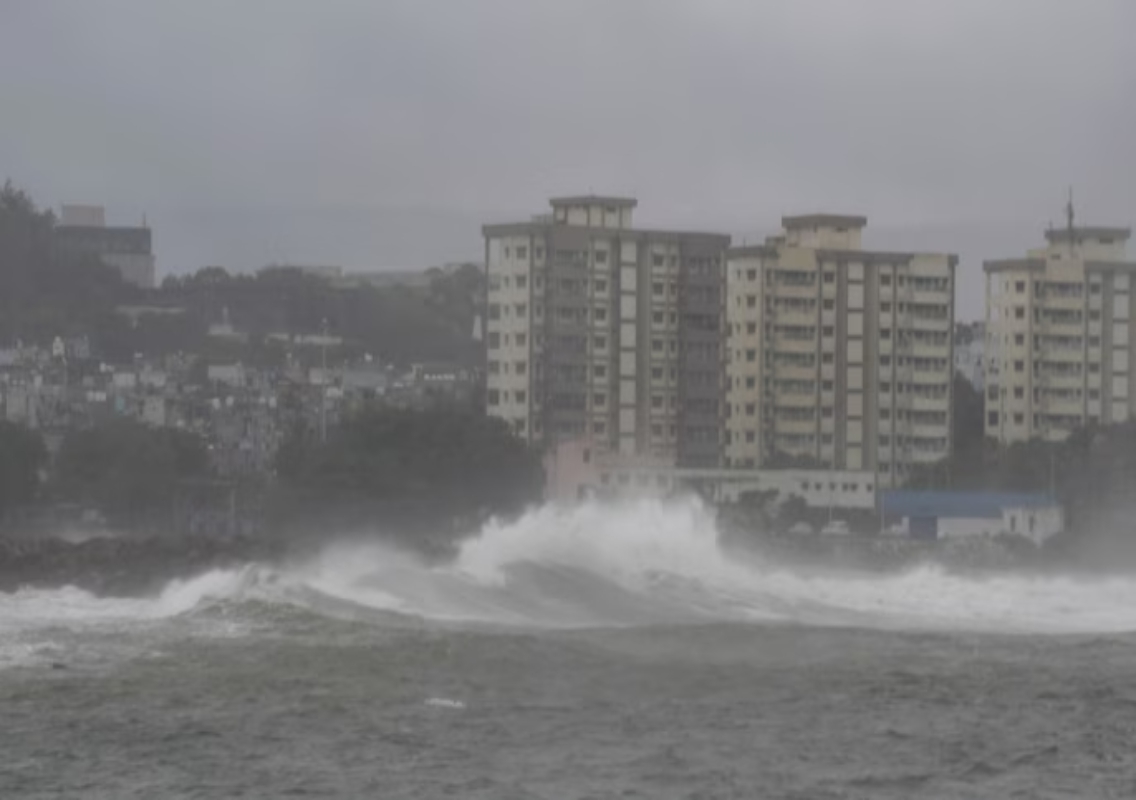


Amaravati: Very severe cyclonic storm Arnab began making landfall along the Andhra Pradesh coast in the early hours of Wednesday, October 28, bringing the threat of destructive winds, intense rainfall and coastal flooding. The India Meteorological Department (IMD) said the storm was crossing the coast between Bapatla and Visakhapatnam, close to south of Yanam, with maximum sustained wind speeds of 125–135 kmph and gusts reaching 150 kmph.
The cyclone has prompted extensive precautionary measures in Andhra Pradesh and neighbouring Odisha, including evacuations from vulnerable areas, the deployment of disaster-response teams and restrictions on activities along affected coastal stretches.
According to the latest reports available on Wednesday morning, the landfall process was continuing. Authorities remained on alert as the storm moved inland and continued to threaten coastal communities with strong winds, heavy rain and possible flooding.
Cyclone Arnab intensifies before landfall
Cyclone Arnab developed over the Bay of Bengal and intensified into a very severe cyclonic storm as it approached the eastern coastline. The system moved towards the Andhra Pradesh coast before turning northwestwards, prompting the IMD to issue successive warnings as its position and expected landfall timing changed.
In its bulletin issued early on October 28, the IMD said the cyclone’s centre had moved very close to the coastline and that the landfall process was expected to begin within one to two hours. The agency subsequently confirmed that landfall had commenced around 1.20 am.
The storm’s approach raised concerns about damage to homes, power infrastructure, roads, trees and other public assets. Strong winds and intense rain can also disrupt transport, communications and essential services, particularly in low-lying coastal areas.
The IMD warned that the cyclone would continue to produce powerful winds during the crossing. Residents in affected areas have been advised to follow official instructions and avoid unnecessary travel during hazardous conditions.
Andhra Pradesh steps up evacuation and emergency preparations
The Andhra Pradesh government mobilised emergency services ahead of the cyclone’s arrival, with authorities arranging shelters and shifting people from low-lying and flood-prone areas to safer locations.
A report by the Associated Press said at least 89,000 people had been evacuated from vulnerable areas in Andhra Pradesh. More than 2,000 shelters had been opened across the state’s districts, while medical teams and emergency resources were placed on standby.
The state also deployed National Disaster Response Force (NDRF) teams to areas expected to face the greatest impact. Medical personnel, ambulances and emergency beds were prepared to support residents who might require assistance during or after the cyclone.
Authorities urged residents to cooperate with evacuation instructions and use designated shelters where necessary. People living close to the coast, river mouths and other flood-prone locations face particular risks from strong winds, heavy rainfall and rising water levels.
Emergency agencies were also preparing for the possibility of fallen trees, damaged power lines, blocked roads and disruptions to essential services. Restoration work would depend on conditions becoming safe enough for personnel to enter affected locations.
Odisha prepares for heavy rain and strong winds
Neighbouring Odisha also stepped up preparedness measures as the cyclone approached Andhra Pradesh. The state faced the risk of heavy to extremely heavy rainfall in several locations, particularly along southern coastal areas and districts likely to be affected by the storm’s outer rain bands.
The IMD’s coastal weather bulletin warned of rough to very rough seas along parts of the Odisha coast. It forecast heavy to very heavy rainfall in several areas, with isolated extremely heavy falls possible in parts of southern Odisha.
Authorities initiated evacuation measures in vulnerable locations and deployed emergency-response personnel to support residents. Schools were also closed in several districts as a precaution, according to reports published ahead of the storm’s landfall.
Residents have been advised to remain indoors during periods of strong winds, stay away from beaches and avoid entering flooded streets or streams. Fishermen have been warned against venturing into the sea as dangerous marine conditions persist.
Storm surge raises concerns about coastal flooding
In addition to strong winds and heavy rainfall, the IMD warned of a potentially dangerous storm surge along the Andhra Pradesh coast. A bulletin issued by the Visakhapatnam coastal weather office indicated that a surge of approximately 1.5 to 2.5 metres above the astronomical tide could inundate low-lying coastal areas during landfall. The bulletin warned of the possibility of higher surge levels near the Godavari river mouth.
Storm surge occurs when strong winds and low atmospheric pressure push seawater towards the coast, raising water levels beyond normal tides. The resulting flooding can affect homes, roads, agricultural land and coastal infrastructure, especially in areas with limited natural protection.
Authorities have therefore prioritised moving residents away from exposed coastal stretches and other locations vulnerable to inundation. Residents have been advised not to return to evacuated areas until local officials confirm that it is safe.
The cyclone may also cause localised flooding because intense rainfall can overwhelm drainage systems and raise water levels in rivers and streams. Officials are monitoring the situation as the storm crosses the coast.
Rail and transport services face disruption
The cyclone has also affected transport planning in the region. Indian Railways cancelled a number of train services as a precaution, while road restrictions were introduced in some coastal areas to reduce risks to travellers and emergency personnel. Reports on October 27 indicated that at least 50 train services had been cancelled in connection with the storm.
Air services may also face disruption where heavy rain, strong winds or airport operating restrictions affect flights. Passengers travelling through Andhra Pradesh and nearby regions should check with their airlines and transport operators before beginning their journeys.
Emergency officials have stressed the importance of keeping roads accessible for ambulances, rescue teams and essential supplies. Residents should avoid driving through flooded roads, where water depth and road damage may be difficult to assess.
What residents should do during the cyclone
Residents in areas under official warnings should follow instructions issued by the IMD, district administrations and disaster-management authorities. People in evacuation zones should move to designated shelters rather than wait for conditions to deteriorate.
Residents should stay away from windows during strong winds, avoid standing near trees or power lines, and keep essential medicines, drinking water, food, torches and charged mobile phones accessible. Any fallen electrical wires should be treated as live and reported to the authorities.
People should not enter the sea, visit beaches or attempt to cross flooded roads during the storm. Those who have evacuated should return home only after local authorities declare the area safe.
As Cyclone Arnab continues its crossing of the Andhra Pradesh coast, emergency teams remain focused on protecting lives, assisting vulnerable communities and responding to any damage caused by the storm. The extent of the impact will become clearer as conditions improve and officials are able to assess affected areas.