







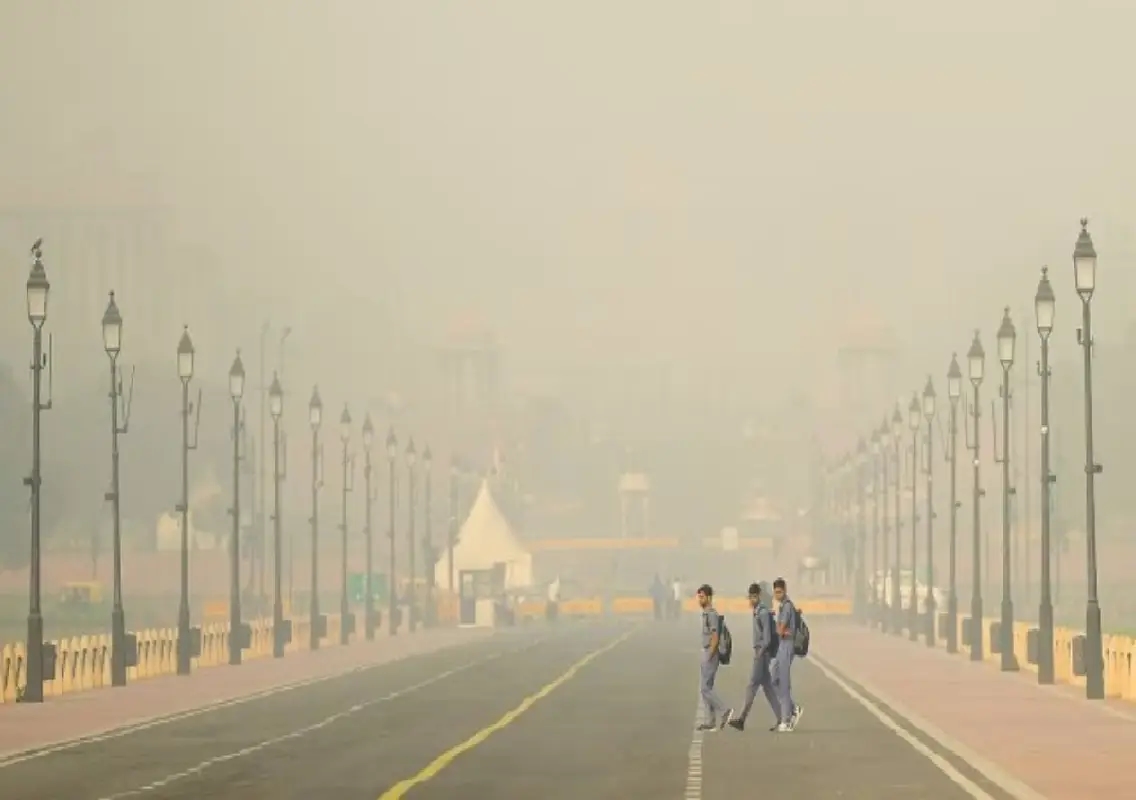


New Delhi: Residents in Delhi-NCR woke up to another suffocating morning on Saturday, with the Air Quality Index (AQI) plunging deeper into the ‘severe’ category. A thick, grey blanket of smog reduced visibility across key roads and commercial hubs, marking yet another day of hazardous pollution.
While the Air Quality Early Warning System (EWS) recorded Delhi’s AQI at 386, private monitor AQI.in pegged it significantly higher at 470 — pollution experts say this level of exposure is equivalent to inhaling 12 cigarettes a day.
Most neighbourhoods record ‘severe’ pollution
According to Central Pollution Control Board (CPCB) data, several areas registered air quality in the ‘very poor’ or outright ‘severe’ zones. Among the worst-hit localities were:
- Siri Fort: 495
- Wazirpur: 447
- Bawana: 441
- Jahangirpuri: 422
- Rohini: 423
- Mundka: 426
- Chandni Chowk: 419
- Punjabi Bagh: 405
- RK Puram: 406
- ITO: 418
Other regions such as Ashok Vihar, Burari Crossing, Najafgarh, Patparganj, Vivek Vihar, and Sonia Vihar also remained firmly in the ‘severe’ band. The EWS recorded an AQI of 386 at 5:30 AM, with fluctuations attributed to differing pollutants and station locations.
GRAP Stage III continues across NCR
With pollution levels showing no signs of easing, the Commission for Air Quality Management (CAQM) has continued Stage III of the Graded Response Action Plan (GRAP) throughout Delhi-NCR.
Under Stage III:
- Construction and demolition activities are heavily restricted
- Brick kilns and stone crushers must remain shut
- Industrial units with high emissions face tighter curbs
Authorities say these measures will remain in place until there is a sustained improvement in the region’s air quality.
Supreme Court seeks action from Punjab, Haryana
Amid worsening conditions, the Supreme Court has directed the governments of Punjab and Haryana to submit detailed status reports on steps taken to curb stubble burning — a key seasonal contributor to Delhi’s toxic air.
A bench led by Chief Justice of India BR Gavai, which is overseeing pollution-control efforts in Delhi-NCR, took note of rising pollution despite the enforcement of GRAP measures. The court has sought clear accountability from the states as farm fire incidents continue to spike.
A city gasping for relief
With winter setting in, slow wind movement and falling temperatures are likely to trap pollutants closer to the ground, worsening the smog. Health experts have advised residents to limit outdoor activity, use masks, and avoid early morning walks until air quality improves.