







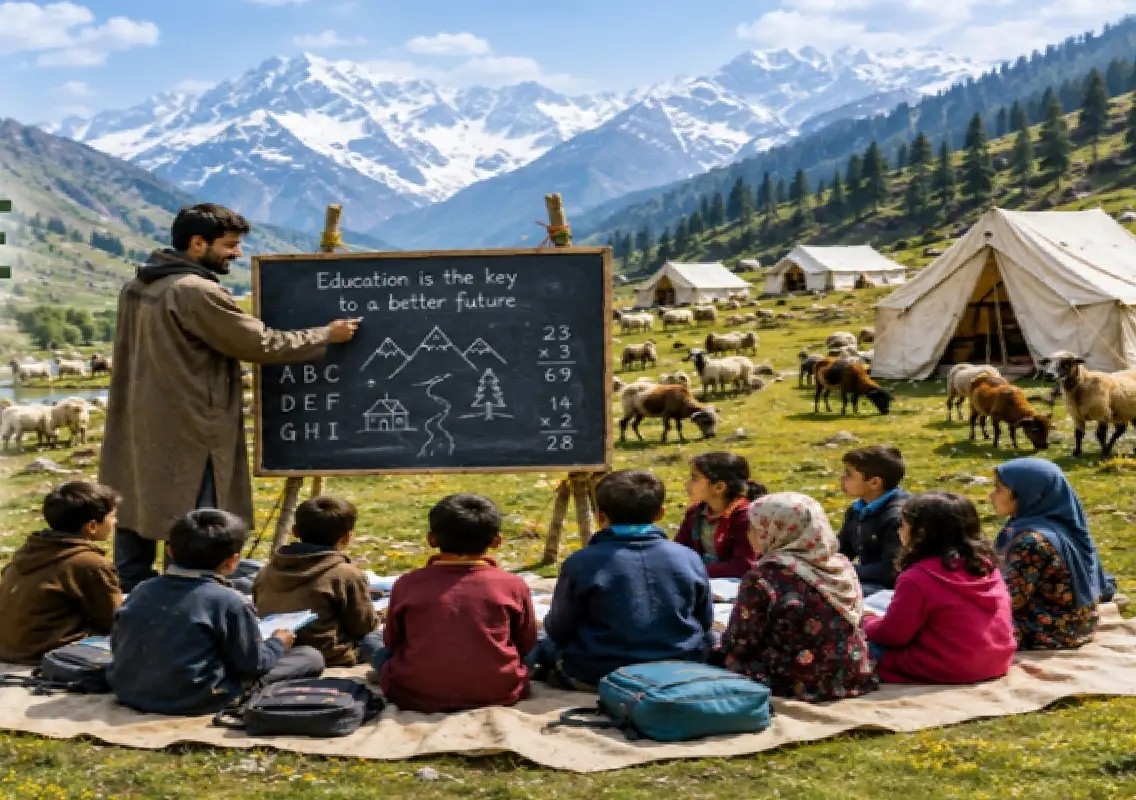


For children growing up among the high mountains and remote valleys of the Himalayas, education can be difficult to access when their homes move with the seasons. For many nomadic and pastoral families, migration is an essential part of life, but it can also disrupt a child’s journey through school.
When the classroom cannot follow
Across parts of the Himalayan region, nomadic communities move seasonally in search of pasture for their livestock. Their children may travel long distances with their families, making regular attendance at a fixed school difficult.
The challenge is not simply about distance. Schools often operate on fixed calendars, locations and enrolment systems, while nomadic life follows changing seasons and traditional livelihoods. As a result, children can experience interrupted schooling or miss out on formal education altogether.
Education and a way of life
For Himalayan nomadic families, education must also coexist with a deeply rooted way of life. Children often contribute to household responsibilities and learn traditional knowledge, skills and practices from their communities.
Sending children to distant residential schools can therefore involve difficult choices for parents, particularly when it means separating children from their families and traditional environment.
Bringing learning closer to children
Flexible education models could help bridge this gap. Mobile schools, seasonal learning centres, travelling teachers and flexible enrolment systems can make education more accessible to children whose families move across the Himalayas.
The experience of these children highlights a larger question about inclusive education: should children be expected to adapt completely to a fixed schooling system, or should education systems also adapt to the realities of children’s lives?
For Himalayan nomadic children, ensuring that education remains accessible wherever the journey takes them could be an important step towards making the promise of inclusive education a reality.