







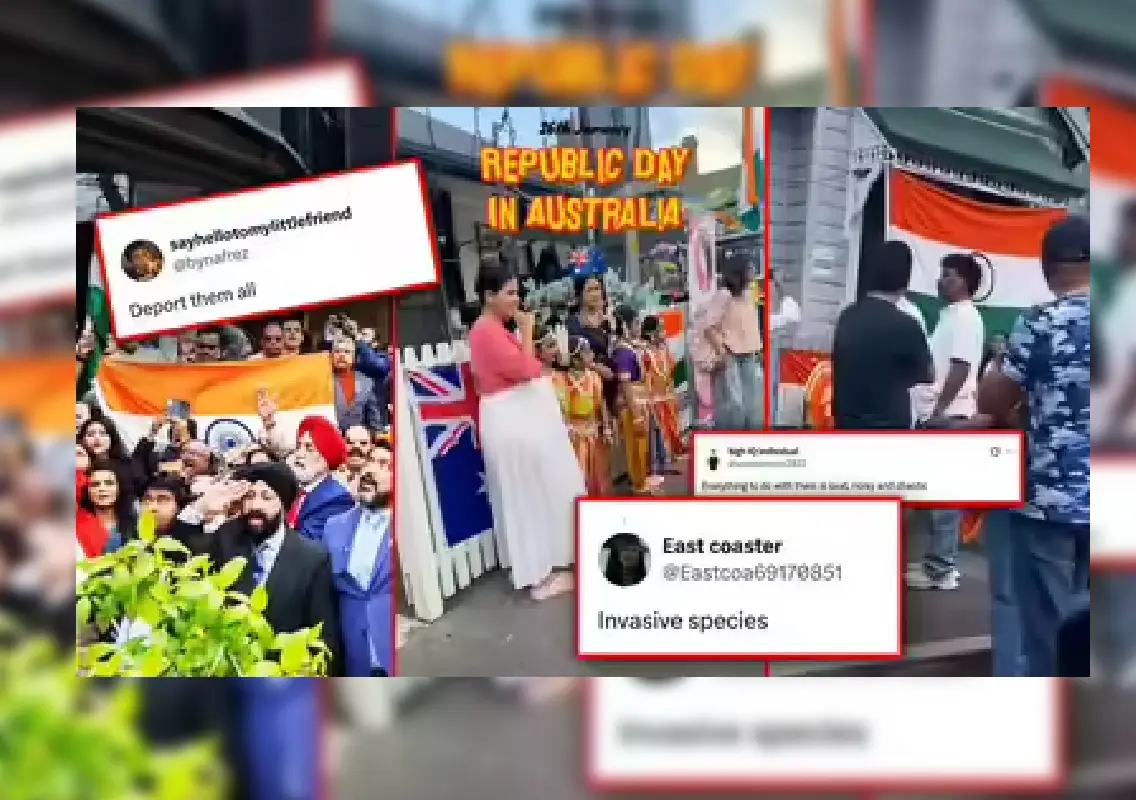


A video showing Indians celebrating India’s Republic Day on the streets of Australia has gone viral, triggering a sharp debate on social media over patriotism, identity and coexistence in multicultural societies.
The clip, first shared on Instagram, shows participants playing dhols, wearing traditional Indian attire and waving the Indian tricolour alongside Australian flags. The celebrations took place around January 26, a date that coincides with both India’s Republic Day and Australia Day.
Mixed reactions flood social media
While many users praised the visuals as a joyful expression of cultural pride, others criticised the gathering, calling it disrespectful to Australia Day. Several comments went further, with some users questioning why Indians were celebrating abroad and telling participants to “go back to India”.
The harsh remarks sparked counter-reactions, with many users condemning the tone of the criticism and calling out the hostility directed at the Indian community.
Supporters defend dual celebration
Those backing the celebrations pointed out that the participants were acknowledging both their country of origin and their adopted homeland. Supporters said waving both flags symbolised respect for India’s Republic Day as well as Australia Day, reflecting the reality of migrant communities who maintain cultural ties while contributing to their new countries.
“People can honour where they come from and where they live at the same time,” one user wrote, while others stressed that multicultural societies thrive on such expressions, not on exclusion.
Broader debate on diaspora identity
The episode has reignited discussions around how migrant communities celebrate national identities abroad and where the line is drawn between cultural expression and perceived insensitivity. Many observers noted that similar celebrations by diaspora communities happen worldwide and are often meant to foster unity rather than division.
As the video continues to circulate, it has become less about one celebration and more about how online spaces amplify polarised reactions — turning moments of joy into flashpoints for wider social tensions.