







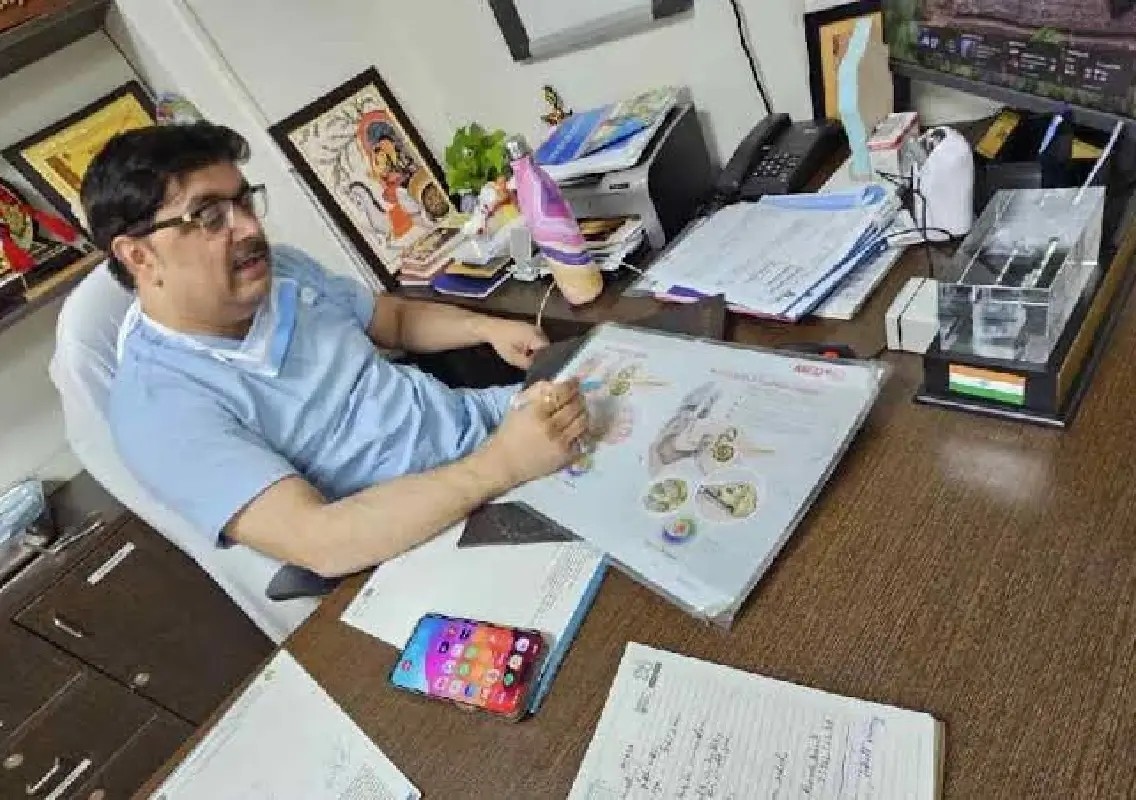


Kolkata : A 15-month-old girl from Kuwait, who was born deaf, has heard sound for the first time following a pioneering bilateral cochlear implant procedure performed at Apollo Hospitals in Kolkata.
The infant travelled with her parents from Kuwait to West Bengal to undergo an advanced hearing implant procedure using the Nexa cochlear implant system. The surgery was performed on August 4 by a team led by ENT specialist Dr Shantanu Panja. The child’s hearing was activated during a “switch-on” session on August 25, when she responded to sound by crying, marking an emotional moment for her parents and the medical team.
The case has been described as the first time an international paediatric patient underwent bilateral Nexa cochlear implantation in West Bengal, highlighting the growing availability of advanced hearing treatment in the State.
Ten-hour surgery gives child a new beginning
The bilateral procedure was carried out at Apollo Hospitals in Kolkata on August 4.
Dr Shantanu Panja, who led the surgical team, said the operation began at around 9 am and concluded at approximately 7 pm, with only a short break between the procedures on the two ears.
Performing cochlear implant surgery on both ears during the same session requires careful planning and precision, particularly when the patient is an infant.
The medical team used Smart Nav technology to guide the placement of the electrode arrays during the procedure.
The technology is designed to assist surgeons in accurately positioning the electrodes inside the cochlea, an important part of the implant procedure.
First sound brings emotional moment
The most significant moment came several weeks after surgery.
On August 25, the child underwent the “switch-on” procedure at the audiologist’s booth of CC Saha Ltd. This is the stage at which the external sound processor is activated following the necessary period of healing after surgery.
When sound was transmitted through the newly activated system, the infant began crying.
For her parents, who had travelled from Kuwait hoping their daughter would eventually be able to hear, the reaction was an emotional confirmation that the treatment had begun to provide access to sound.
The switch-on does not mean that a child immediately understands speech. Following activation, children generally require auditory training and speech therapy to learn to interpret the sounds delivered by the implant.
What is a cochlear implant?
A cochlear implant works differently from a conventional hearing aid.
A hearing aid primarily amplifies sound for people whose auditory system can still process amplified signals. A cochlear implant is designed for people with severe to profound hearing loss where the normal mechanism for transmitting sound information through the inner ear is significantly impaired.
According to Dr Panja, the external audio processor detects sound and converts it into an electrical signal. The internal implant then converts this information into electrical pulses that are delivered through an electrode array placed inside the cochlea, stimulating auditory nerve fibres and sending information towards the brain.
The process effectively bypasses damaged parts of the hearing system.
The brain then needs time and appropriate rehabilitation to learn how to interpret these electrical signals as meaningful sounds.
Early detection is crucial in children
Doctors involved in the case stressed the importance of identifying hearing loss at an early age.
According to Vikram Saha, director of CC Saha Ltd, around one in every 1,000 children is born deaf. Early identification can make a major difference because children have an important period during their early years for developing speech and language skills.
If significant hearing loss is detected before the age of two or two-and-a-half years, appropriate intervention can help children develop speech and language skills with suitable rehabilitation.
When hearing loss remains undetected until a child is five or six years old, opportunities for normal speech development can become more limited.
The Kuwait infant’s treatment at 15 months therefore came at an important stage of her development.
Advanced Nexa implant offers smart features
The child received bilateral Nexa cochlear implants, described by the surgical team as a new generation of smart hearing technology.
One of the features highlighted by Dr Panja is upgradeable software and internal memory.
Unlike older systems where audiological settings are stored in the external processor, the Nexa system stores the patient’s audiological settings internally, according to the medical team.
This allows the technology to retain important settings even when the external processor is changed or upgraded.
The Smart Nav system used during surgery also provided technological assistance in guiding the electrode placement.
Together, these technologies represent the continuing evolution of cochlear implantation.
Treatment available for adults too
Although cochlear implants are particularly important for children born with profound hearing loss, the technology can also benefit adults who lose hearing later in life.
The medical team said cochlear implant procedures have been performed on patients in their 60s and 70s.
Adult hearing loss can have several causes, including infections, accidents and certain medication-related complications.
For people who develop profound hearing loss later in life, restoring access to sound can have important practical benefits.
Being able to hear environmental sounds such as traffic, alarms and household noises can improve independence and safety, while rehabilitation can support communication.
Bengal emerges as a treatment destination
The Kuwait infant’s journey also highlights a wider development in healthcare in West Bengal.
According to Vikram Saha, international patients previously travelled to southern parts of India for similar procedures, while patients are now travelling to Kolkata for advanced cochlear implant treatment.
The arrival of an international paediatric patient for a bilateral Nexa implant indicates growing confidence in the specialised services available in the city.
Advanced medical procedures can also strengthen a region’s reputation as a healthcare destination, attracting patients from other parts of India as well as overseas.
The availability of specialised surgeons, audiologists, rehabilitation services and modern implant technology is essential for successful cochlear implant programmes.
Surgery is only the beginning
For the little girl from Kuwait, the switch-on was an important milestone, but her hearing journey does not end with surgery.
Children receiving cochlear implants need continued auditory rehabilitation and speech and language support. Their brains must gradually learn to recognise and interpret the electrical signals generated by the implant.
Family involvement is also an important part of this process.
Parents and caregivers play a crucial role by exposing children to sounds, encouraging communication and following the rehabilitation programme recommended by audiologists and speech therapists.
The earlier this process begins, the greater the opportunity for children with congenital hearing loss to develop communication skills.
A milestone for the family and Bengal
The successful treatment of the Kuwait infant represents a deeply personal milestone for her family and a notable development for the medical team involved.
Born without hearing, the child was able to respond to sound for the first time after bilateral cochlear implantation and subsequent activation of the devices.
For her parents, the child’s reaction during the switch-on provided an emotional moment after months of uncertainty and medical planning.
For Bengal’s healthcare sector, the case demonstrates the availability of advanced cochlear implant technology for international patients.
As cochlear implant technology continues to develop, early diagnosis, timely intervention, skilled surgery and long-term rehabilitation remain central to helping children with profound hearing loss gain access to sound.
The little girl’s first response to sound may have been only the beginning of a long learning journey, but it marks a remarkable new chapter in her life — one that began with her family travelling thousands of kilometres from Kuwait to Kolkata in search of a chance to hear.