







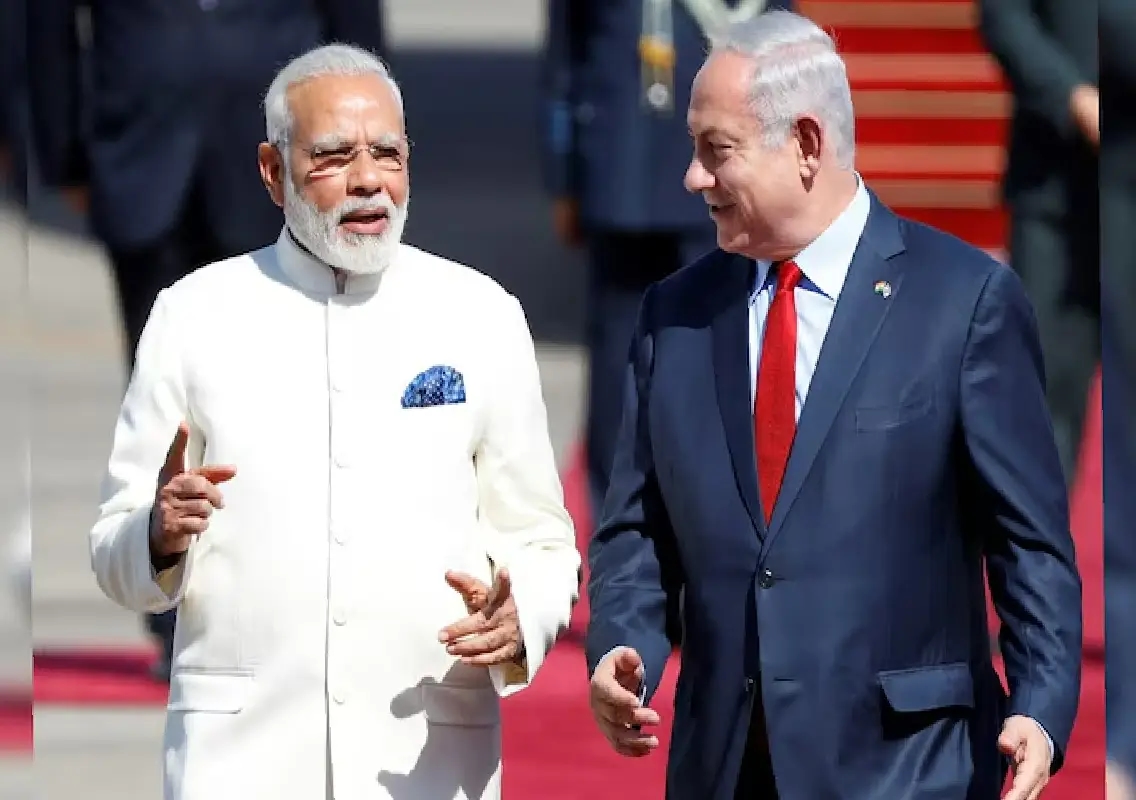


New Delhi: Prime Minister Narendra Modi is likely to visit Israel in February, in a move expected to give fresh momentum to the rapidly expanding strategic partnership between the two countries. The indication came from Israel’s Ambassador to India, Reuven Azar, who said that Israeli Prime Minister Benjamin Netanyahu has formally invited PM Modi and that preparations are underway to facilitate the visit at the earliest possible opportunity.
Speaking to NDTV’s Senior Executive Editor Aditya Raj Kaul, Ambassador Azar confirmed the invitation but refrained from giving a specific date. “We hope to see him soon. We confirm that Prime Minister Netanyahu has invited him, and we hope to be able to see him as soon as possible,” he said. Diplomatic sources have indicated that February is being considered as a possible window, subject to the finalisation of schedules and security arrangements.
If it materialises, the visit would come at a time of intense geopolitical churn in West Asia and amid growing convergence between India and Israel in areas ranging from defence and security to technology, innovation and trade.
High-level invitation signals momentum
The proposed visit reflects the sustained momentum in bilateral ties, marked by frequent high-level exchanges between New Delhi and Tel Aviv in recent months. Several senior ministers and officials from both sides have travelled between the two capitals, underlining the priority accorded to the relationship.
External Affairs Minister Dr S. Jaishankar and Commerce and Industry Minister Piyush Goyal have both visited Israel recently, engaging with their counterparts on a wide range of strategic, economic and technological issues. These interactions have helped advance cooperation in sectors identified as mutually beneficial and future-oriented.
Officials familiar with the discussions say the possible visit by the Prime Minister would help consolidate outcomes from these ministerial engagements and provide political direction to the next phase of the partnership.
Defence and security at the core
Defence and security cooperation has emerged as one of the central pillars of India–Israel relations over the past decade. Israel is among India’s key defence technology partners, supplying critical systems that enhance India’s operational capabilities.
Cooperation spans missiles, unmanned aerial vehicles, surveillance systems, electronic warfare equipment and air defence platforms. Joint development and technology transfer have also become increasingly important components of the defence relationship, moving beyond a buyer-seller framework.
Both countries share concerns about terrorism, extremism and regional instability, which has further strengthened cooperation in counter-terrorism, intelligence sharing and homeland security.
Expanding cooperation in technology and innovation
Beyond defence, India and Israel have significantly expanded collaboration in high technology and innovation-driven sectors. Cyber security, space cooperation, semiconductors and artificial intelligence are areas where engagement has grown steadily.
Israel’s globally recognised innovation ecosystem and India’s scale and talent pool are seen as complementary strengths. Officials say both sides are keen to deepen partnerships between start-ups, research institutions and industry players.
Agriculture and water management have been traditional areas of cooperation, with Israeli technologies playing a role in improving productivity, water efficiency and food security in several parts of India.
Trade, economy and people-to-people ties
Economic ties have also gained traction, with bilateral trade expanding and negotiations on a free trade agreement continuing. The proposed agreement is expected to boost trade in goods and services, enhance investment flows and strengthen supply chain linkages.
There is growing collaboration in fintech, clean energy, health technology and digital services. People-to-people ties, including academic exchanges, tourism and professional mobility, have also seen steady growth.
Officials in New Delhi view Israel as an important partner in India’s broader West Asia strategy, which aims to maintain strong relations with multiple regional actors while focusing on connectivity, trade, energy security and the welfare of the Indian community in the region.
Strategic importance for both sides
For Israel, India represents a major strategic and economic partner in Asia. Shared democratic values, converging security interests and complementary economic strengths have helped anchor the relationship.
Analysts note that the potential visit by PM Modi would send a strong signal of continuity and commitment to deepening ties, even amid a complex and evolving regional environment.
Building on the 2017 landmark visit
PM Modi last visited Israel in 2017, becoming the first Indian Prime Minister to do so. That landmark visit marked a turning point in bilateral relations, moving away from a low-profile approach to a more open and expansive partnership.
Since then, India–Israel ties have grown in scope and depth, supported by regular political engagement, institutional mechanisms and practical cooperation across sectors.
Focus on regional and global developments
If the February visit goes ahead, it is expected to focus not only on bilateral cooperation but also on regional and global issues, including the security situation in West Asia and broader geopolitical developments.
For both New Delhi and Tel Aviv, the visit would underscore a shared intent to further institutionalise a strategic partnership that has matured steadily over the years and is seen as increasingly relevant in a rapidly changing global order.